Fall yard cleanup is the big one if you want to make your New England yard less comfortable for ticks before winter and easier to manage when spring comes back.
Hey, I’m Jeff, your local pest control guy and the owner of Mosquito Enemy.
Every fall I see the same mistake: the open lawn gets cleaned, but the leaves are blown under the shrubs, pushed against a stone wall, or dumped right where the lawn meets the woods.
That may make the grass look neat from the kitchen window, yet it leaves the exact damp, protected edge habitat where blacklegged ticks do well.
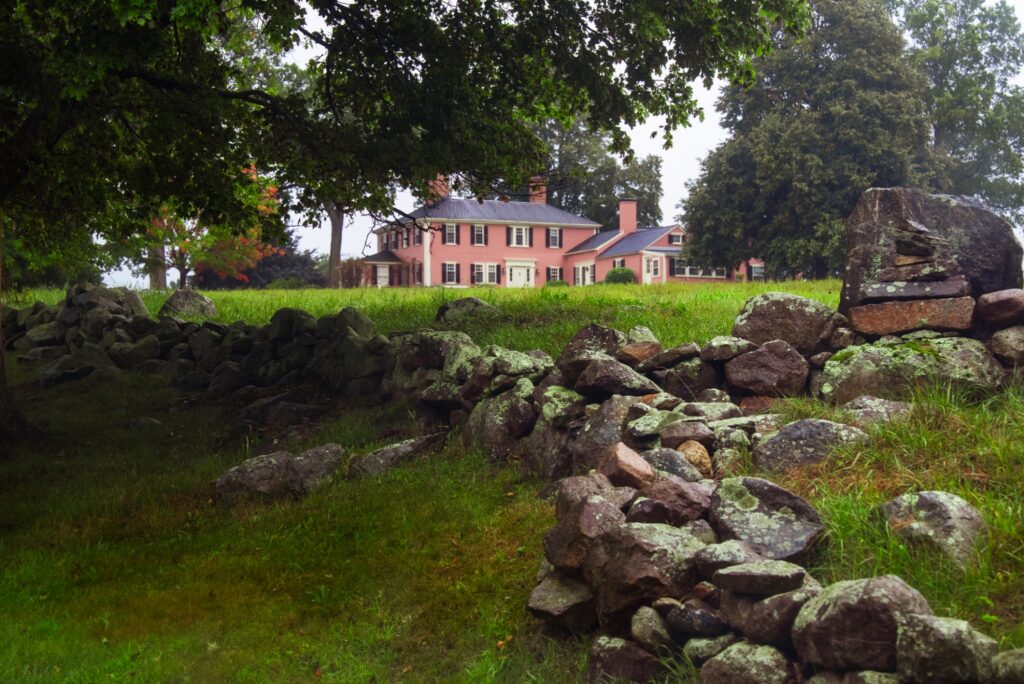
Pile damp leaves, sticks, brush, and tall grass around a stone wall, and you are basically building ticks a hotel.
Good fall cleanup is not about making the property look like a golf course; it is about taking tick-friendly cover away from the places your family and pets actually use.
Why Fall Leaves Matter to Tick Habitat
Blacklegged ticks are highly vulnerable to drying out, so shaded areas with humidity, leaf litter, brush, ground cover, stone walls, and woodland edges give them a much better microclimate than an open sunny lawn.
University of Maine’s landscape-management guidance specifically recommends keeping leaves raked, clearing leaf litter and brush around stone walls and lawn edges, and opening areas to more sunlight where practical.
A residential field study also found that removing leaf litter reduced host-seeking blacklegged tick nymphs in the study area, which supports the basic idea that habitat cleanup can matter.
No cleanup routine makes a property tick-proof, but removing the cover ticks favor is a useful part of an integrated control plan.
Do Not Just Move the Leaves Five Feet and Call It Done
In northeastern Massachusetts and southern New Hampshire, the heaviest leaf drop on many properties often shows up from late October into November, so homeowners tend to work in stages.
My preference is a few cleanups as leaves come down, followed by one thorough final cleanup, because the longer the high-use parts of the yard stay clean, the less protected clutter you leave sitting there.
Blowing every leaf from the lawn directly into shrubs or piling them at the woods edge is not the same thing as removing the habitat from the active yard.
If you keep leaves on the property, move them to a designated low-use natural or compost area away from normal foot traffic, pet routes, play areas, and the immediate lawn-to-woods transition rather than making a thick pile right beside the lawn.
UMass offers a sensible compromise for people who want to “leave the leaves” for wildlife: clear the portions of the yard you use most often and leave lower-use natural areas alone when that fits the property.
Start With the Places Your Dog and Family Actually Use
When somebody tells me they only have a couple of hours for cleanup, I do not automatically tell them to start with the prettiest part of the lawn.
First, clean the dog run, fenced pet area, or the route the dog uses every day, because repeated trips through leaves, brush, and stone-wall edges create repeated opportunities to pick up ticks.
Next, work on the places where the family spends time: patios, play areas, fire pits, paths, sitting areas, and the transition zones people cross to get there.
After that, prioritize stone walls, lawn-to-woods edges, woodpiles, brush piles, and shaded beds according to how that particular property is used.
For dog owners, I also recommend our backyard tick-control routine for dogs, because yard work and pet checks need to support each other.
Stone Walls and the Lawn-to-Woods Edge Deserve Extra Attention
Classic New England stone walls are beautiful, but once leaves, sticks, tall weeds, and rodent activity collect around them, they can become prime tick habitat.
Ideally, I like a clean, maintained transition where the usable lawn ends and the wall or woodland begins instead of a tangled strip of damp debris.
CDC recommends a 3-foot-wide barrier of wood chips or gravel between lawns and wooded areas to discourage contact with brushy or grassy borders beyond the lawn.
On some properties, especially around a play area or heavily used space, my field preference is an even wider crushed-stone separation when the layout and budget allow, but I never call any barrier an impenetrable wall against ticks.
For a closer look at these areas, our older article on tick hot spots around stone walls, leaf litter, and wood edges shows why the transition zone matters so much.
Rake the Leaves or Mulch Them? Here Is My Field Preference
Homeowners ask whether they can simply run the mower over the leaves because mulching is faster and returns organic matter to the lawn.
University of Maine says finely mulching leaves in place can be an option, so I am not going to tell you that every chopped leaf automatically creates a tick problem.
For tick reduction in the high-risk parts of a property, however, I still prefer physical removal around stone walls, under shrubs, along wooded edges, around dog areas, and anywhere damp leaf material can build into a mat.
That is the difference between general lawn care and targeted tick-habitat management: the middle of a sunny lawn is not the same environment as a shaded border packed with decomposing leaves.
Do Ticks Die When the Yard Freezes?
Winter cold slows tick activity, but a frost does not simply wipe the population out and reset the yard.
CDC says blacklegged ticks can be active whenever winter temperatures rise above freezing, while leaf litter and snow can help insulate the ground and moderate temperature swings.
That is why I do not want homeowners thinking, “It froze last night, so the leaves no longer matter.”
If you want more detail on winter behavior, read Are Ticks Active in Winter in MA & NH?.
Woodpiles, Brush Piles, and Fallen Limbs Are Part of the Cleanup
Firewood and brush are another place where people accidentally create shelter for mice, chipmunks, and other animals that can carry ticks.
Keep firewood neatly stacked and dry, elevate it when practical, and place the pile away from the house and high-use family or pet areas instead of burying it in leaf clutter beside a stone wall.
Brush and fallen branches should be removed from the lawn edge and normal travel routes or moved to a designated low-use area deeper into the property where people and pets are not constantly passing through.
One cross-pest reminder matters here too: if a tarp or cover on the woodpile holds rainwater, empty that water regularly so a tick-management feature does not become a mosquito-breeding container.
Ground Cover and Shrub Beds Can Hide the Mess
Dense ground covers such as pachysandra, ivy, low evergreens, thick hostas, and shrub beds can look tidy from above while holding damp leaves underneath.
Pull or blow trapped leaves out of those shaded pockets, thin overly dense growth when it makes sense horticulturally, and avoid letting ground cover become a continuous damp bridge from the woods to patios, pet areas, or the foundation.
Around the house, I also like enough space between shrubs and the foundation for air movement and inspection, because an open, maintained bed is easier to manage for ticks and other crawling pests than a packed wall of vegetation.
Fall Cleanup Helps Professional Tick Control Work as Part of a Plan
Customers sometimes ask, “If I am paying you to treat ticks, why do I still have to rake?”
My answer is that professional tick control and property maintenance solve different parts of the problem: we can treat tick habitat, but we cannot make deep leaves, brush, and neglected edges disappear for you.
Chemical control can reduce ticks in treated habitat, and University of Maine notes that acaricides work best as part of an integrated approach that also includes landscape management and personal protection.
You have got to help yourself if you want us to help you, because the best results come when we do our part and the homeowner does theirs.
Should You Wait Until Every Last Leaf Falls Before the Final Treatment?
Ideally, I like the bulk of the important cleanup done before the last scheduled fall tick treatment so we can see and reach the actual edges, stone walls, and ground-level habitat that will remain.
Real life does not always cooperate, though, because our regular treatment season is winding down in early October while major leaf drop can continue weeks later.
Do not postpone a scheduled fall visit indefinitely waiting for the final oak leaf to hit the ground; keeping the treatment window matters too.
If you are worried about encountering ticks while raking, having the scheduled treatment first and cleaning afterward can still make practical sense, especially when the alternative is skipping the fall visit altogether.
A Good Fall Cleanup Still Needs a Spring Follow-Up
Fall is the major cleanup, but winter will throw branches, leaves, and debris back into the yard and your neighbor’s leaves may arrive whether you invited them or not.
Once snow cover is gone, I want the stone walls, pet areas, shrubs, and wooded edges checked again so the clean zones you built in fall do not disappear before spring activity ramps up.
Mosquito Enemy normally begins spring tick work around April 15 when weather and snow cover allow, rather than waiting until homeowners are already pulling ticks off the dog.
Even if every spring leaf is not cleaned yet, starting the program on time and improving the habitat as the yard becomes workable is usually better than waiting deep into May or June.
Your Neighbor’s Mess Does Not Make Your Cleanup Pointless
Ticks and wildlife do not recognize survey pins, so a mouse, deer, squirrel, dog, or other animal can move ticks from one property to another.
Still, you are improving the yard you control, and a well-maintained treated property can have very different tick pressure from an unmanaged property next door.
The important distinction is exposure: if your dog regularly wanders into the neighbor’s brush or wooded edge, the dog can pick up ticks there and bring them home even when your own yard is maintained.
For that specific concern, read Will Mosquito and Tick Control Work if My Neighbors Do Nothing?.
A Clean Lawn Can Still Have a Tick
Anything is possible outdoors because a tick can drop from a host almost anywhere, including an open lawn.
What changes is the habitat: sunny, short, maintained turf is generally much less favorable for blacklegged ticks than moist leaf litter, shaded brush, stone walls, and woodland edges.
Keep the lawn mowed at a healthy height for the turf instead of scalping it, and do not let edge grass turn into a foot-high strip that merges with brush.
Cleanup reduces the places ticks are likely to persist; it does not guarantee that wildlife will never deposit another tick on the property.
Use Protection While You Are Cleaning Tick Habitat
If you are raking under shrubs, pulling leaves from a stone wall, or dragging brush at the woods edge, you are deliberately working in places where ticks may already be present.
Wear long pants, long sleeves, gloves, and closed boots or shoes, and tuck pant legs into socks when practical so crawling ticks stay on the outside where you can see them.
CDC recommends treating clothing and gear with 0.5% permethrin and using EPA-registered repellent on exposed skin according to the label; permethrin is for clothing and gear, not direct application to skin.
Afterward, check yourself, your children, and your pets, shower soon after coming indoors, and put dry work clothes in a high-heat dryer for 10 minutes when appropriate.
A Simple White-Cloth Check Can Show You Something – But Not Everything
Researchers use standardized drag cloths to sample host-seeking ticks, and I sometimes suggest a simple homeowner version as a quick reality check along a lawn-to-woods edge.
A textured white or light cotton cloth attached to a rake can be dragged through the transition zone, then flipped over and inspected for ticks that latched onto the fabric.
CDC surveillance guidance confirms that white textured drag cloths are a legitimate tick-sampling method, although professional surveillance uses a much more standardized size, distance, and checking procedure than a homeowner test.
Finding a tick tells you ticks are present; finding none on one short pass does not prove the property is tick-free.
Fall Yard Cleanup for Ticks: Clean the Habitat You Actually Live In
You do not need to strip every acre of natural woods bare to make fall cleanup worthwhile.
Focus first on dog areas and family-use zones, then keep stone walls, shaded shrub beds, wooded transitions, brush piles, and other high-contact edges from turning into deep mats of leaves and sticks.
Combine that maintenance with sensible personal protection, pet checks, and a professional program when tick pressure justifies it, because no single tactic eliminates every tick exposure on its own.
Visit the Mosquito Enemy FAQ to compare these recommendations with other questions customers ask us about wooded yards, pets, treatment zones, and seasonal timing.
Questions Homeowners Ask About Fall Cleanup and Ticks
Q: Do leaves in my yard really make ticks worse?
A: Leaf litter can make parts of a yard more favorable for blacklegged ticks because it holds moisture, shade, and protection close to the ground. Cleaning leaves from heavily used areas, wooded edges, stone walls, and other tick habitat can reduce those favorable conditions, although it cannot guarantee a tick-free property.
Q: Should I rake leaves or mulch them if I am trying to reduce ticks?
A: In high-risk tick areas, my field preference is to physically remove the leaves rather than simply chop them and leave the organic layer in place. Fine mulching can be appropriate on parts of a lawn, but shaded edges, stone walls, shrub beds, pet areas, and deep leaf mats are the places I most want cleaned out.
Q: Do I need to remove every leaf from my entire property to reduce ticks?
A: No. Concentrate on the parts of the yard people and pets actually use, especially dog areas, patios, play areas, paths, lawn-to-woods transitions, and stone walls. Natural leaf litter can remain in lower-use woodland areas when you maintain a cleaner separation from the active yard.
Q: Do ticks die after the first hard freeze?
A: No, a freeze does not automatically eliminate blacklegged ticks. Cold reduces activity, but adults can become active again during winter warm-ups above freezing, and protected leaf litter can help moderate the conditions at ground level.
Q: Where should I clean first if I only have a couple of hours?
A: Start with the dog run or fenced pet area, then clean the places your family uses most. After those high-exposure zones, work outward to stone walls, wooded edges, brush, woodpiles, and shaded beds based on the way your property is actually used.
Q: If I pay for professional tick control, why do I still need to rake leaves?
A: Treatment can reduce ticks in the areas we service, but it does not remove the habitat itself. Clearing leaf litter, brush, and neglected edges makes the property less favorable and gives professional tick control a better overall management plan to work with.
Q: Will fall yard cleanup by itself get rid of ticks?
A: No. Wildlife, pets, and neighboring habitat can continually bring ticks onto a property, so cleanup lowers habitat and exposure opportunities rather than creating a guarantee. The strongest approach combines landscape management, personal and pet protection, and professional control when needed.
Q: What should I wear while raking leaves in tick habitat?
A: Long pants, long sleeves, gloves, and closed footwear are the basic protection I recommend, and tuck pants into socks when practical. CDC also recommends permethrin-treated clothing or gear and an EPA-registered repellent for exposed skin, followed by a tick check and shower after outdoor work.
Q: Will my dog still bring ticks inside after I clean up the yard?
A: Yes. A cleaner yard can reduce favorable habitat, but dogs can still pick up ticks from wooded edges, brush, neighboring properties, trails, or wildlife activity. Keep using veterinarian-recommended tick prevention and check your dog regularly, especially the ears, legs, fur, and between the paw pads.
Want Help Reducing Tick Pressure Around Your Yard?
If ticks are showing up around dog areas, stone walls, wooded edges, or other parts of the yard your family uses, a professional tick-control plan can add another layer beyond cleanup alone.
Mosquito Enemy provides tick control throughout our Massachusetts and New Hampshire service areas and can help match the treatment to the way your property is actually used.
Call or text: 888-229-0095
Learn more: Tick Control
It’s More Fun Outside! with Mosquito Enemy.