
I’m Jeff, your local pest control guy.
Bourbon virus is one of those tick topics that feels like it came out of nowhere.
A headline pops up.
Somebody says, “Great… now there’s another one?”
That reaction is normal.
This post is the calm, practical version of what Bourbon virus is, how people catch it, what symptoms look like, and why it stays on the radar even though it’s rare.
Related reading
Start here: Tick Control: How to Reduce Ticks in Your Yard
Then read this: Heartland virus: Symptoms, Tick Vector, and Prevention
Quick answer
Bourbon virus is a rare tick-borne virus that people catch through the bite of an infected tick.
The main tick linked to spread is the lone star tick.
Most reported human cases have been in the Midwest and southern U.S., not as a common day-to-day New England illness.
Fever, fatigue, headache, body aches, and stomach symptoms are common, and a rash can show up.
Bloodwork clues often include low white blood cells and low platelets.
No human vaccine exists, and no specific cure exists, so medical care is mainly supportive.
Prevention is still the best tool, because fewer tick bites means fewer chances for any rare tick virus to land on your family.
What is Bourbon virus and how do people catch it?
Bourbon virus is a tick-borne virus first identified in the United States in 2014.
The name comes from Bourbon County, Kansas, which is where it was first recognized.
A tick bite is the usual doorway into a human.
Casual contact does not spread it.
Sharing food, hugging, and normal day-to-day life is not how this virus moves.
Pets are not “giving you Bourbon virus” through normal contact either.
Ticks are the issue.
Which tick is believed to be the main vector?
CDC points to the lone star tick as the primary tick tied to Bourbon virus.
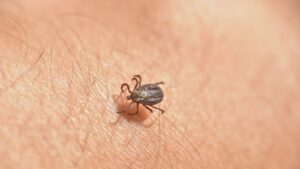
If you’ve ever seen an adult female with that single white dot on her back, that’s the one people talk about.
This matters because tick species change risk.
Deer ticks drive most of the New England conversation.
Lone star ticks drive a lot of the “emerging southern tick problems moving north” conversation.
Scientists also watch other ticks in surveillance, including the Asian longhorned tick, because studies have detected Bourbon virus in surveillance work.
Still, the “real world” headline vector remains the lone star tick.
Where have most Bourbon cases been reported?
CDC describes a limited number of reported cases, mostly in the Midwest and southern United States.
That means this virus is not the everyday tick story for most Massachusetts and New Hampshire households.
Travel changes that, though.
A hiking trip, hunting trip, campground weekend, or family visit in lone star tick country can create exposure.
Work outdoors can do the same, especially if someone’s job puts them in brush, tall grass, and edge habitat.
Range expansion is part of why this topic keeps coming up.
Ticks don’t read state lines.
What symptoms are most common?
Most people who become ill report fever.
Fatigue is a common complaint too, and it can feel like a full-body shutdown.
Headaches show up often.
Muscle aches can show up as well.
Stomach symptoms are part of the Bourbon picture in many reports.
Nausea can happen.
Vomiting can happen too.
Diarrhea can be part of it.
A rash can occur, and clinicians often describe it as a maculopapular rash.
Now here’s the reason clinicians take this seriously.
Bloodwork often shows low white blood cells and low platelets.
Liver enzymes can be elevated as well.
That lab pattern is one reason early illness can get confused with other tick infections.
How rare is Bourbon virus?
Bourbon virus illness is rare.
Low case counts are the reason most people never hear about it.
Rarity does not mean “impossible,” though.
One bite can be enough if the tick is infected.
That’s why the right mindset is simple.
Treat it as one more reason to respect tick prevention.
Is there a vaccine or a specific treatment?
No human vaccine exists for Bourbon virus.
No specific medication exists that “cures” it.
Supportive care is the approach.
Hydration, fever control, pain control, and monitoring are the usual medical tools.
Hospital care may be needed if symptoms are severe or lab values are concerning.
Antibiotics don’t treat viruses.
That said, clinicians may still treat for other tick illnesses early when the symptoms and bloodwork fit those patterns, because some bacterial tick infections do respond to antibiotics.
How can you tell Bourbon apart from other tick illnesses at first?
From the couch at home, you usually can’t.
Early illness overlaps with a bunch of tick problems.
Fever and fatigue are common across the board.
Headaches and body aches don’t narrow it down much either.
Bloodwork is often where clinicians get the first real clues.
Low white blood cells and low platelets push the clinician toward certain tick-borne categories.
A travel story matters too.
Time outdoors in lone star tick areas matters as well.
Here’s the practical rule I live by.
When someone feels very sick after tick exposure, a clinician should guide the next steps.
Why do we still talk about it if it’s rare?
Serious illness is part of the reason.
Deaths have been reported.
That reality keeps public health focused.
Tick range changes are another reason.
Lone star ticks have been expanding into more parts of the Northeast over time.
Surveillance keeps improving too, which means unusual viruses get found more reliably than they used to.
One more reason matters for families.
The same prevention habits that protect you from rare viruses also protect you from the common stuff you deal with every year.
The prevention steps that actually work
Clothing is the easiest start.
Long pants and closed shoes beat bare ankles in edge habitat.
Light-colored fabric makes crawling ticks easier to spot.
Repellent helps when brush contact is likely.
Trail-center walking helps too.
Same-day tick checks are the real closer.
A second check after a shower catches what the first check missed.
Gear deserves attention as well.
Backpacks and jackets can pick up hitchhikers when they get dropped in grass.
Yard changes that lower tick pressure
Edge habitat is where tick pressure lives.
Leaf litter holds moisture and creates protection.
Brush piles attract small animals.
Stone walls act like wildlife highways.
Cleaner borders reduce contact for kids and dogs.
Sunny play areas help because ticks do worse in hot, dry conditions.
A mulch or gravel strip can help create a drier transition zone when it’s wide enough and kept clean.
Where Mosquito Enemy fits
Some properties refill with ticks week after week.
A focused plan makes sense when you’re pulling ticks off the dog constantly.
Our Tick Control service targets the places ticks live and the edges where exposure happens.
A combined option exists too through Mosquito + Tick Programs for families who want the whole outdoor problem handled on a schedule.
Mosquito breeding control steadies tougher mosquito yards as well, which is why Mosquito Egg & Larvae Control exists as five targeted applications per year aimed at breeding zones.
Larvae feed, so larvicides can control them.
Pupae don’t feed, so that stage can’t be controlled the same way.
That breeding work matters because fewer mosquitoes and fewer ticks makes outdoor life feel normal again.
Bottom line
Bourbon virus is rare, but it’s real.
Lone star ticks are the main vector tied to spread.
Early symptoms can look like other tick illnesses, so medical care and bloodwork matter when someone feels seriously sick.
No vaccine exists and no specific cure exists, which keeps prevention at the top of the list.
A steady tick plan protects your family without turning every outdoor day into a worry session.
FAQ
What is Bourbon virus and how do people catch it?
A: Bourbon virus is a rare tick-borne virus, and people catch it through the bite of an infected tick.
Detail: Normal day-to-day contact does not spread it, so prevention focuses on avoiding tick bites.
Which tick is believed to be the main vector (spreader)?
A: The lone star tick is believed to be the primary vector for Bourbon virus in the United States.
Detail: Surveillance and research continue to watch other ticks, but the main real-world concern remains lone star ticks.
What symptoms are most common (fever, rash, fatigue, etc.)?
A: Fever, fatigue, headache, body aches, stomach upset, and sometimes rash are commonly reported symptoms.
Detail: Bloodwork often shows low white blood cells and low platelets, which is one reason clinicians treat it seriously.
Is there a vaccine or a specific treatment?
A: No human vaccine exists, and no specific cure exists, so care is mainly supportive.
Detail: Clinicians may still treat other tick illnesses early when the picture fits, because some bacterial tick diseases respond to antibiotics.
How rare is Bourbon virus, and why do we still talk about it?
A: Bourbon virus illness is rare, but it can be severe, and reported cases have included deaths.
Detail: Lone star tick range changes and better surveillance keep it on the radar, and prevention habits protect against the common tick problems too.
Top towns we service
Here are 16 of the top towns we service every week.
Amesbury, MA
Andover, MA
Boxford, MA
Byfield, MA
Georgetown, MA
Groveland, MA
Haverhill, MA
Ipswich, MA
Merrimac, MA
Newbury, MA
Newburyport, MA
North Andover, MA
Rowley, MA
Salisbury, MA
Topsfield, MA
West Newbury, MA
Don’t see your town? We probably still service it. Use our Service Area page to confirm.
Related resources
Start with / Mosquito + Tick Programs
Add this for tougher yards / Mosquito Egg & Larvae Control
Ticks ONLY / Tick Control
Home protection / Home Shield
Stinging insects / Stinging Insect Control
Rodents / Rodent Control
Gutter Cleaning / Gutter Cleaning
Reach us / Contact us
Call or text: 888-229-0095 | Email: jeff@mosquitoenemy.com | Contact us
It’s More Fun Outside! with Mosquito Enemy.