I’m Jeff, your local pest control guy.
BTI is one of my favorite mosquito tools because it attacks the problem where it starts.
Most people think mosquitoes are only an “adult flying” issue.
One look at breeding water changes that thinking fast.
People say, “Jeff… I dumped the birdbath and they’re still here.”
Then we find the sneaky water.
BTI is made for those breeding pockets.
Today I’m going to explain what it is, how it works, what it doesn’t do, and how long it tends to last.
Related reading
Start here: Mosquito Spray Schedule: Why Recurring Treatments Beat One-Time Sprays
Then read this: What happens if it rains after a mosquito treatment?
Quick answer
BTI is a larvicide that targets mosquito larvae in water before they become flying adults.
Mosquito larvae eat it, and that’s when it does the job.
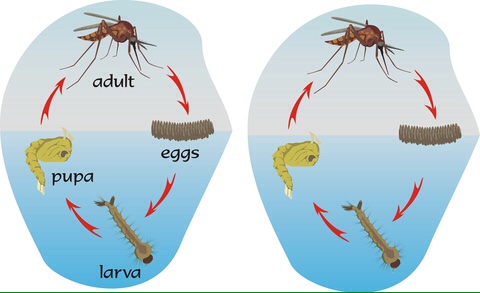
Because pupae don’t feed, BTI can’t control that stage.
Adult mosquitoes are a separate target, so BTI is part of the plan, not the whole plan.
Most BTI products are known for being selective when used per label, which is why they’re widely used in mosquito programs.
A breeding program stays effective by repeating on schedule, because water sites change and refills happen.
What is BTI and how does it kill mosquito larvae?
BTI stands for Bacillus thuringiensis israelensis.
This is a bacteria that produces proteins that are lethal to mosquito larvae once ingested.
Larvae feed in the water like little filter machines.
BTI gets eaten during that feeding.
After ingestion, the larva’s gut gets disrupted and the larva dies.
That’s why BTI is a breeding-site tool, not an “air spray” tool.
Why BTI is such a big deal in real yards
Mosquito control gets easier when you stop the next wave before it flies.
Adult control helps comfort right now.
Breeding control helps comfort next week.
BTI lives in that breeding lane.
A steadier yard comes from cutting refills, not just chasing adults.
Does BTI harm people, pets, fish, or beneficial insects like honeybees?
Selectivity is the reason BTI has such a strong reputation.
Mosquito larvae are the target.
A few related fly larvae can be affected too, depending on the situation and label.
People and pets aren’t feeding in stagnant water like larvae do, so the exposure pathway is completely different.
Fish aren’t the target either, which is why BTI products are commonly labeled for certain water uses when directions are followed.
Honeybees don’t match the BTI “recipe” because they aren’t aquatic larvae living in stagnant water.
Label directions still matter, because every product has rules for a reason.
Where can BTI be used?
Product labels decide the exact list, so always follow the label.
Standing water you cannot dump is the classic BTI target.
Birdbaths can be treated when daily water changes aren’t realistic for a busy family.
Ponds and water features are often part of the conversation on properties with steady breeding pressure.
Low spots that hold water after rain are another common breeding zone.
Clogged gutters can be a sneaky one, because wet debris holds water without you noticing from the ground.
My simple rule stays the same.
Dump what you can dump.
Fix what you can fix.
Treat what you can’t remove.
Why doesn’t BTI work on pupae or adult mosquitoes?
Feeding is the whole BTI mechanism.
Larvae feed, so BTI works on larvae.
Pupae don’t feed, so BTI can’t touch that stage.
Adult mosquitoes aren’t in the water feeding like larvae either.
Resting zones are the adult story.
Shrubs, humid corners, and shaded edges are where adults hang out before they bite.
Mosquito Enemy focuses on multiple life stages for that exact reason.
Egg and larvae work reduces refills.
Adult control reduces biting pressure.
Pupae are the one stage we can’t control the same way, because pupae don’t feed.
How long does BTI stay effective after it’s applied?
Duration depends on the formulation and the site.
Dunks, bits, granules, and liquids can behave differently.
Water movement changes everything.
Heavy rain can flush a breeding pocket.
Sprinklers can act like mini rain on a birdbath or a low corner.
Organic muck can also reduce performance in stagnant pockets that are basically “mud soup.”
That’s why repeat timing matters.
A program stays effective by revisiting and staying ahead of refills.
How BTI fits into a real mosquito control plan
BTI controls larvae.
Barrier work controls adults in resting zones.
Putting both together covers more of the mosquito life cycle.
That’s the advantage most homeowners feel after a few visits.
Our Mosquito + Tick Programs focus on the adult side and the areas where biting pressure lives.
Breeding control is handled through Mosquito Egg & Larvae Control, and BTI is one of the tools that can be used when the breeding site fits.
Five targeted applications per year aimed at breeding zones helps stop refills.
A steadier season comes from that repeat pressure reduction.
A fast homeowner checklist that works
Walk the yard after rain.
Look for water you can dump in 30 seconds.
Spot the low corners that stay wet.
Check hidden collection zones like gutters.
Treat the water you can’t eliminate with the right larvicide tool.
Stay consistent.
Consistency beats wishful thinking every time.
Bottom line
BTI is a targeted larvicide that works because mosquito larvae eat it.
People, pets, fish, and honeybees are not the target when BTI is used per label.
Pupae don’t feed, so BTI can’t control that stage.
Adult mosquitoes require a different approach in the resting zones.
A real plan hits multiple life stages, and BTI is one of the best tools for the breeding side of the story.
FAQ
What is Bti and how does it kill mosquito larvae?
A: BTI is a bacteria-based larvicide that kills mosquito larvae after they eat it in the water.
Detail: Gut disruption happens after ingestion, so BTI works in breeding water, not on flying adult mosquitoes.
Does Bti harm people, pets, fish, or beneficial insects like honeybees?
A: BTI is known for being selective to mosquito larvae and certain related fly larvae, and it’s widely used when applied per label.
Detail: Honeybees are not aquatic larvae in stagnant water, and people, pets, and fish aren’t affected the way mosquito larvae are.
Where can Bti be used (ponds, birdbaths, gutters, standing water)?
A: BTI is used in standing water breeding sites that can’t be dumped or drained, with exact uses determined by the product label.
Detail: Birdbaths, low water pockets, and even clogged gutters can be part of the breeding story on many properties.
Why doesn’t Bti work on pupae or adult mosquitoes?
A: Larvae must eat BTI for it to work, and pupae don’t feed.
Detail: Adult mosquitoes are controlled by treating resting zones, which is a different strategy than larviciding.
How long does Bti stay effective after it’s applied?
A: Duration depends on the formulation and site conditions, so some products release longer while some sites flush out faster after rain.
Detail: Repeat timing matters, which is why breeding control works best as a program instead of a one-time application.
Top towns we service
Here are 16 of the top towns we service every week.
Amesbury, MA
Andover, MA
Boxford, MA
Byfield, MA
Georgetown, MA
Groveland, MA
Haverhill, MA
Ipswich, MA
Merrimac, MA
Newbury, MA
Newburyport, MA
North Andover, MA
Rowley, MA
Salisbury, MA
Topsfield, MA
West Newbury, MA
Don’t see your town? See the full list here: Service Area
Related resources
Start with / Mosquito + Tick Programs
Add this for tougher yards / Mosquito Egg & Larvae Control
Ticks ONLY / Tick Control
Home protection / Home Shield
Stinging insects / Stinging Insect Control
Rodents / Rodent Control
Gutter Cleaning / Gutter Cleaning
Reach us / Contact us
Call or text: 888-229-0095 | Email: jeff@mosquitoenemy.com | Contact us
It’s More Fun Outside! with Mosquito Enemy.