
I’m Jeff, your local pest control guy.
When the weather starts warming up around May, the same thing happens every year.
One good night outside turns into a bunch of bites.
Then the phone comes out and the searches start flying.
“how to get rid of mosquitoes in yard” shows up a lot.
Right behind it, I see this constantly: Mosquito exterminator near me.
If you’re standing in your yard wondering what you can do naturally before you hire anyone, I get it.
Most homeowners aren’t trying to learn bug biology.
People are trying to grill, relax, and let the kids run around without doing the “mosquito dance.”
I hear this all the time from homeowners in Andover, MA, especially once people start heading back outside near Andover Town Common & downtown, Phillips Academy campus, and Harold Parker State Forest (Andover side).
Quick Answer
Dump standing water once a week, cut back thick shade so the yard dries faster, and run a fan where you sit outside.
Those steps reduce breeding and make your yard less comfortable for adult mosquitoes that hide in cool, damp spots.
DIY moves help a lot, but mosquitoes can still fly in from nearby wet areas you don’t control.
That’s why combining your natural cleanup with a mosquito control service and a targeted mosquito yard treatment is often what finally makes the yard feel normal again.
Mosquito exterminator near me: What should I do once a week starting the first of May?
Start with standing water and heavy shade, because water creates mosquitoes and shade protects them.
Here’s how I explain this to homeowners: you don’t need to “fight harder,” you need fewer mosquitoes being born and fewer mosquitoes hiding all day.
That’s the whole game.
A steady weekly routine beats a big once-a-month cleanup that gets forgotten.
Think in two zones
Breeding water is the first zone.
Daytime cover is the second zone.
Handle both, and you feel it fast.
Ignore one, and dusk still surprises you.
Why do mosquitoes get worse when the weather warms up?
Mosquitoes get worse in late spring because warm temperatures speed up their life cycle and spring rain leaves little water pockets everywhere.
That’s why it can feel like the problem shows up overnight.
Mosquito biology in plain English
Mosquitoes have four life stages: egg, larva, pupa, and adult.
Eggs and larvae live in water.
Pupae also sit in water, and they don’t feed during that stage.
Adult mosquitoes fly, then they spend most of the day tucked into shade where it stays cool and humid.
Dusk comes, the air calms down, and that’s when they go hunting for you.
This is what actually matters in your yard: water plus heat equals mosquitoes.
Take away the water, and you slow the whole machine down.
How can I reduce mosquitoes naturally by eliminating standing water?
Eliminating standing water is the strongest natural move because it stops the next generation before mosquitoes can fly.
Small water is the enemy, because small water gets missed.
The weekly water walk that works
Pick one day each week and do one lap around your property.
Dump buckets, toys, wagons, wheelbarrows, and anything that holds rain for a couple of days.
Scrub and refresh birdbaths often.
Empty plant saucers or fill them with sand so they can’t puddle up.
Pull tarps tight so they don’t sag into little pools.
The hidden sources that fool people
Low lawn spots can hold puddles after a storm.
Downspouts can create a muddy “mini pond” if water keeps landing in the same place.
Leaf piles behind shrubs stay wet for days, even when the lawn looks dry.
Pool covers can sag and collect water pockets you don’t notice until mosquitoes do.
One place homeowners overlook
Roof drainage gets ignored because you don’t see it from the patio.
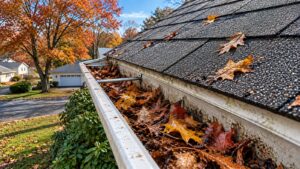
gutters that hold wet leaves and sludge can keep standing water up high, and that can quietly feed mosquito pressure around a home.
Clean flow sends water away.
Clogs keep it sitting.
Fixing that hidden spot can remove a breeding source you didn’t even know you had.
How does shade and thick landscaping make mosquitoes worse?
Shade makes mosquitoes worse because adults rest in cool, humid cover during the day.
More shade usually means more mosquitoes hanging around your seating areas.
What to trim first
Open up the bottoms of shrubs so air can move underneath.
Raise low tree limbs so sunlight hits the ground and dries it out.
Pull thick groundcover back from patios and play areas.
Rake wet leaf pockets out of fence corners and under decks.
Watering habits matter too
Overwatering keeps the yard humid.
Morning watering usually lets the yard dry out before evening.
Night watering can keep things damp right when mosquitoes want to rest and then bite.
I hear the same pattern from homeowners in North Andover, MA who want comfort back near Stevens Pond & Weir Hill, North Andover Town Common & Main St, and Merrimack College.
Do fans and plants actually help with backyard mosquito control?
Fans help a lot in the exact spot you’re sitting, and plants can help a little in that same small zone.
Neither one replaces water cleanup, but both can make a deck feel more livable.
Why a fan works so well
Mosquitoes are weak flyers.
Airflow makes it hard for them to land and bite.
Point a fan across the sitting area and aim it at legs and ankles.
Turn it on before you sit down so mosquitoes don’t get comfortable first.
What to know about mosquito-repelling plants
Herbs like basil, rosemary, lavender, and mint can help a little up close.
Most of the effect comes from oils in the leaves, so the plant sitting there isn’t a force field.
Use plants because you like them.
Build your real plan around water and airflow.
How do ticks fit into a “natural mosquito” plan?
Ticks fit into this because the same shade and messy edges that help mosquitoes often help ticks too.
A yard can feel fine and still have a problem hiding at the borders.
Tick biology in plain English
Ticks don’t fly.
They wait on grass tips and brush, then they grab onto a passing host like a dog or a person.
Most tick trouble starts where lawn meets woods, stone walls, and leaf litter.
Natural tick-reduction moves
Mow regularly and keep tall grass from turning into a tick ladder.
Pull leaf piles back from play areas, patios, and dog paths.
Create a dry buffer strip with mulch or gravel where it makes sense.
If you want professional help, focused tick control treatments target those edge zones where ticks actually wait.
Homeowners in Middleton, MA ask about the mosquito-and-tick combo once the season ramps up near Richardson’s Ice Cream & farm, Middleton Town Common & Town Hall, and Ipswich River / canoe access.
Mosquito exterminator near me: When does DIY stop being enough?
DIY stops being enough when you’ve done the basics and the yard still gets ruined at dusk.
Neighbor breeding sources, hidden water, and heavy shade can keep refilling your property no matter how neat you are.
What a mosquito control service should actually do
A real mosquito control service targets the foliage and protected areas where adult mosquitoes rest.
That’s what most people mean when they say mosquito spray service or mosquito spraying service.
A mosquito exterminator approach focuses on where mosquitoes live, not just what you see flying.
Good pros call it a mosquito barrier treatment.
Homeowners sometimes type it like this: yard mosquito treatment mosquito barrier treatment.
That long phrase is just someone saying, “Treat my yard where mosquitoes hide.”
Fogging, misting, and what lasts
A mosquito fogging service can knock down what’s flying right now, but it usually doesn’t fix breeding or resting zones for long.
A mosquito misting system can fit certain properties that want automation, especially with heavy woods lines.
Proper mosquito misting system installation matters, because poor placement can drift product away from the hot spots.
Residential vs commercial service
Residential mosquito control is usually about kids, pets, cookouts, and daily comfort.
Commercial mosquito control is usually about guest areas, outdoor seating, and events that need predictable comfort.
Cost, schedules, and honest expectations
Mosquito treatment cost depends on yard size, shade density, and breeding pressure.
Many programs run on a repeating schedule, which is why people ask about monthly mosquito service.
Best mosquito treatment for yard results come from matching the plan to the property, and results vary by yard and nearby breeding sources.
I get that question from homeowners in Topsfield, MA who want their summer back near Topsfield Fairgrounds, Ipswich River Wildlife Sanctuary (Topsfield entrance), and Topsfield Town Common.
Where Mosquito Enemy fits in
Mosquito Enemy fits in by doing the part that DIY can’t do consistently: treating the resting zones and hot spots on a schedule.
Natural yard habits still matter, and I want homeowners doing those first.
The core program most homeowners start with
Most homeowners start with our Mosquito & Tick Control program so the yard gets treated where mosquitoes rest and ticks wait.
That’s the missing piece in a lot of DIY plans.
Why egg and larvae control can matter
Some properties also need breeding help in the water-side stages.
That’s where our Mosquito Egg & Larvae Control program can support your standing-water cleanup and help reduce new mosquitoes hatching between visits.
That add-on isn’t a replacement for dumping water.
Extra support can be a big difference when breeding pressure stays high.
Safety and how we apply treatments responsibly
We apply treatments responsibly by following the label, focusing on hot spots, and keeping the process simple for families.
Safe work is not about hype.
Good safety is about doing the basics the same way every time.
What we do on a normal visit
We focus on shaded foliage, under-deck zones, and edge lines where mosquitoes rest.
Flowering plants get avoided whenever possible because pollinators spend time there.
Kids and pets should stay inside during application and stay off treated areas until everything is fully dry.
Credible resources I recommend
For bite-prevention basics, read the CDC mosquito bite prevention guidance.
Repellent ingredient info is easy to compare on the EPA repellent ingredient list.
Local updates and seasonal info are posted on the Massachusetts mosquito-borne diseases page.
Tick questions are covered clearly on the CDC Lyme disease basics page.
FAQ
Q: How can I reduce mosquitoes in my yard naturally without buying a bunch of gadgets?
A: Dump standing water every week and trim thick shade so the yard dries faster. Add a fan where you sit outside to cut down bites right away.
Details:
A simple routine beats a complicated plan that nobody sticks to. Hidden water sources are usually what keep a yard buggy even when it looks clean.
Q: Where are mosquitoes usually breeding in a normal suburban yard?
A: Most breeding happens in small, hidden water sources like plant saucers, clogged drainage spots, and low lawn puddles. Mosquitoes do not need much water to start a new wave.
Details:
A quick weekly walk catches most of these before they hatch. Removing breeding water is the foundation of natural mosquito control.
Q: Do mosquito-repelling plants actually work, or is it mostly a myth?
A: Plants can help a little in a small patio area, but they won’t fix a whole-yard problem. Water removal and airflow changes still do the heavy lifting.
Details:
Most of the repelling effect comes from oils in the leaves. Plants work best as a bonus, not as the plan.
Q: Does a fan really help with backyard mosquito control on a deck?
A: Yes, steady airflow makes it hard for mosquitoes to land and bite. A fan won’t remove every mosquito, but it can make one sitting area feel dramatically better.
Details:
Aim the airflow at ankles and legs first. Turning the fan on before you sit down helps even more.
Q: I searched “Mosquito exterminator near me” — do I need a pro if I want natural control?
A: Maybe, because DIY reduces breeding but doesn’t always handle the resting zones that cause most bites. A mosquito exterminator near me plan can target those hot spots while you keep doing the natural steps.
Details:
Neighbor sources and hidden water can keep refilling your yard. Results vary by property, so the best plan matches your layout and pressure.
Q: What if it rains right after a mosquito spraying service?
A: If the product has time to dry, normal rain usually has less impact. If rain hits immediately, performance can drop because the application did not set up properly.
Details:
A good provider watches the forecast. Clear communication matters because timing is part of what makes a mosquito barrier treatment work.
Q: How long does a mosquito barrier treatment last, and how often do you treat?
A: Many homeowners schedule service in repeating cycles so protection stays consistent through peak season. How long it lasts depends on weather, growth, and pressure on your property.
Details:
This is why people ask about monthly mosquito service, even though some yards need different timing. The best mosquito control near me plan is the one that matches your yard, not a one-size schedule.
Prefer to talk to a real person?
Call us at 888-229-0095 and we’ll get you setup
email: jeff@mosquitoenemy.com
We service Essex County and the northern half of Middlesex County MA, plus Rockingham County and Hillsborough County (Pelham) NH.