
Hey, I’m Jeff, your local pest control guy.
If you’re asking what insect repellents actually work for mosquitoes and ticks, skip the front-label hype and look for an EPA registration number and a proven active ingredient.
CDC recommends EPA-registered repellents with active ingredients such as DEET, picaridin, IR3535, oil of lemon eucalyptus (OLE), para-menthane-diol (PMD), or 2-undecanone. Used as directed, these products can reduce mosquito and tick bites.
What insect repellents actually work?
The best choice is an EPA-registered repellent that is labeled for the pest you want to avoid and fits how long you will be outside. DEET and picaridin are common choices, but they are not the only effective ingredients.
Protection time varies by formulation and concentration, so compare the actual label instead of assuming one brand is always stronger than another.
DEET: proven and widely available
DEET has been used for decades and remains one of the most familiar repellent ingredients. It can protect against mosquitoes and ticks when the product is labeled for those pests.
More is not automatically better. Follow the application and reapplication directions on the bottle rather than guessing.
Picaridin: another strong option
Picaridin is also EPA-registered and commonly used for mosquito and tick protection. Many people like its skin feel and lower odor compared with some DEET products.
That does not make it universally better. The right choice depends on the label, protection time, age restrictions and the outdoor activity you are planning.
IR3535, OLE, PMD and 2-undecanone
CDC also lists IR3535, oil of lemon eucalyptus, PMD and 2-undecanone among EPA-registered active ingredients that can provide protection.
One important child-safety rule: CDC says products containing OLE or PMD should not be used on children under age 3. Pure essential oil of lemon eucalyptus is not the same thing as an EPA-registered OLE/PMD repellent.
What about permethrin?
Permethrin is useful for treating clothing and gear, not bare skin. CDC recommends 0.5% permethrin-treated clothing and gear as an added layer of tick and mosquito protection.
That can be especially useful for yard work, hiking and time near brushy or wooded edges. Always follow the product label.
How should repellent be used on children?
Follow the age directions on the label. CDC advises adults to apply repellent to their own hands first and then put it on a child’s face, avoiding the hands, eyes, mouth, cuts and irritated skin.
Dress children in clothing that covers arms and legs when practical, and use mosquito netting over strollers or carriers when needed.
If you are using sunscreen too, CDC guidance is to apply sunscreen first and repellent second.
Does a higher percentage always mean better protection?
A higher concentration can often extend protection time, but it does not mean you should automatically choose the strongest product on the shelf.
Match the product to the length of time you expect to be outside, the insects you are trying to avoid and the label directions. EPA’s repellent search tool can help compare registered products.
What about natural or botanical repellents?
“Natural” is not the same thing as proven. Some plant-derived ingredients are EPA-registered, but many homemade or essential-oil mixtures have not gone through the same effectiveness review.
If bite prevention matters, especially during periods of West Nile, EEE or heavy tick activity, I would rather use a registered product with known instructions than rely on a pleasant smell and hope.
Repellent protects the person, not the whole yard
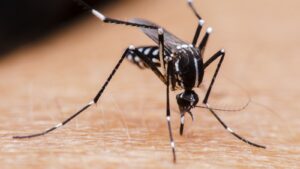
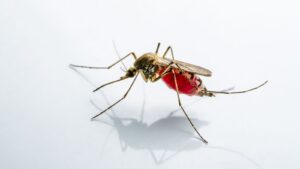
Personal repellent is important, but it does not reduce mosquitoes breeding in standing water or ticks waiting along brushy edges.
For mosquito pressure, CDC recommends a weekly water check: empty, scrub, turn over, cover or throw out items that hold water. For ticks, daily checks after yard time and prompt removal still matter.
Our mosquito and tick control programs are designed to reduce pest pressure around the property, while personal repellent adds another layer when you are outdoors.
When tick exposure is the main concern
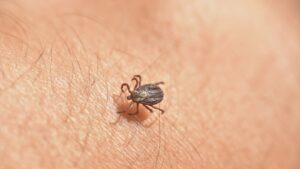
Ticks do not fly or jump. They wait in grassy, brushy and wooded areas and attach when people or animals brush past.
CDC tick-prevention guidance recommends EPA-registered repellents, protective clothing, treated gear and tick checks after outdoor activity.
For property-level help, see our tick control service.
Bottom line
What insect repellents actually work? EPA-registered products with proven active ingredients such as DEET, picaridin, IR3535, OLE/PMD or 2-undecanone can work well when used according to the label.
Choose by active ingredient, protection time and instructions—not by marketing language.
FAQ
What insect repellents actually work for mosquitoes and ticks?
A: Look for EPA-registered repellents with proven active ingredients like DEET or picaridin, and follow the label directions.
Detail: The active ingredient matters more than the brand name, and proper use matters more than the marketing on the front.
Is picaridin a good alternative to DEET?
A: Yes, picaridin is a solid option and many people like how it feels compared to DEET.
Detail: Check the label for intended pests and reapplication guidance, especially during long outdoor evenings.
Is DEET safe when used correctly?
A: Yes, when used as directed on the label, DEET is widely used and effective for mosquito and tick protection.
Detail: Using the right amount in the right places beats overdoing it, and label directions are the best guide.
What should I use on kids for mosquito protection?
A: Choose a proven repellent and apply it exactly as the label says for age and use.
Detail: Focus on key areas like ankles and wrists, and keep it simple instead of coating everything.
What can I use if I have sensitive skin?
A: Pick one product, test a small spot first, and stick to label directions so you’re not over-applying.
Detail: If irritation is common for you or your child, a quick call to a pediatrician or doctor can help you choose the best option.
Get Your Free Quote
Call or text: 888-229-0095
Email: jeff@mosquitoenemy.com | Contact us
It’s More Fun Outside! with Mosquito Enemy.