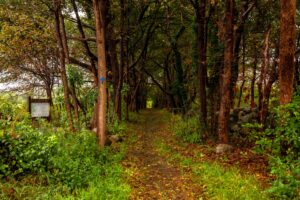
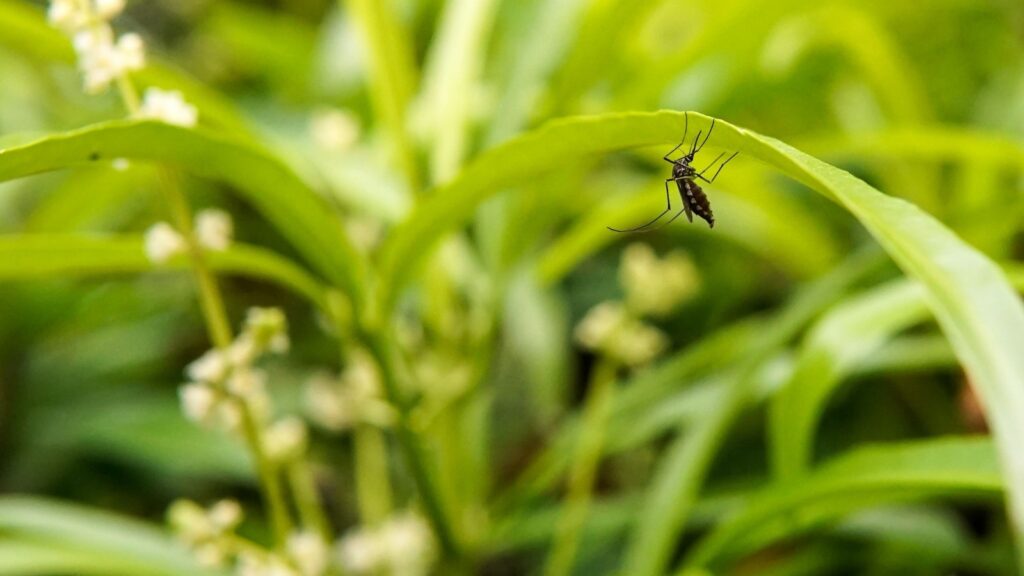
Shade and dense landscaping create the exact conditions mosquitoes need to survive the heat of the day. CDC guidance on adult mosquitoes notes that they commonly rest under plants, in dense brush or tall grasses, on the undersides of leaves, and in moist, shady areas. That helps explain why some of the most attractive yards in a neighborhood can also have heavy mosquito activity, a pattern our mosquito and tick control programs are built to address directly.
Mosquitoes Cannot Tolerate Direct Sun for Long
Adult mosquitoes are small, thin-bodied insects that lose moisture quickly when exposed to direct sunlight and heat. Without shelter, they dehydrate and become inactive within a short period of time. Shade solves this problem for them, allowing mosquitoes to rest through the hottest, brightest parts of the day and conserve energy for periods when conditions are more favorable.
Dense Shrubs Create Ideal Daytime Hiding Spots
Overgrown shrubs, hedges, and thick foundation plantings provide exactly the kind of low, sheltered space mosquitoes prefer for daytime rest. These areas stay cooler and more humid than open lawn, and their density protects mosquitoes from wind and direct exposure. Homeowners who want more examples can also see where mosquitoes hide during the day in a yard.
Layered Landscaping Traps Humidity Close to the Ground
Yards with layered plantings, such as taller shrubs positioned above groundcover or mulch beds, trap humidity close to the soil. This creates a consistently moist microclimate that benefits resting adult mosquitoes. Mulch beds in particular can retain dampness after rain, especially when shaded by taller plants above them; our guide to mulch beds, leaf piles, and mosquito pressure explains that relationship in more detail.
Overgrowth Multiplies the Available Shelter
As shrubs and hedges grow without regular trimming, they create more overlapping leaves and branches, which means more shaded pockets where mosquitoes can settle. An overgrown property does not just have a slightly larger version of the same problem; it often supports more usable resting habitat than a well-maintained one.
Landscaping Features That Tend to Attract the Most Activity
Certain landscaping choices are more likely to create favorable mosquito conditions than others:
- Dense, unpruned hedges along property lines or walkways
- Thick groundcover or ivy beds that retain moisture
- Layered plantings with limited airflow near the ground
- Mulch beds in heavily shaded areas
- Ornamental grasses or thick perennial beds left untrimmed through the season
Regular trimming and thinning can reduce some of this shelter, but most homeowners are not willing to remove the landscaping features that make their yard attractive in the first place, and doing so does not eliminate mosquito activity on its own.
Mosquito Enemy’s barrier treatments are applied to appropriate vegetation and resting areas according to the product label, including shaded shrubs, groundcover, and layered plantings where mosquitoes are likely to rest. This allows a yard to keep its mature trees and dense plantings while still addressing the habitat mosquitoes use during the day.
Questions Homeowners Ask About Shade and Mosquitoes
Do mosquitoes really prefer shady areas?
Yes. Adult mosquitoes commonly use moist, shaded vegetation as resting habitat because it protects them from direct sun, heat, and drying conditions.
Will trimming shrubs get rid of mosquitoes?
Trimming can reduce some resting habitat, but it usually will not eliminate mosquito pressure by itself. Nearby water, neighboring properties, woods, wetlands, and other vegetation can continue contributing mosquitoes to the yard.
Should mosquito treatment focus on shrubs instead of the open lawn?
Professional treatment should follow the mosquito habitat and the product label. Dense vegetation, shaded resting areas, and other appropriate targets generally matter more for resting adult mosquitoes than treating an open lawn as if every square foot were equally important.
If your landscaping seems to attract more than its share of mosquitoes, contact us and our team can evaluate which specific areas of your yard need attention.