
A hard freeze usually ends normal mosquito biting in our area, but a little white frost on the lawn does not automatically mean mosquito season is over in Massachusetts or southern New Hampshire.
Hey, I’m Jeff, your local pest control guy. Many homeowners see frost on the grass, pull a scraper across the windshield, and naturally think every mosquito outside must be finished for the year.
What matters is the difference between a light frost and a true hard or killing freeze. A light frost may damage tender plants and slow insect activity, while a hard freeze can dramatically knock down the exposed adult mosquitoes that are still active around the yard.
That distinction also matters because ticks do not follow the same shutdown. Mosquito pressure can effectively end for the season while adult blacklegged ticks remain capable of moving and finding hosts during later mild periods.
Light Frost and Hard Freeze Are Not the Same Thing
UMass Amherst describes a freeze as temperatures at or below 32°F and a hard freeze as sustained temperatures of about 28°F or lower. Its freeze-and-frost guidance also points out that frost can form under local conditions even when a nearby weather station reads several degrees warmer.
From a homeowner’s point of view, a light frost is often the morning when the grass looks white and a few tender annuals or chrysanthemums show damage, but plenty of vegetation still looks alive. That kind of event can slow mosquito activity without giving me confidence that normal seasonal pressure is completely finished.
A true killing freeze looks more decisive. The windshield may need a scraper or de-icer, annual flowers across the property can blacken or collapse, vegetable foliage is largely finished, and shallow water may show a skin of ice.
One hard freeze can be enough to change the mosquito picture dramatically; it does not require three identical nights in a row. Still, I treat 28°F as a useful field marker rather than a magic switch that guarantees every mosquito and every protected microhabitat experienced exactly the same temperature.
What a Hard Freeze Really Does to Mosquitoes
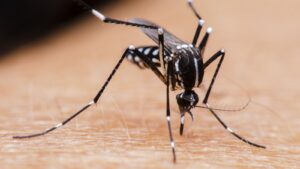
Massachusetts public-health guidance says mosquitoes generally remain active until the first hard frost. The state’s mosquito-repellent guidance uses that first hard frost as the practical end of the normal active mosquito season.
For exposed adult mosquitoes, a real hard freeze is the event that usually collapses the biting pressure homeowners have been dealing with through summer and early fall. After that, I do not consider one isolated mosquito on a strange warm afternoon evidence that the whole mosquito season restarted.
However, “mosquito season is over” does not mean “every mosquito life stage is dead.” Different species survive New England winter in different ways, which is why spring does not begin from zero.
A Killing Freeze Does Not Sterilize the Yard for Next Spring
Some mosquitoes survive cold weather as eggs, while northern house mosquitoes such as Culex pipiens can overwinter as adult females in protected shelters. Those strategies allow the population to bridge the winter even though normal fall biting pressure has ended.
Research on Culex pipiens in the Northeast shows that overwintering females enter diapause, stop seeking blood meals, and remain in protected sites until seasonal conditions change. If you want the broader winter explanation, read The Truth Behind Winter Mosquitoes in Massachusetts.
Other mosquitoes use hardy eggs as their winter strategy. The important lesson for homeowners is simple: frost ends the current flying season far more effectively than it ends the biological ability of mosquitoes to return when warmth and water come back.
For that reason, standing-water prevention still matters going into winter and early spring.
What If It Warms Back Up After the Hard Freeze?
New England weather can be ridiculous. We can have a hard freeze and then get a November afternoon that feels more like September, so homeowners understandably wonder whether the mosquitoes can simply come roaring back.
Normally, no. A later warm spell may make an isolated insect visible or wake activity in a protected microclimate, but that is not the same as rebuilding summer-level mosquito pressure after a true killing freeze.
I would not restart a mosquito route because somebody saw one mosquito after the seasonal shutdown. By that point, we are looking at the actual biology, the property, and whether there is meaningful biting pressure rather than chasing a single insect on an odd warm day.
Microclimates Mean Your Town May Freeze Before the Next Town
One of the biggest mistakes is assuming that one weather-station reading tells us what happened at every Mosquito Enemy property that night. It does not.
UMass freeze data warns that actual frost dates can vary considerably because of air drainage, site conditions, elevation, nearby water, and local heat retention. Its Massachusetts freeze/frost tables show how widely the 28°F threshold can vary even among Massachusetts locations.
My horticulture training taught me about microclimates long before I was in mosquito control because weather was part of everyday decision-making.
The same thing happens with snow. I can see slush in West Newbury and drive only a few miles inland to find several inches of white snow on the ground.
So when one town reports 28°F and the next town bottoms out at 33°F, I do not pretend the mosquito season ended identically across the whole service area. Mother Nature does not operate on municipal boundaries.
Why Most Customers Finish Before the Biology Is Completely Finished
By around the first week of October, most Mosquito Enemy customers have completed the regular seasonal schedule. A smaller group chooses additional late-season applications because they are still grilling, gardening, reading on the deck, working around the yard, or simply enjoying mild fall evenings.
That difference is important because customer behavior and mosquito biology are not the same thing. A family can be mentally finished with the yard before the mosquitoes are biologically finished for the year.
For the broader late-season picture, The September Surprise: Why Mosquitoes Can Still Be Severe After School Starts explains why school calendars, pool covers, and earlier sunsets do not automatically end pest activity.
If a customer tells me they are done using the yard, I am not going to argue them into an extra mosquito application. When somebody is still outside regularly and we have not had the killing freeze, continuing later can make sense because the exposure and the pest activity are still real.
Late-Season Mosquito Disease Risk Does Not End With Labor Day
There is another reason I do not treat the first cool morning as an automatic all-clear: mosquito-borne disease risk can continue late into the season.
Massachusetts DPH has repeatedly warned that risk from Eastern equine encephalitis and West Nile virus can continue until the first hard frost. State EEE guidance also notes that most EEE infections occur by the end of September, while some risk can remain after that until a hard frost finally shuts mosquito activity down.
That does not mean every late-season mosquito is infected or that homeowners should panic. It means a chilly week or a little frost on the lawn should not be mistaken for the biological end of every mosquito concern.
When mosquitoes are still active, personal bite prevention still matters. An EPA-registered repellent, appropriate clothing, and common-sense timing outdoors remain useful until the season truly winds down.
The Hard Freeze Ends Mosquito Season Before It Ends Tick Season
This is the part I most want homeowners to remember: mosquitoes and ticks do not shut down together.
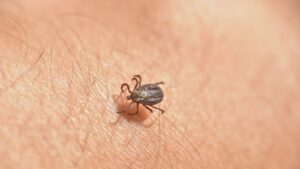
Massachusetts says adult blacklegged ticks can be out searching for a host any time winter temperatures rise above freezing. The state’s tick-borne disease prevention guidance makes that distinction very clear.
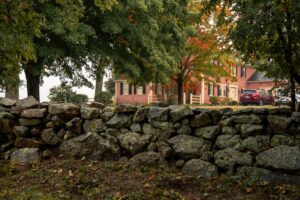
A killing frost that essentially ends normal mosquito biting can leave plenty of tick concern around lawn-to-woods edges, stone walls, leaf litter, brush, and the routes dogs use every day. Mild, snow-free periods later in fall or winter can still create opportunities for exposure.
That is why I treat winter tick activity as a separate conversation. Our article Are Ticks Active in Winter in MA & NH? explains what homeowners and dog owners should watch for after mosquito season is already finished.
How Late Can Tick Treatment Continue?
If mosquito pressure is done but ticks are still a concern, the property can still have a reason for late-season tick work. As long as the target habitat is accessible, the conditions are suitable, and the applicable pesticide label allows the application, tick treatment can continue after the mosquito part of the season has shut down.
Snow cover eventually changes the practical answer because you cannot properly reach the ground-level habitat when it is buried. Before that happens, fall cleanup and tick checks still matter, especially for homes with dogs, stone walls, woods, brush, or regular wildlife traffic.
This is also a good time for one final cleanup of leaves and debris in the high-use parts of the yard. Removing harborage does not eliminate every tick, but it supports the same integrated approach we use throughout the season.
Weather Should Guide the Decision, Not One Date on the Calendar
Weather already changes mosquito and tick work throughout the season, and our guide to how weather affects mosquito and tick treatments explains why temperature, rain, wind, and actual site conditions matter more than a single forecast icon.
Fall is no different. A light frost can be a warning that the season is winding down, while a hard freeze around 28°F is a much more meaningful biological turning point for exposed adult mosquitoes.
Even then, I look at the actual property and the local weather because microclimates can make nearby yards behave differently. The goal is not to force another treatment or stop one too early; it is to understand what Mother Nature actually did.
The Bottom Line: Frost Is a Signal; a Hard Freeze Is the Real Shutdown
A little frost on the lawn does not automatically end mosquito season. The more meaningful event is a true hard or killing freeze, which dramatically reduces exposed adult mosquitoes and usually ends normal biting pressure in Massachusetts and southern New Hampshire.
Next, remember that the freeze does not erase overwintering eggs or protected adult mosquitoes, so spring can still restart the cycle. Most importantly, do not assume ticks received the same shutdown notice, because adult blacklegged ticks can remain active during later mild periods above freezing.
Watch the actual yard, the weather, and how your family uses the property. That approach is more useful than circling one date on the calendar and pretending every pest disappears at midnight.
Frequently Asked Questions
Q: Does a light frost kill mosquitoes?
A: Not necessarily. A light frost can slow mosquito activity and kill some exposed insects, but it is not the same as the hard killing freeze that usually ends normal mosquito pressure in our area.
Q: What temperature is considered a hard freeze for mosquitoes?
A: Roughly 28°F sustained for a period of time is a useful hard-freeze benchmark. UMass uses 28°F or lower for a hard freeze, although the actual temperature experienced by insects varies with shelter, elevation, ground conditions, and microclimate.
Q: If it warms up after a hard freeze, can mosquitoes come back?
A: You may occasionally see an isolated mosquito during a later warm spell, but a true hard freeze usually ends normal seasonal biting pressure. Some species survive winter in protected forms, yet that does not mean summer-level mosquito activity has restarted.
Q: Does a hard freeze kill mosquito eggs too?
A: No. Some mosquito species survive winter as cold-hardy or dormant eggs, while others such as northern Culex can overwinter as protected adult females. A hard freeze ends much of the active adult pressure without sterilizing the property for next spring.
Q: Are EEE and West Nile still a concern after the first light frost?
A: Potentially, yes, if mosquitoes are still active. Massachusetts DPH advises that mosquito-borne disease risk can continue until the first hard frost, so a little frost on the grass is not an automatic all-clear.
Q: Are ticks still active after a hard freeze?
A: Yes. Adult blacklegged ticks can search for hosts during fall and on winter days when temperatures rise above freezing. Mosquito season can be effectively finished while tick exposure remains possible.
Q: Can one town get a killing freeze while a nearby town does not?
A: Absolutely. Elevation, cold-air drainage, coastal influence, nearby water, vegetation, and other microclimate effects can create different temperatures only a few miles apart. One regional weather reading does not tell us exactly what happened in every yard.
Q: Should I keep mosquito treatments going until the first hard freeze?
A: It depends on whether you are still using the yard, whether mosquitoes remain active, and where you are in your service schedule. Most Mosquito Enemy customers finish the regular program by early October, while a smaller group chooses extra late-season applications when conditions and outdoor use justify them.
Still Using Your Yard Before the Killing Freeze?
When mosquitoes are still active or fall ticks are keeping you from comfortably using the property, Mosquito Enemy can help you decide what still makes sense for your yard instead of relying on a calendar date alone.
Call or text: 888-229-0095
Learn more about Mosquito Enemy Mosquito & Tick Control
It’s More Fun Outside! with Mosquito Enemy.