
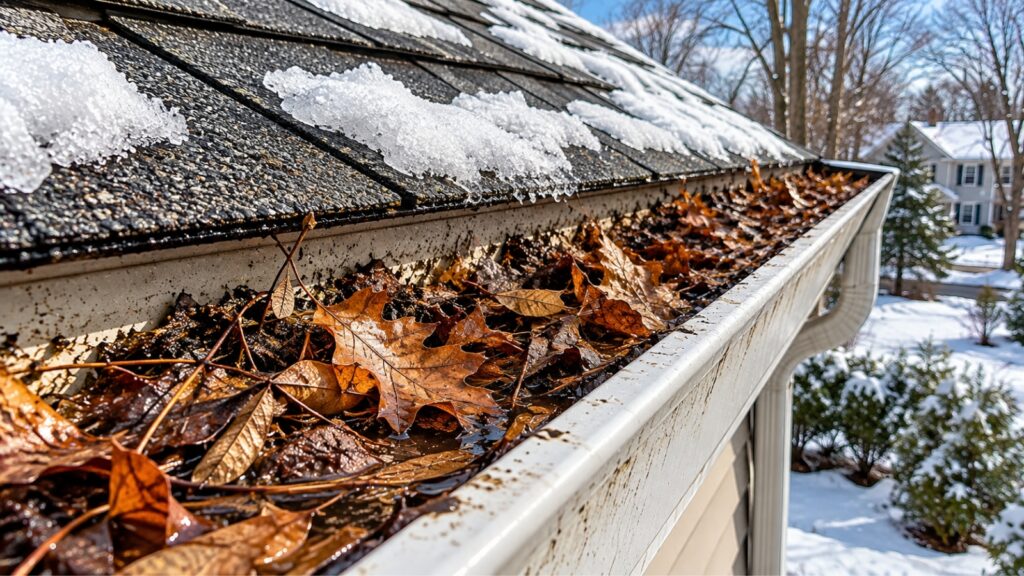
Gutters filled with leaves and debris can hold water, overflow beside the house, freeze into heavy blockages, and send winter melt in the wrong direction. The effects often develop at the roof edge, along siding and fascia, in landscaping, and near the foundation. Mosquito Enemy provides ladder-free gutter cleaning across its Massachusetts and New Hampshire service area before winter conditions settle in.
Wet Debris Becomes Dense and Difficult to Drain
Dry leaves seem light when they first enter a gutter. Rain compresses them around twigs, roof grit, seeds, and needles. The resulting layer can cover the downspout inlet or form a dam within the channel. Water then pools behind the obstruction or spills over the nearest edge.
Repeated freezing adds another complication. Water held inside the debris turns to ice, then receives more water during the next thaw or rain. The channel may remain blocked even when the visible snow begins to melt. A gutter that enters winter clear has more room to carry that water toward its downspouts.
Overflow Can Reach Siding and Exterior Wood
A blocked gutter redirects water over the front or behind the back edge. Repeated wetting can leave streaks on siding and keep fascia, soffit areas, and trim damp. Paint may peel, wood may soften, and joints may remain wet longer than they would under normal drainage.
These symptoms deserve inspection because several building conditions can produce similar stains. A roof leak, failed joint, poor pitch, undersized gutter, or damaged flashing may also contribute. Cleaning removes the obvious obstruction and makes the remaining drainage pattern easier to evaluate.
Ice Adds Weight at the Roofline
Frozen water and saturated debris add weight to a gutter system. Existing loose fasteners or weak fascia can worsen under that load. Sagging changes the slope of the channel and creates low spots that retain even more water.
Gutter ice and roof-edge ice also create different problems that may appear together. Heat loss through the roof can contribute to ice dams, while clogged gutters restrict drainage at the edge. Clearing gutters supports drainage, although attic insulation, ventilation, roofing, and weather conditions may need separate attention when ice repeatedly forms along the eaves.
Water Can Collect Beside the Foundation
Gutters and downspouts are designed to move roof runoff away from the structure. Overflow drops concentrated water beside the home, where it can erode soil, wash mulch, damage plantings, and create wet areas near the foundation. Freeze-thaw cycles can then act on saturated soil and existing cracks.
Downspout discharge also needs a clear route. An open gutter offers limited benefit if an extension is missing, crushed, disconnected, or aimed toward the house. During a rain, watch where the water exits and whether it continues away from the foundation.
Winter Hides the Original Blockage
Snow can cover leaves and make a clogged section look like an ordinary winter gutter. The first visible symptom may be overflow during a thaw, an icicle cluster below one section, or water staining that appears indoors or outside. By that point, cold surfaces and accumulated snow can make access harder.
Late-fall cleaning creates a clearer baseline. If water still behaves poorly afterward, the owner can investigate pitch, joints, downspouts, roof drainage, or building-envelope concerns with the appropriate professional. A channel packed with leaves makes that diagnosis less direct.
Debris Can Carry Into Spring
Material left through winter remains in place when spring rain begins. New seeds, blossoms, roof grit, and early plant debris can join the existing mass. Pools of water may then persist in low sections as temperatures rise.
Standing water near the roofline also creates a potential mosquito breeding source once conditions become warm enough. Clearing the system before winter reduces the amount of organic material that sits there for months and gives spring water a better route out of the gutter.
Safe Cleaning Requires the Right Conditions
Cold roofs, wet ground, and frost raise the risk of ladder work. Reaching sideways from a ladder or stepping onto a roof adds another hazard. Timing service after the main leaf drop and before persistent ice provides safer, more workable conditions.
Mosquito Enemy uses a SkyVac system with high-reach poles and closed-circuit video. We vacuum debris from the ground, check downspout inlets, and use the camera to verify the visible channel. The contained system keeps wet gutter material from being washed across the property.
A Clean Gutter Still Needs Observation
After cleaning, watch the system during the next rain when it is safe to do so from the ground. Water should move through the channel and discharge from the downspout. Look for drips at seams, overflow at roof valleys, sagging, or water returning toward the house. Those observations can identify repairs outside the scope of routine cleaning.
Homes beneath heavy tree cover may need spring and fall visits. Mosquito Enemy generally recommends at least annual cleaning, usually in fall after leaves have dropped, and offers service from April through December. A twice-yearly schedule can suit properties with recurring accumulation.
Winter Maintenance Continues at Ground Level
Keep downspout outlets visible after snow removal and avoid piling shoveled snow directly against them. Packed snow can block discharge during a thaw and send water back toward the wall. Check extensions after storms because snowblowers, plows, and foot traffic can disconnect or crush them.
Observe icicles from a safe distance. A concentrated cluster beneath one gutter section can identify where water is escaping, though icicles alone cannot establish the cause. Note the location and share it with the professional evaluating the gutter, roof edge, insulation, or ventilation.
Entering winter with clear gutters helps roof runoff and meltwater follow the intended drainage path. If leaves are packed into the channel or you have seen overflow during fall rain, contact Mosquito Enemy to arrange gutter cleaning before freezing weather locks the debris in place.