Hey, I’m Jeff, your local pest control guy. One of the biggest misconceptions I hear about tick control is that more product over more square footage automatically means better protection. It does not. A good tick treatment starts by finding the habitat where ticks are most likely to survive and where people or pets are most likely to encounter them.
For most residential properties in northeastern Massachusetts and southern New Hampshire, that means paying close attention to the transition where maintained lawn meets woods, brush, shaded groundcover, stone walls, or other protected habitat. Open sunny lawn can still have an occasional tick, especially when wildlife drops one there, but the middle of the lawn is usually not where I want to concentrate a tick barrier. The goal is targeted coverage, not treating every green square foot just because it is there.
A Tick Barrier Is a Targeted Zone, Not an Invisible Wall
When I use the phrase tick barrier, I am talking about a treated zone placed where tick exposure is most likely, not a magical line that no tick can cross. Host animals can move ticks around a property, pets can pick them up beyond the treated area, and different tick species do not all behave exactly the same way. That is why I would rather build the treatment around habitat than make promises about an invisible wall.
University of Maine Tick Lab guidance explains that ticks are highly susceptible to drying out and generally need relatively humid habitat. Wooded areas, tall grass, brush, leaf litter, groundcover, stone walls, woodpiles, and the edge where woods meet lawn are all common places to look. By comparison, bright, sunny, well-maintained lawn is less favorable for blacklegged ticks.
That habitat pattern is also why our professional tick control does not begin with the question, “How much lawn do you own?” Instead, I want to know where the maintained yard ends, what sits beyond it, where the shade and moisture stay longest, and how the family actually uses the property.
Start With the Lawn-to-Woods Transition
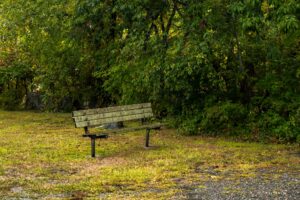
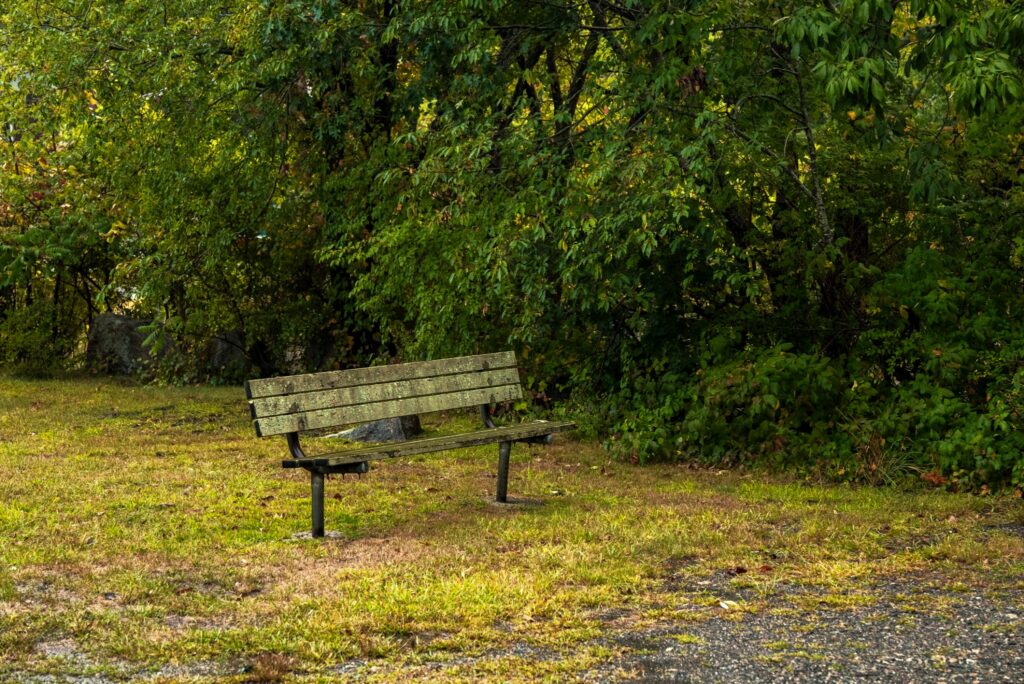
On a typical wooded property, the most important line is where the manicured lawn meets the unkept or wooded side of the yard. That edge may be obvious forest, but it can also be a row of hemlocks, yews, dense shrubs, groundcover, or another shaded transition. I want the technician thinking about those places first.
Research supports that focus. The CDC recommends clearing tall grass and brush at lawn edges and notes that fewer blacklegged ticks are found on well-maintained lawns that are separated from brushy or grassy habitat. University of Maine guidance likewise says habitat-targeted pesticide applications should focus primarily on wooded areas around the home, woodland borders, ornamental plantings, and stone walls, always according to the pesticide label.
If you want to see the habitat clues we are looking for before treatment, our guide to where ticks hide in a yard goes deeper into leaf litter, wooded edges, groundcover, and protected areas. The important point here is placement: the edge is usually more important than the open center of the lawn.
Why We Usually Do Not Treat the Middle of the Lawn the Same Way
Homeowners sometimes ask us to treat every inch of lawn because it feels more complete. I understand the instinct, but a blanket approach can spend time and product in places that are not the highest-value tick habitat. Sun, heat, lower humidity, short turf, and regular disturbance generally make exposed lawn less favorable than shaded edges and protected vegetation.
A tick can still show up in open grass. Wildlife such as a deer, mouse, dog, squirrel, or another host may carry a feeding tick across the property, and that tick can drop wherever the blood meal ends. Cooler, damper spring and fall conditions may also make an open area temporarily more survivable than it would be during the hottest, driest part of summer.
Even so, finding one tick in the lawn does not automatically mean the whole lawn should become the main treatment target. We keep the focus on the places where ticks are more likely to persist and where exposure is more likely to repeat.
Driveways, Patios, and Bare Dirt Can Be Natural Breaks
A tick barrier does not need to form one unbroken chemical ring across every surface around the property. Driveways, patios, walks, and other hard surfaces can interrupt the treatment line without creating a reason to apply product there. With granular products in particular, the label directs applicators to keep material on the intended turf area rather than leaving granules on pavement.
Bare dirt can be a similar judgment call. A dry round pen, compacted path, or other open dirt area is not automatically treated just because it sits inside a fence. If vegetation, leaf litter, shade, or a wooded trail begins again on the other side, that habitat can become the next place to evaluate.
Paths leading into woods deserve attention for a different reason: people and pets actually use them. When a trail leads toward a brush pile, leaf-dumping area, firewood, or another shaded zone, the route itself can become part of the exposure picture even though a nearby driveway does not need treatment.
Granular Tick-Only Service and Liquid Mosquito-and-Tick Service Are Different Programs
Mosquito Enemy uses two different approaches depending on what the customer is buying. If a homeowner only wants tick control, our tick-only program uses a granular formulation and is normally built around three seasonal visits: spring, early summer, and early fall. Those are operating windows, not a promise that every customer is treated on the exact same calendar day.
Customers who want both mosquito and tick control normally receive our liquid mosquito-and-tick program. That program uses a different application method and schedule because mosquitoes and ticks use the property differently, even though some treatment zones overlap. Our explanation of mosquito control versus tick control breaks down why shaded foliage can matter more for adult mosquitoes while ground-level edge habitat matters heavily for ticks.
In either program, label directions control where and how a pesticide can be applied. The technician’s job is to match the labeled treatment method to the actual property, not force every yard into the same pattern.
The Foundation Can Create a Second Tick-Risk Zone
Foundation areas are another place I check beyond the outer lawn-to-woods edge. Often, two sides of a house are shaded for much of the day, while irrigation, gutter runoff, dense foundation plantings, and mulch can keep those areas cooler and damper. Moisture and shade can create another protected zone close to where people and pets enter the home.
For that reason, a tick-only treatment plan may include labeled turf or perimeter areas around the house in addition to the outer property edge. Isolated planting beds inside the lawn can also deserve attention when they create their own shaded, moisture-holding island. Rather than treating those features just because they are decorative, we look at whether they actually resemble tick habitat.
Stone walls and brush piles can add another layer, but I do not want to repeat an entire article here. Our tick hot-spot guide explains why loose stone, trapped leaves, groundcover, and wildlife activity can make some walls and piles more important than others.
A Physical Gravel Barrier Is Different From a Pesticide Barrier
Homeowners sometimes use the word barrier to mean a strip of crushed stone or gravel between the lawn and woods. That is a landscaping strategy, not the same thing as a pesticide application. CDC currently recommends a 3-foot-wide strip of wood chips or gravel between lawns and wooded areas to discourage contact with brushy or grassy borders.
I do not think every property needs a stone moat around the entire lawn. Where I especially like extra separation is near a children’s play area that sits close to wooded habitat. If the property has room, my field preference is often a wider 6-to-10-foot crushed-stone separation near that high-use area, while recognizing that the CDC recommendation starts at 3 feet and no stone strip should be described as impenetrable.
Maintenance matters too. Once leaves, weeds, ivy, pachysandra, or other organic material fill a gravel strip, the homeowner can recreate the cool protected conditions the strip was supposed to separate from the play or lawn area.
What If the Neighbor’s Woods Start at Your Property Line?
Property lines are one of the reasons there is no universal drawing for tick control. A customer may have a beautifully maintained lawn while dense brush begins immediately on the neighbor’s side. We do not treat someone else’s property without permission, and a treatment on your side cannot guarantee that wildlife will never carry another tick across the line.
On some properties, a labeled granular turf strip along the customer’s side can be useful as an added buffer even when that side is relatively open. Many other yards do not need that extra treatment because there is little habitat there. The technician has to make the call based on vegetation, boundaries, use patterns, and the label.
If neighboring habitat is part of your concern, read our explanation of whether mosquito and tick control can still work when neighbors do nothing. You can improve the property you control without pretending the surrounding landscape has disappeared.
Large Properties Do Not Mean Treating Every Acre
A five-acre or ten-acre parcel may have only a half-acre of maintained living space around the house. In that situation, I do not assume the customer needs every wooded acre treated. My focus is the yard they actually use, the transition around that yard, and other high-contact habitat that can be serviced legally and effectively.
The same principle applies to a small suburban lot. A narrow strip of dense shade, a wet foundation bed, or a wooded trail may matter more than the total square footage on a tax map. That is why inspection and property notes are part of how our program works before a technician decides where treatment belongs.
Horse, Pony, and Donkey Properties Need a Site-Specific Plan
Equestrian properties are common enough in our service area that they deserve a separate note. A horse property may include grass paddocks, fence lines, shaded edges, and a bare-dirt round pen or exercise area, and those surfaces should not automatically be treated as if they are the same.
Bare dirt is usually not a reason by itself to apply a turf tick product. Grass and vegetation can change the habitat picture, but animal-use areas also raise specific pesticide-label questions about approved sites, grazing, feed, water, and re-entry. For that reason, any paddock or livestock-area treatment has to be matched to the exact product label rather than assumed from a normal residential lawn program.
That is one area where I would rather be conservative than make a blanket promise. A good plan can still address fence lines, nearby tick habitat, and the parts of the property people and animals use, but the approved site and application method come first.
One Treatment Is Not a Whole-Season Tick Program
One more misconception I hear is, “Just give me one tick application and I’m good for the year.” That is not how I build a seasonal program. Tick activity changes through spring, summer, and fall, and host animals can keep reintroducing ticks from surrounding areas.
Our tick-only program is designed around three seasonal visits rather than one annual pass. The combined liquid mosquito-and-tick program follows its own schedule. If you want the deeper timing explanation, our article on how often a yard should be treated for ticks explains why frequency depends on the program, season, pressure, and product label.
Customers who stay on the program rarely call me with ongoing tick complaints, but I still do not call any yard tick-free. A dog that wanders into untreated woods or a deer crossing the lawn can change exposure even when the treated portions of the property are performing well.
Tick Barrier Placement: Follow the Habitat
The best tick barrier is placed where the biology and the property meet: lawn-to-woods transitions, shaded groundcover, appropriate perimeter zones, isolated high-risk beds, trails, and other places where ticks and hosts are more likely to overlap. Open sunny lawn, pavement, patios, and bare dirt usually deserve less attention unless the actual conditions give us a reason to think differently.
Every property still needs judgment. A barrier can have breaks, a neighboring property can add pressure, and a physical gravel strip can help separate high-use areas without becoming an absolute guarantee. Most importantly, the pesticide label decides where a product may legally be applied, even when a homeowner asks us to treat more.
If you are comparing treatment plans, start with one question: is the company treating the habitat that matters, or simply spraying the largest area it can point to? That difference is a big part of professional tick control.
Frequently Asked Questions
Q: Where should a tick barrier treatment be placed in my yard?
A: Start with the transition where maintained lawn meets wooded, brushy, shaded, or otherwise favorable tick habitat. Other areas such as shaded foundation plantings, isolated groundcover beds, stone-wall edges, and frequently used wooded paths may also matter when the product label allows treatment there.
Q: Do I need to treat my entire lawn for ticks?
A: Usually not. Open, sunny, well-maintained lawn is generally less favorable to blacklegged ticks than shaded leaf litter, brush, wooded edges, and protected groundcover. An occasional tick can still be dropped in the lawn by wildlife or pets, but that does not make every square foot an equally important target.
Q: Does a gravel or crushed-stone strip stop ticks from crossing?
A: Never treat a physical barrier as tick-proof. The CDC recommends a 3-foot wood-chip or gravel strip between lawn and woods to discourage contact with brushy borders, and a dry maintained strip can help separate high-use space from tick habitat. Leaves, weeds, and groundcover should not be allowed to fill the strip back in.
Q: Does a tick barrier need to be continuous around the whole property?
A: No. Driveways, patios, walkways, and other low-value hardscape can create natural breaks, while wooded paths, shaded edges, and vegetation may deserve treatment on the other side. The plan should follow habitat and the product label instead of drawing a perfect circle on a map.
Q: What if my neighbor’s woods or brush starts right at my property line?
A: You can still improve the property you control. Treatment stays on the customer’s property unless there is permission to go elsewhere, and the technician may use an appropriate labeled edge treatment or buffer on your side. Neighboring habitat can add pressure, so no barrier should be sold as an absolute wall against reintroduction.
Q: Is one tick treatment enough for the whole season?
A: I do not recommend treating one application as a full-season program. Tick activity changes across spring, summer, and fall, and wildlife can keep moving ticks through the landscape. Mosquito Enemy’s tick-only program uses three seasonal visits, while our combined mosquito-and-tick program follows a different liquid-treatment schedule.
Q: What is the difference between granular tick-only service and liquid mosquito-and-tick service?
A: The granular program is for customers who only want tick control, while the liquid program is designed to address both mosquitoes and ticks. Each program has different application methods, target zones, and schedules, and both must stay within the directions on the product label.
Q: Can tick control be done on a property with horses or donkeys?
A: Yes, but equestrian properties need a site-specific plan. Grass paddocks, fence lines, bare-dirt round pens, feed and water areas, and animal re-entry all raise different questions, so the exact pesticide label must support the treatment site and application method before work is done.
Need Help Deciding Where Tick Treatment Belongs?
If you are not sure whether your highest-risk area is the woods edge, foundation plantings, a stone wall, a trail, or another part of the yard, Mosquito Enemy can help you sort out what deserves attention and what does not. Learn more about our professional tick control program, or Call or text: 888-229-0095 to talk through your property. You can also contact Mosquito Enemy online.
It’s More Fun Outside! with Mosquito Enemy.