
I’m Jeff, your local pest control guy.
If your yard feels worse than everyone else’s, you’re not imagining it.
A few small things can turn a normal yard into a mosquito and tick magnet.
This backyard mosquito tick risk checklist is how I find the problem fast.
Grab a coffee.
Walk your yard once.
Ten minutes is enough.
Related reading
- Why Mosquito Treatments “Work for a Few Days”… Then Fail
- Tick Control for Wooded Yards & Dogs (MA + NH)
Quick Answer
Most bad yards have the same three problems: water, shade, and edges.
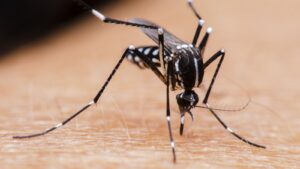
Water makes mosquitoes.
Shade holds mosquitoes.
Edges are where ticks live.
Fix a few items and the yard usually improves fast.
How to use this checklist
Walk the property like a mosquito.
Think like a tick too.
Start at the house.
Circle the yard.
End at the woods line or the far fence.
Look for the easy stuff first.
Spot the hard stuff next.
Mosquito checklist: breeding water
Water is the factory.
Small water makes big problems.
Check these places:
- Anything that holds water for more than a day
- Tarps that sag and form puddles
- Toys, buckets, plant trays, and wheelbarrows
- Low spots that stay wet after rain
- Drainage areas that stay soggy
Pay attention to the house line too.
Overflow from clogged Gutter Cleaning problems can create wet foundation zones.
Those damp pockets can feed mosquito pressure right where you walk and sit.
Mosquito checklist: resting zones
Mosquitoes don’t just fly around.
They rest.
Shade is their favorite place to hide.
Check these spots:
- Dense shrubs near patios and decks
- Under decks and stair landings
- Shady fence lines with thick growth
- Wood piles and brush piles near seating areas
- Any cool, damp corner that stays shaded
That’s where a good barrier plan focuses.
Spraying the middle of the lawn is rarely the main battle.
Tick checklist: edges and hot spots
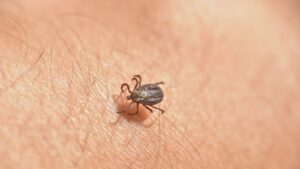
Ticks are an edge problem.
Short grass in the middle of the yard is not usually the worst area.
Check these hot spots:
- Woods line borders
- Brush edges and tall weeds
- Stone walls and rock piles
- Leaf litter along the perimeter
- Paths where deer and wildlife travel
Dogs find those edges fast.
Kids find them too.
That’s why tick control needs a targeted plan.
Service details are here: Tick Control.
What to fix yourself first
Start with the stuff you can change today.
Dump standing water once a week.
Flip anything that holds rainwater.
Trim thick brush near the areas you use.
Clean leaf litter along play and pet zones.
Open up airflow near seating when possible.
Small changes stack.
When to add Egg & Larvae Control
Some yards keep reloading no matter how careful you are.
That’s usually because you can’t control every breeding pocket.
Water might be on the neighbor’s side.
Drainage might be part of the property design.
Wet weather can create new pockets fast.
That’s when this add-on makes a lot of sense:
Egg & Larvae Control is not a stand-alone service.
That program strengthens the barrier plan by targeting breeding areas so fewer new mosquitoes hatch between visits.
When to stop DIY and call a pro
Time matters.
Comfort matters too.
Call when the yard still feels unusable after you fix the easy stuff.
Reach out when ticks are showing up on pets or kids.
Ask for help when wet pockets and shade keep winning.
Program options are here: Mosquito + Tick Programs.
FAQ
What is the fastest thing to check on this backyard mosquito tick risk checklist?
A: Standing water.
Detail: Water is the breeding factory, so removing it gives the fastest improvement.
Why is my yard worse than my neighbor’s?
A: Shade, moisture, and edges can be totally different lot to lot.
Detail: A few damp pockets or thicker shrubs can turn one yard into the resting zone.
Do mosquitoes breed in grass?
A: Not usually.
Detail: Mosquitoes need water to breed, then they rest in shade and thick landscaping.
Where should I look first for ticks?
A: Edges near woods, brush, stone walls, and leaf litter.
Detail: Tick pressure usually lives where the lawn meets wild areas and wildlife paths.
When should I add Mosquito Egg & Larvae Control?
A: Add it when the yard keeps reloading between visits or after wet weather.
Detail: Water-stage control helps reduce how many new adults hatch on the property.
Do clogged gutters really affect mosquitoes?
A: Overflow can create wet pockets near the foundation.
Detail: Damp soil near the house supports mosquito pressure close to where you spend time.
Related Resources
- Mosquito + Tick Programs
- Mosquito Egg & Larvae Control
- Tick Control
- Home Shield Protection
- Stinging Insect Control (MA only)
- Rodent Control (MA only)
- Gutter Cleaning
- Service Area
- Contact us
Top towns we service
Don’t see your town? See the full list here: Service Area
- Amesbury MA
- Andover MA
- Byfield MA
- Georgetown MA
- Groveland MA
- Haverhill MA
- Hampton NH
- Merrimac MA
- Newbury MA
- Newburyport MA
- North Andover MA
- Rowley MA
- Salisbury MA
- Seabrook NH
- Topsfield MA
- West Newbury MA
It’s More Fun Outside! with Mosquito Enemy.