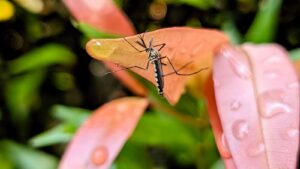

I’m Jeff, your local pest control guy.
If you’ve got sprinklers and the yard still feels buggy, you’re not crazy.
A sprinklers mosquito problem is real.
Watering can quietly keep the “mosquito hotel” open all season.
Nothing’s wrong with you.
Moisture is the switch.
Related reading
- Why Mosquito “Waves” Happen (And What To Do)
- Why Mosquito Treatments “Work for a Few Days”… Then Fail
Quick Answer
Sprinklers can make mosquitoes worse when they keep shade zones damp.
Wet shade gives adults a resting spot close to where you sit.
Standing water creates the next wave.
Small changes to watering can improve results fast.
Sprinklers mosquito problem: what’s really happening
Most people think mosquitoes are a “grass” problem.
Real life is different.
Mosquitoes rest in shade.
Moist shade is even better for them.
So if sprinklers are soaking shrubs and shady corners every morning, that yard stays inviting.
Water can also create breeding pockets.
Puddles form in low spots.
Trays and containers fill up.
That combination is how a sprinklers mosquito problem builds.
The 3 sprinkler mistakes that feed mosquitoes
First: watering too often.
Daily watering keeps the yard damp.
Damp zones hold mosquitoes close.
Second: watering the wrong areas.
Spraying shrubs and foundation plantings creates wet resting zones.
Those are the same areas people walk past and sit near.
Third: watering at the wrong time.
Night watering keeps things wet when mosquitoes are most active.
Early morning watering can still be fine, but constant saturation is the issue.
What to change right now
Small adjustments help more than most people expect.
Start with frequency.
Water less often, but water deeper.
Then reduce overspray onto shrubs.
Next, fix low spots that pool water.
Keep it simple:
- Stop soaking shady shrub zones every day
- Fix sprinkler heads that hit bushes and foundation plantings
- Reduce pooling in low spots after irrigation
- Dump containers that collect water (toys, trays, buckets)
Overflow next to the house matters too.
Clogged Gutter Cleaning issues can keep foundation soil wet and mosquito-friendly.
Will sprinklers ruin a treatment?
Not automatically.
Daily soaking can reduce how long results hold on treated surfaces.
That is especially true when irrigation hits shrubs and shaded resting zones.
So if your watering schedule is heavy, tell your technician.
Plans work best when they match reality.
The missing piece most yards need when water stays around
Adult control can feel great fast.
New adults can still show up later.
Breeding water is usually the reason.
That is why we offer this add-on: Mosquito Egg & Larvae Control.
Egg & Larvae Control is not a stand-alone program.
This add-on strengthens your plan by targeting breeding areas so fewer new mosquitoes hatch between visits.
Less hatching means fewer new biters showing up after wet stretches.
What Mosquito Enemy does different
Most competitors focus mainly on adult spraying.
Our approach goes deeper when the yard needs it.
When we combine the right programs, we can hit eggs, larvae, and adults.
That’s 3 of the 4 life stages.
Pupae are the only stage that can’t be controlled because they don’t feed.
Program details live here: Mosquito + Tick Programs.
Quick tick note
Ticks like moisture too.
Edges stay cooler and damper than the open lawn.
Brush lines, leaf litter, and stone walls are classic tick zones.
Need tick help? Start here: Tick Control.
FAQ
Can sprinklers cause a mosquito problem?
A: Yes, when they keep shade zones damp.
Detail: Wet shade creates resting spots close to patios and doors, and pooling water can create breeding pockets.
What sprinkler change helps the most?
A: Water less often and stop soaking shrubs.
Detail: Deep, less frequent watering helps the lawn while reducing mosquito-friendly damp pockets.
Should I water at night?
A: Night watering often keeps things wet when mosquitoes are active.
Detail: Morning watering can be fine, but constant saturation is what creates the problem.
Do sprinklers make treatments “not last”?
A: Heavy irrigation can reduce longevity on treated surfaces.
Detail: Overspray onto shrubs and shady resting zones is the most common issue.
When should I add Egg & Larvae Control?
A: Add it when the yard keeps reloading after wet weather.
Detail: Water-stage control reduces how many new adults hatch on the property between visits.
What’s one quick check for hidden breeding water?
A: Look for puddles that last more than a day.
Detail: Low spots after irrigation and wet foundation pockets are common breeding triggers.
Related Resources
- Mosquito + Tick Programs
- Mosquito Egg & Larvae Control
- Tick Control
- Home Shield Protection
- Stinging Insect Control (MA only)
- Rodent Control (MA only)
- Gutter Cleaning
- Service Area
- Contact us
Top towns we service
Don’t see your town? See the full list here: Service Area
- Amesbury MA
- Andover MA
- Byfield MA
- Georgetown MA
- Groveland MA
- Haverhill MA
- Hampton NH
- Merrimac MA
- Newbury MA
- Newburyport MA
- North Andover MA
- Rowley MA
- Salisbury MA
- Seabrook NH
- Topsfield MA
- West Newbury MA
It’s More Fun Outside! with Mosquito Enemy.