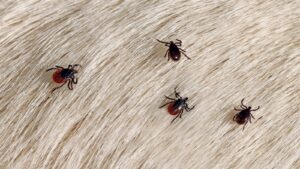
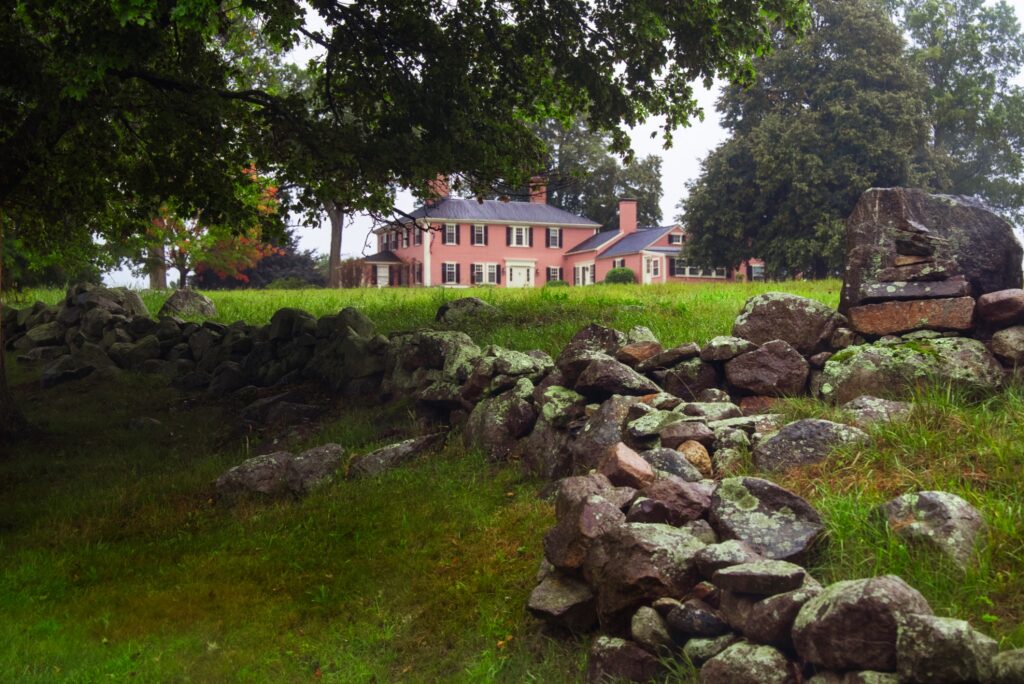
Hey, I’m Jeff, your local pest control guy, and one thing I have learned after years of treating properties in Massachusetts and New Hampshire is that a tick problem is not always sitting out in the open where a homeowner expects to see it. When I check tick hotspots, the most important places are the areas people walk past every day without thinking twice: an old fieldstone wall, a shaded rock garden, a pile of brush behind the lawn, or a retaining wall that has started to age and open up.
That does not mean every wall, rock pile, or brush pile automatically has ticks. What matters is what is happening around it: shade, moisture, trapped leaves, weeds, groundcover, rodent activity, and how close that feature is to the part of the yard people and pets actually use.
During an inspection, I am not simply looking for “rocks.” I am looking for the microclimate those rocks have created.
Why Some Yard Features Become Tick Hotspots
Blacklegged ticks, also called deer ticks in our area, do better in protected environments that help them avoid drying out. Massachusetts tick-management guidance specifically points homeowners toward reducing leaf litter, undergrowth, and small-mammal shelter while increasing sunlight and lowering ground-level humidity.
A clean feature in full sun can be very different from the exact same feature under tree cover. Put damp leaves, weeds, groundcover, shade, and protected openings together, and now I am paying much closer attention.
Think of it this way: the wall itself is not automatically the problem. Surrounding conditions can turn these areas into tick hotspots by providing shelter for ticks and the animals that carry them.
That is why a neat, dry, exposed retaining wall may concern me far less than an older fieldstone wall twenty feet away that sits under mature trees with leaf litter packed into both sides.
Dry-Laid Fieldstone Walls Deserve a Closer Look
New England has old fieldstone walls everywhere. Many were built generations ago, and plenty of them still run along property lines, wooded borders, roadsides, and old farm boundaries.
From a tick-control standpoint, the walls that get my attention are usually the dry-laid ones with open spaces between the rocks. Those cavities can provide shelter for white-footed mice, chipmunks, and other small animals that use the wall as cover.
Leaves also get trapped between stones and along the base. Once those leaves begin to break down, they hold moisture and create a protected layer at ground level.
Shade makes the situation more favorable. If weeds, pachysandra, ground ivy, or brush are growing through the wall too, you now have even more cover and humidity in the same narrow zone.
For a deeper look at this kind of habitat, read our guide to Tick Hot Spots: Stone Walls, Leaf Litter, and Wood Edges.
A Mortared Wall Is Not the Same Thing
Homeowners sometimes hear “stone wall” and assume every stone wall is a major tick concern. I would not look at it that way.
A tightly mortared wall in full sun, especially one that is clean on both sides and has little vegetation around it, usually gives mice fewer protected openings and holds less organic debris than a loose fieldstone wall. That does not make it impossible for ticks or rodents to be nearby, but it is a very different setup.
Cracked or deteriorating mortar can change the picture over time. Still, I care much more about whether the area is shaded, damp, cluttered, and connected to mouse cover than I do about the fact that the wall happens to be made of stone.
Old Landscape Timbers Can Create Similar Problems
Retaining walls are not always stone. Around older homes, I still see landscape timbers, pressure-treated wood, and old railroad-tie-style walls.
Over time, those timbers can crack, separate, soften, and decay. Gaps develop, leaves get trapped, weeds grow through them, and moisture stays in places that used to be tight and exposed.
That combination creates more protected spaces for small animals and a cooler, damper microclimate around the base. It can also create other pest issues; carpenter ants, for example, are commonly associated with damp or decaying wood.
The tick lesson is simple: I do not care whether the retaining wall started out as stone or wood. I care about what the feature has become after years of weather, vegetation, moisture, and neglect.
Rock Gardens and Rock Piles Are Not Automatically Bad
A homeowner may have a beautiful rock garden that is clean, sunny, and dry. Someone else may have a pile of rocks sitting in the back corner because they plan to build a wall someday.
Those are not automatically the same risk. Location and maintenance matter.
If a rock pile sits in full sun with little vegetation and very little leaf litter, it is generally less favorable than a pile pushed against a shaded wooded edge where leaves collect and the ground stays damp. Add groundcover or weeds, and the microclimate changes again.
I have also seen piles of rocks get watered every day by an irrigation system for absolutely no reason. Rocks do not need irrigation.
When sprinklers repeatedly wet a shaded rock pile, they can help maintain moisture around the surrounding soil, weeds, leaves, and organic material. Redirecting that water is an easy homeowner improvement, and it can also reduce unnecessary weed growth in the cracks.
Our Landscaping Tips to Deter Mosquitoes and Ticks explains other yard changes that can make frequently used areas less inviting to ticks.
A Brush Pile Changes as It Sits
A fresh brush pile from this weekend's storm cleanup is not the same thing as a pile that has been sitting untouched for months. There is no exact countdown where a brush pile suddenly becomes a tick hotspot, but undisturbed cover becomes more attractive to wildlife over time.
Connecticut wildlife guidance actually recommends brush piles when the goal is to create habitat for rabbits, chipmunks, birds, and other wildlife. That is good evidence for the other side of the same point: if your goal is reducing tick-host activity close to your lawn, you probably do not want that shelter sitting right where your family and pets pass every day.
In my field experience, a pile left through a season or over winter can become very different from the pile a homeowner honestly removes within a week or two. Leaves settle underneath it, vegetation can grow through it, the bottom stays protected, and small animals may begin using it as cover.
I make the same comparison with an unused vehicle. CDC warns that rodents can build nests in cars, trucks, campers, and other vehicles that sit unused, because undisturbed shelter is attractive to them.
The lesson is not that every brush pile instantly creates mice. Instead, “temporary” piles have a habit of becoming permanent habitat when nobody gets around to moving them.
Where You Put the Brush Pile Matters
A lot of homeowners back the mower or wheelbarrow up to the lawn-to-woods edge and dump grass clippings, branches, and leaves just a few feet beyond the mowing line. It feels convenient because the material is technically out of the lawn.
From my perspective, that is exactly where I do not want a growing pile of organic debris. The transition between maintained lawn and natural vegetation is already one of the areas we pay closest attention to for ticks.
When the property allows it, I prefer to see brush moved farther into an unused area rather than stacked directly against the lawn edge. My field recommendation is often to get that material roughly eight to ten feet back from the maintained edge when it can be done safely and entirely on the customer's property.
Official public-health guidance commonly recommends at least a three-foot separation or barrier between lawn and woods. My wider cleanup preference is simply an additional field-management choice for properties that have the room.
Grass Clippings Can Work Against a Clean Edge
Repeatedly dumping clippings in one place can gradually build a layer of organic material right at the perimeter. Weed seed can move into it, leaves mix with it, and vegetation can establish in areas that used to be more open.
None of that means grass clippings “create ticks.” Rather, the buildup works against the goal of keeping the lawn edge cleaner, drier, and easier to inspect.
A homeowner who already has wooded borders, stone walls, and heavy shade gains very little by adding another pile of damp organic material right where those conditions meet the lawn.
What We Do Differently When We See These Features
One thing I want homeowners to understand is that seeing a retaining wall, rock pile, or brush pile does not completely change how Mosquito Enemy treats a property. We already expect to treat the areas where ticks are most likely to be found.
Our attention shifts toward potential tick hotspots. A technician should recognize that a shaded fieldstone wall packed with leaves deserves more deliberate coverage than an open, dry section of turf.
The same goes for a brush pile at the wooded edge, dense groundcover around a wall, or an aging timber retaining wall with vegetation and debris around it. We are not trying to hit every last leaf; we are making sure the important habitat is not treated like an afterthought.
Our service records also help me judge application quality. I monitor how much finished material is used on a property along with the other application details we record, because that can show me when a treatment does not line up with what I expect for that yard.
For a broader explanation of where we concentrate tick work, see Where Do Ticks Hide in My Yard? The Spot Most Homeowners Miss First.
What Homeowners Can Do Without Tearing the Yard Apart
Most people do not need to rip out a stone wall or rebuild their entire landscape to manage potential tick hotspots. In many cases, the better investment is cleaning up the conditions around the feature.
Start by blowing or raking leaves away from both sides of the wall where practical. Next, cut back weeds and heavy groundcover that hold shade and moisture at ground level.
Keep brush piles, dumped grass clippings, and stored debris away from the immediate lawn edge. Redirect sprinklers that are watering rocks, walls, or other areas that do not need irrigation.
Clean up spilled birdseed because mice, chipmunks, and squirrels will take advantage of an easy food source. Prune back vegetation where practical so more sunlight reaches the wall or edge and helps it dry faster.
Basic steps like these are part of integrated pest management. They do not guarantee a tick-free yard, but they can make the property less favorable to ticks and the animals that carry them.
If the wall is staying, improve what you can control around it.
Be Careful Before Removing an Old New England Stone Wall
There is another reason I do not casually tell homeowners to tear down an old fieldstone wall: some walls have legal significance.
Massachusetts law protects certain stone walls or fences from unauthorized removal, and New Hampshire law specifically protects stone walls that serve as known boundary markers. That does not mean every old wall is legally untouchable.
Before removing a wall near a property line, check your survey, deed, local requirements, and ownership rights. Spending money on cleanup, sunlight, vegetation control, and tick management may be far more practical than creating a property-line dispute.
Identifying Tick Hotspots Means Looking Beyond the Rocks
A better homeowner question is: what kind of habitat has developed around those rocks, walls, and piles?
Consider a dry mortared wall in full sun. Now compare it with a shaded dry-laid wall filled with leaves, weeds, cavities, and mouse activity.
Then think about a fresh brush pile being removed next weekend. Contrast that with a forgotten pile sitting through winter at the lawn edge.
That is how I want homeowners to think about tick habitat. Look beyond the object and look at the conditions around it.
Frequently Asked Questions
Q: Do stone walls attract ticks?
A: Not every stone wall is a tick hotspot. Shaded dry-laid walls with leaf litter, vegetation, moisture, and small-mammal activity are much more concerning than clean, dry walls in full sun.
Q: Are rock gardens bad for ticks?
A: Not automatically. Risk goes up when the area stays shaded and damp, collects leaves, grows dense vegetation, or provides cover for mice and other hosts.
Q: Do brush piles attract ticks?
A: Brush piles can create protected wildlife habitat, especially when they sit undisturbed near wooded edges. That does not prove ticks are present, but an older pile with leaf litter, shade, and host activity deserves more attention than a temporary cleanup pile.
Q: How long can I leave a brush pile in my yard?
A: There is no scientific timer that makes a brush pile safe for a set number of days. A pile being removed within a week or two is very different from one left through months or winter, when it has more opportunity to collect debris and become wildlife shelter.
Q: Should I remove an old fieldstone wall to reduce ticks?
A: Usually that is not my first recommendation. Instead, cleaning leaves from both sides, cutting back groundcover, reducing nearby brush, controlling food sources for rodents, and increasing sunlight can improve the habitat without removing the wall.
Q: Can irrigation make a rock wall or rock garden more tick-friendly?
A: Unnecessary irrigation can help maintain a damp microclimate around shaded rocks, soil, weeds, and leaf debris. Redirecting sprinklers away from areas that do not need water is a simple way to reduce that extra moisture.
Q: Are old landscape-timber retaining walls a tick concern?
A: They can be when the timbers are cracked, decaying, shaded, overgrown, and surrounded by leaf litter. Cracks and surrounding debris create protected spaces for small animals and a cooler, damper environment around the base.
Q: Will professional tick control help if I cannot remove my stone wall or brushy edge?
A: Yes. Habitat cleanup and professional tick treatment can work together, with treatment focused on the parts of the property where ticks and their hosts are most likely to overlap.
Need Help Identifying the Tick Hotspots Around Your Yard?
Retaining walls, rock gardens, brush piles, wooded edges, and old landscape timbers do not all carry the same level of concern. The difference is usually in the shade, moisture, debris, vegetation, and animal activity around them.
If you are finding ticks or your property has several of these conditions, our professional tick control program is designed around the areas where ticks are most likely to be encountered. We can also point out practical habitat changes that may help you make the yard less inviting between treatments.
Call or text: 888-229-0095 to talk about your property and the areas you are concerned about.
It's More Fun Outside! with Mosquito Enemy.