
I’m Jeff, your local pest control guy.
If you want the plain truth about tick yard treatment, it starts here: yes, ticks in your own yard can spread real diseases, and that risk can be lowered with the right plan.
In Amesbury, MA, I see it all the time near Lake Gardner, along the Powwow River, and around Lowell’s Boat Shop.
When a tick shows up on a kid, a sock, or a dog’s ear, the question gets serious fast.
Could that bite make someone sick?
Quick Answer
Yes, ticks in your yard can transmit diseases like Lyme disease.
In Massachusetts and New Hampshire, the deer tick is the one that worries me most, because it can carry more than one illness.
A smart tick yard treatment focuses on the shady edges where ticks wait, not the sunny middle of the lawn.
Reducing tick pressure in your yard lowers the odds of bites for your family and pets, but results vary by property.
Tick yard treatment and disease risk in plain English
Yes, ticks in your yard can carry germs that cause Lyme disease and other illnesses.
Lowering the number of ticks in the places your family actually walks and plays is how you lower the risk.
Answer Block: A tick does not need “deep woods” to be a problem. Deer ticks can live in leaf litter, along stone walls, and in shady border areas right in your yard. A focused tick yard treatment helps reduce tick numbers where bites happen most, which lowers risk over time, even though no plan can promise zero ticks.
Here’s the straight list I care about in our region: Lyme disease, anaplasmosis, and babesiosis show up in real life every season.
Dog ticks can also carry diseases, including Rocky Mountain spotted fever.
If you’re standing in your yard wondering why this is happening, it’s usually because the habitat is right and the hosts are nearby.
That’s why a good tick control plan looks at the yard like a map, not like a blank sheet of grass.
Where ticks actually live in a yard
Ticks don’t spread out evenly across the lawn, so treating “everything” isn’t the point.
The goal is to focus on the edge zones where ticks rest and wait for a host to brush by.
In Salisbury, MA, that edge-zone problem shows up fast near Salisbury Beach State Reservation, around the Salisbury Beach Carousel, and by Blue Ocean Music Hall.
Here’s what I check first when I walk a property: shaded borders, leaf litter, brush piles, tall grass at the fence line, and the transition where lawn meets woods.
Most problem yards have one thing in common: a “soft edge” where plants, moisture, and wildlife overlap.
Those spots stay cooler and damper, and that helps ticks survive.
A real tick barrier spray is about hitting the right targets, at the right height, in the right places.
Tick life cycle and why edge zones matter
Ticks keep showing up because their life cycle is long and the environment keeps feeding it.
When you treat the edges consistently, you interrupt that cycle where people and pets actually get bitten.
Deer ticks go through four stages: egg, larva, nymph, and adult, so real deer tick control has to respect that timeline.
Most of the “Lyme disease tick prevention” conversation comes down to the nymph stage, because nymphs are tiny and easy to miss.
When I walk a yard, I’m looking for “questing lanes,” which is my simple way of saying: the stems and leaves ticks climb so they can grab onto passing legs.
Answer Block: Ticks don’t jump or fly. They wait on leaves and tall grass, then latch on when something brushes past. That’s why the edge zone matters most for a tick yard treatment. If you treat the high-traffic borders and keep those areas cleaned up, you cut down tick encounters where they happen most.
Here’s what I check next: kids’ play areas, dog runs, paths to sheds, and the spots where people stand still like a patio edge or firepit circle.
If you’ve been calling around for a tick control service, that’s the kind of detail you should expect from the tech.
What I do on a typical visit
On a typical visit, I focus on the areas that actually produce bites: edges, shade, and high-traffic zones.
That’s the difference between “spraying” and doing real Tick Control.
First, I walk the property and look for the border conditions that feed ticks: leaf litter, brush, tall grass, and tight shaded corners.
Next, I identify the main movement lanes: the path to the grill, the swing set route, the garden loop, and the dog’s favorite run.
Then I apply a targeted tick spraying service to the edge zones, lower shrubs, and ground cover where ticks travel and wait.
After that, I note the simple fixes that make the treatment work better, because a spray without habitat work is like mopping with the faucet still running.
When I’m done, I leave clear notes about what I treated, what to avoid until it’s dry, and what to watch next.
Results vary by property, so the plan is always adjusted to what your yard is actually doing.
In Merrimac, MA, the same pattern shows up around Merrimac Town Forest, the Old Sawyer House, and the Merrimac Public Library.
Edges create ticks, so I treat edges first.
That one decision alone is why a tick exterminator visit can feel different than a generic spray job.
How long does tick yard treatment last, and why it changes
A professional tick spray service can help for weeks, but rain, growth, and new tick activity can shorten that window.
Staying consistent is what keeps you from starting over after every weather swing.
If you’re asking “How long does tick yard treatment last?” you’re asking the right question, because timing matters as much as product choice.
Most homeowners want the best tick treatment for yard use that still feels reasonable for kids, pets, and pollinators.
That’s why I keep treatments targeted, and I always follow label directions and local rules.
Mosquitoes: life cycle and why consistency matters
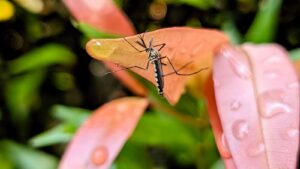
Mosquito control works best when you understand their life cycle and treat more than just what’s flying today.
Consistency matters because new mosquitoes hatch constantly, and some fly in from nearby yards.
Mosquitoes go through egg, larva, pupa, and adult.
Eggs and larvae live in water, pupae don’t feed, and adults rest in shady plants before they bite.
When I walk a yard, I’m looking for two different things: breeding zones (standing water) and resting zones (cool, shady leaves).
A barrier program focuses on those resting zones, and that’s the backbone of our Mosquito & Tick Control and a practical mosquito tick barrier treatment plan.
If breeding spots are part of your yard or nearby, adding Mosquito Egg & Larvae Control helps reduce new mosquitoes hatching between visits and supports a mosquito tick yard treatment approach.
The only stage we can’t truly control is the pupae stage, because they don’t feed during that window.
Why mosquitoes and ticks “come back” even after treatment
They come back because nature keeps refilling the yard through hatches, hosts, and habitat.
The right program is built to stay ahead of those refills instead of pretending they won’t happen.
Mosquitoes can fly in after a warm rain or hatch from water you didn’t even notice.
Ticks can ride in on wildlife and settle into the same edge zones again if the habitat stays perfect.
Simple homeowner moves that actually help
If you’re wondering how to get rid of ticks in yard areas, you can’t “clean up” all of nature, but a few smart moves can reduce tick pressure fast.
Small changes make your yard less inviting to ticks and help every treatment work better.
Start with the edges: cut back brush, mow tall grass, and remove leaf piles where ticks stay hidden and moist.
This kind of cleanup is simple tick prevention yard work.
Move wood piles away from play areas, because rodents love them and rodents carry ticks.
Keep paths wide and sunny when you can, because ticks dry out in direct sun.
Dump standing water and fix low spots, because mosquito breeding zones are often just tiny puddles and clogged corners.
Stay on top of gutters, because clogged ones hold water and create mosquito hatch zones right over your head.
If you have pets, ask your vet about protection, because tick control for dogs yard time is about both the animal and the space.
In Newbury, MA, I see the same edge-and-water pattern near Parker River National Wildlife Refuge, Spencer-Peirce-Little Farm, and Old Town Hill.
One more thing helps a lot: do a quick tick check after yard time, especially behind knees, around waistbands, and at the hairline.
Fast removal matters, and it’s one of the simplest habits you can build.
Safety and how we apply treatments responsibly
Safety comes from doing fewer things, more carefully, and always following the label.
We apply treatments responsibly by targeting the right zones, using the right rates, and keeping people and pets off until surfaces are dry.
When I’m choosing products and application methods, I’m thinking about your kids, your dog, your plants, and the beneficial insects that belong in a healthy yard.
If you want to read the public guidance I trust, start with CDC guidance on where ticks live and how they spread.
For Lyme basics and bite prevention, CDC Lyme disease information is a solid place to begin.
If you want the local disease picture, Massachusetts tick-borne disease information explains what shows up most in our state.
For pesticide safety and why labels matter, EPA pesticide label guidance lays out the rules that every applicator has to follow.
That’s the standard I hold my team to, and it’s also what pet safe tick yard treatment really means in the real world: follow the label, let it dry, and treat the right spots.
In Haverhill, MA, the yards that surprise people the most are often the ones near Winnekenni Park, around Kenoza Lake, and close to Ski Bradford.
Wildlife moves through those green corridors, and ticks move with the wildlife.
A calm, consistent plan beats panic spraying every time.
FAQ
Q: Can ticks in my yard really transmit Lyme disease?
A: Yes, they can, especially from deer ticks in our region. That’s why bite prevention and yard control both matter.
Details:
Lyme risk goes up when ticks are common in your edge zones and you spend time in those areas. A focused tick yard treatment reduces tick pressure where bites happen most. Checking for ticks after being outside is still important.
Q: How do I know if my yard has ticks?
A: Seeing ticks on pets or on socks is the most common clue. It usually means they’re living on your property or very close by.
Details:
Ticks show up more in shady edges, leaf litter, tall grass, and along fences. A tech can flag the hot zones during a walk-through. Results vary by property, so the inspection matters.
Q: How long does tick yard treatment last?
A: It often helps for weeks, but weather and growth can shorten how long it feels strong. A consistent schedule is what keeps the edges from refilling.
Details:
Rain, mowing patterns, and new tick activity can change the timeline. Consistent visits are how you avoid the “one step forward, two steps back” feeling. Ask what schedule fits your yard’s conditions.
Q: Is a tick spray service safe for kids and pets?
A: When it’s done by the label and allowed to dry, it can be used responsibly around families. Dry time and targeted application are the big safety pieces.
Details:
Keep people and pets off treated areas until dry, and follow any specific instructions you’re given. Targeted treatments reduce exposure compared to blanket spraying. If anyone has special sensitivities, tell your service provider up front.
Q: What’s the best time of year to start tick control?
A: Starting before peak activity helps reduce ticks as they ramp up, not after bites are already happening. Spring is a common starting point in our area.
Details:
Tick pressure can stay high into summer and fall, especially in shaded edge zones. The right schedule depends on weather and habitat. A good tick control service will time visits to stay ahead of the cycle.
Q: Do I need tick control near me if my neighbor doesn’t treat?
A: Yes, because ticks can still arrive on wildlife even if you do everything right. Treating your own edge zones still makes a real difference.
Details:
A good plan reduces ticks in your own high-traffic zones, which is where bites happen. You can’t control nearby habitat, but you can control your edges and your yard habits. Consistency matters more than perfection.
Q: Can a tick exterminator near me help with ticks on my dog in the yard?
A: Yes, lowering ticks in the yard helps reduce what your dog picks up outside. Pair it with vet protection for the best results.
Details:
Yard treatments work best when they target the dog’s routes and the shady edges where ticks wait. Vet protection helps on the animal, and yard work helps in the space. That combination is practical tick control for dogs yard time.
“It’s More Fun Outside”! with Mosquito Enemy.
Prefer to talk to a real person?
Call us at 888-229-0095 and we’ll get you setup
email: jeff@mosquitoenemy.com
We service Essex County and the northern half of Middlesex County MA, plus Rockingham County and Hillsborough County (Pelham) NH.