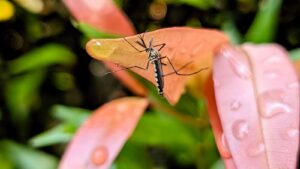

West Nile and EEE update. New risk levels. Headlines get louder. Questions start flying.
I’m Jeff, your local pest control guy, and I want to keep this simple.
If you live in Massachusetts or southern New Hampshire, mosquito season isn’t just “annoying.” It can be a health issue when viruses like West Nile and EEE start showing up in local mosquito testing.
During the 2025 season, Massachusetts officials raised West Nile virus risk to “high” in 10 communities after more than 150 mosquito samples tested positive, and they confirmed the first EEE-positive mosquito sample of the season from a collection dated July 21, 2025 in Hampshire County. In 2024, Massachusetts reported four human EEE cases and one death.
None of that is meant to scare you. It’s meant to help you make smart moves with your family, your pets, and your yard as we head into the 2026 season.
Related reading
Mosquito Exterminator: MA/NH Season Start & End
How to Get Rid of Mosquitoes in Your Yard
West Nile & EEE quick answer
West Nile virus shows up more often, and it usually peaks in late summer. EEE shows up less often, but it’s the one we take extremely seriously because severe cases can be deadly.
Your best plan is a three-part approach: protect your skin, reduce mosquito breeding around your home, and keep a consistent mosquito and tick control program that targets where mosquitoes live and rest.
What a “high risk” warning really means
First thing to know: the state isn’t measuring the mosquitoes in your yard. They’re using surveillance data from traps and lab testing to estimate where infected mosquitoes are more likely to be active.
That’s why risk levels can jump fast. Warm nights, humid stretches, and a couple rainy periods can turn “quiet” into “busy” in a hurry.
Here’s the part most homeowners miss. Even if the state map says “low,” your yard can still feel miserable because mosquito pressure comes from shade, moisture, and breeding water close to home.
So I look at it like this: state risk is your health alert. Yard pressure is your comfort alert. You want to manage both.
West Nile vs. EEE: same delivery method, different risk
Both viruses are spread by the bite of an infected mosquito. That part is the same.
West Nile is the one that shows up more often in the U.S. Most people who get infected never feel a thing, while a smaller group gets a flu-like illness with fever, aches, and fatigue.
EEE is rarer, but it has a reputation for a reason. Severe EEE can lead to swelling in the brain, long-term neurologic problems, and death.
So when people ask me which one is “worse,” I give the honest answer. West Nile is more common. EEE is more severe when it turns serious.
Symptoms: what to watch for (and when to act)
I’m not a doctor, and this isn’t medical advice. Still, knowing the warning signs helps you make a faster decision.
West Nile, has many infections that have no symptoms at all. Mild illness can look like fever, headache, body aches, stomach upset, or a rash.
With EEE, early symptoms can also start like a “bad summer flu.” Trouble starts when neurologic signs show up like severe headache, stiff neck, confusion, seizures, or weakness.
If a person has high fever plus confusion, neck stiffness, or serious weakness after heavy mosquito exposure, don’t wait it out. Call your healthcare provider or seek urgent care.
Is there a vaccine for West Nile or EEE?
No human vaccine is available for either West Nile virus or EEE. Treatment is supportive, which is a fancy way of saying doctors treat the symptoms while your body does the hard work.
That’s exactly why prevention matters so much. Avoiding bites is not just comfort. It’s risk reduction.
The outbreak playbook: what I tell homeowners to do
When the news gets loud, people swing to extremes. One homeowner ignores it. Another homeowner starts canceling every outdoor plan.
A better approach lives in the middle. Use protection at the right times, clean up breeding water, and keep your yard on a real program.
1) Protect your skin the smart way
Repellent works, and it works best when you use it correctly. Look for EPA-registered products and follow the label.
DEET, picaridin, IR3535, and oil of lemon eucalyptus are common choices. Clothing matters too, because mosquitoes can bite through thin fabric.
Long sleeves and long pants help most at dusk and dawn. Outdoor plans can still happen, but timing helps because many mosquito species ramp up when the sun drops.
Fans are underrated. Moving air makes it harder for mosquitoes to land and feed.
2) Cut off breeding water before it becomes a cloud of mosquitoes
A mosquito doesn’t need a pond. It needs a little water that sits long enough to warm up.
Dump anything that holds water at least once a week, and do it again after rain. Buckets, toys, tarps, plant saucers, wheelbarrows, and low spots are the usual culprits.
Pay attention to gutters. A clogged corner can hold water, grow sludge, and quietly produce mosquitoes right over your head.
Hard-to-fix water is where larvicide earns its keep. That’s why we offer a dedicated Mosquito Egg & Larvae Control add-on that targets breeding areas and helps stop the next wave before it takes flight.
3) Keep the barrier strong where mosquitoes actually live
Mosquitoes don’t live in open grass. They hide in shade, under leaves, inside shrubs, and along the cool edges of your property.
A professional mosquito spraying service should focus on those resting zones, not just “fog the air.” That’s what a true mosquito barrier treatment is built for.
Consistency matters more than most people think. Skipping visits turns a steady program into a rollercoaster, and a rollercoaster is where bites sneak back in.
If you’re already on our mosquito and tick control service, stay on schedule through the peak weeks. Those late-summer weeks are when West Nile tends to surge.
Why “positive mosquito samples” matter to your backyard
When labs find West Nile or EEE in mosquitoes, it means infected mosquitoes are out there biting. That’s the straight answer.
It also tells me something else as a mosquito control company owner. Virus activity usually rides on top of higher mosquito numbers, and higher mosquito numbers almost always trace back to standing water plus heavy shade.
So when I see those reports, I’m thinking about the basics: remove water, tighten the barrier, and treat breeding zones. That’s how you protect people without turning summer into a bunker.
A quick note for 2026 planning
Risk maps and “high risk” labels are seasonal. Massachusetts updates those levels during mosquito season, so the list can change from week to week.
Your job is simple. Check the official state risk map when the season starts, and treat your yard like it’s your responsibility anyway.
My job is also simple. I help you take back the yard with a plan that targets adults, eggs, and larvae, and I explain what I’m seeing so you’re not guessing.
FAQ
When and where was EEE first detected in Massachusetts in 2025?
A: Massachusetts officials reported the season’s first EEE-positive mosquito sample from a collection dated July 21, 2025 in Hampshire County.
Detail: The exact location and risk level can shift during the season, so the best move is to use the state’s public risk map and local alerts once mosquito season starts.
Which Massachusetts towns were declared high-risk for West Nile virus this year?
A: In mid-August 2025, Massachusetts raised West Nile virus risk to “high” in 10 communities based on mosquito testing.
Detail: Risk designations can change week to week, so the most accurate answer for “my town” is always the current state risk map during the active season.
What are the symptoms of EEE compared with West Nile virus, and how deadly are they?
A: West Nile often causes no symptoms or a flu-like illness, while EEE is rarer but can become a severe neurologic disease.
Detail: Public health sources describe severe EEE as having a high fatality rate and a real risk of long-term neurologic problems in survivors, so fast medical attention matters when serious symptoms show up.
Are there vaccines available for EEE or West Nile virus?
A: No human vaccines are available for EEE or West Nile virus.
Detail: Prevention is the main tool, which is why repellent, clothing, timing, and yard mosquito control are the practical steps that move the needle.
What precautions should I take (repellent, clothing, timing) to avoid mosquito bites during an outbreak?
A: Use repellent as directed, cover up with long sleeves and pants when possible, and be extra careful from dusk to dawn.
Detail: Screens, fans, and a consistent mosquito barrier treatment help reduce bites at home, while breeding-water cleanup and larvicide support your yard so you’re not feeding the next generation.
Top towns we service
Here are 16 of the top towns we service every week.
Amesbury
Andover
Boxford
Byfield
Georgetown
Groveland
Haverhill
Ipswich
Merrimac
Newbury
Newburyport
North Andover
Rowley
Salisbury
Topsfield
West Newbury
Don’t see your town? See our full Service Area.
Related resources
Start with Mosquito + Tick Programs
Add this for tougher yards: Mosquito Egg & Larvae Control
Ticks ONLY: Tick Control
Home protection: Home Shield
Stinging insects: Stinging Insect
Rodents: Rodent Control
Gutter Cleaning: Gutter Cleaning
Reach us: Contact us
Get Your Free Quote
Call or text: 888-229-0095 | Email: jeff@mosquitoenemy.com | Contact us
“It’s More Fun Outside”! with Mosquito Enemy.