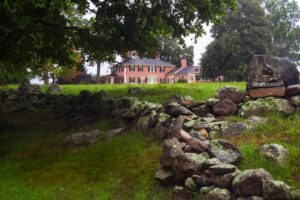

Two Andover homes on the same street can experience very different mosquito activity depending on what borders their backyard. A property backing up to woods or dense tree cover typically deals with far more mosquito pressure than one with an open lawn, and the difference comes down to shade, moisture, and shelter rather than distance from any single water source.
Shade Keeps Mosquitoes Active Longer
Adult mosquitoes are highly sensitive to heat and sunlight, and direct sun causes them to dry out and lose activity quickly. A wooded backyard provides constant shade throughout the day, allowing mosquitoes to rest comfortably until dusk, when they become most active. An open lawn without significant tree cover offers far less of this shelter, which limits how long mosquitoes can comfortably remain in that part of the yard during daylight hours.
Wooded Areas Hold Moisture Longer
Tree canopy slows evaporation on the ground below, keeping leaf litter, fallen branches, and soil damp for longer after rainfall than an open, sun-exposed lawn. This extended moisture supports both mosquito breeding and the humidity adult mosquitoes need to survive. Even without a pond or stream nearby, a wooded lot can hold enough dampness in its leaf litter and undergrowth to sustain mosquito activity through much of the summer.
Natural Debris Creates Countless Small Breeding Sites
Wooded properties accumulate natural debris that open lawns simply do not: fallen leaves, hollow logs, tree stumps, and low-lying depressions in the ground. Each of these can collect small amounts of rainwater, and a mosquito needs only a modest pool to lay eggs. A single wooded backyard near Harold Parker State Forest or another tree-lined section of Andover can contain dozens of these small water-holding features without the homeowner ever noticing them.
Wildlife Activity Adds Another Factor
Wooded areas support more wildlife traffic than open lawns, including deer, raccoons, and other animals that serve as blood-meal hosts for various mosquito species. This wildlife activity, combined with the shelter and moisture wooded areas provide, creates a more complete environment for mosquitoes to feed, rest, and reproduce close to a home.
Comparing the Two Yard Types
A few contrasts help explain the difference in mosquito pressure between these yard types:
- Wooded yards retain shade and moisture; open lawns dry out faster in direct sun
- Wooded yards accumulate natural debris that holds water; open lawns have fewer of these features
- Wooded yards see more wildlife traffic; open lawns typically see less
- Wooded yards provide daytime shelter for resting mosquitoes; open lawns offer far less cover
Open lawns are not immune to mosquito activity, particularly if they include a low spot, a garden feature, or nearby landscaping that holds water. However, the combination of shade, moisture, and shelter found in a wooded backyard generally supports a larger, more persistent mosquito population than an open, sun-exposed lawn.
Because these conditions are built into the landscape itself, removing every source of shelter and moisture on a wooded property is rarely practical or desirable, especially when the trees themselves are part of what makes a yard appealing. Mosquito Enemy’s barrier treatments are applied directly to the vegetation and resting areas where mosquitoes gather, addressing the problem where the wooded landscape actually creates it rather than asking homeowners to remove the trees and shade they value.
If your Andover property backs up to woods or includes mature tree cover, request a free quote and our team can design a treatment plan suited to that specific type of yard.