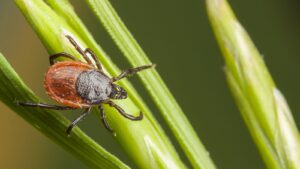

When to Seek Treatment After a Tick Bite
I’m Jeff, your local pest control guy.
Finding a tick on yourself, your kid, or your dog can flip your stomach fast.
That reaction makes sense.
What matters next is doing the simple stuff in the right order, without guessing.
Picture this: tweezers in one hand, phone in the other, and your brain yelling, “Do I need antibiotics?”
This post walks you through it like I would if you stopped me in a driveway.
You’ll know how to remove the tick, how to save it, what the timing means, and when it’s time to call your doctor instead of just worrying.
Related reading
Powassan Virus: A Rare Tick Threat That Can Transmit Fast
Tick Control: How we reduce ticks in real New England yards
Quick Answer
Pull the tick off right away, clean the bite, and write down the date and your best guess on how long it was attached.
Lyme disease risk is usually much lower when the tick comes off fast, because transmission generally takes time, often more than 24 hours.
Higher-risk situations are usually tied to a blacklegged (deer) tick that fed long enough to look engorged, especially when the attachment time is estimated around 36 hours or more.
A single preventive dose of doxycycline is sometimes considered after a high-risk bite when specific criteria are met, but it’s not a “covers everything” move for every tick illness.
Answer Block: A tick bite is a timing game, and your best move is fast, calm action. Remove the tick the right way, then decide if you’re in a high-risk situation based on tick type, engorgement, and estimated attachment time. If you want fewer bites in the first place, a real tick control service starts by reducing tick pressure along the shady edge zones where ticks hide.
First things first: remove the tick the right way
Skip the old-school tricks.
Forget matches, petroleum jelly, nail polish, dish soap, and essential oils.
Those methods slow you down, and speed is your friend here.
Use fine-tipped tweezers.
Grab the tick as close to the skin as you can, right where it’s attached.
Pull upward with steady, even pressure until it releases.
Wash the bite area with soap and water, or use rubbing alcohol.
Clean your hands too.
Save the tick (it helps with the “what now?” decision)
Put the tick in a sealed bag or a small container.
Alcohol in the container is fine.
A clear photo on your phone helps too.
Write down three quick details:
Date you found it.
Where on the body it was attached.
Places you were in the last day or two.
That little note makes conversations with a clinician a whole lot clearer.
It also helps with tick identification, which matters for Lyme risk.
The clock matters: Lyme vs other tick diseases
Here’s the honest truth.
Different germs have different “rules,” so timing is not one-size-fits-all.
For Lyme disease, mainstream public health guidance says infected ticks generally need to be attached for more than 24 hours to transmit infection.
Many prevention guides also point to a higher-risk window closer to 36–48 hours, especially when the tick is engorged.
Other diseases don’t always follow the same clock.
Powassan virus is the one everyone talks about because it may transmit very quickly, so “I’ll handle it later” is not a great plan.
Babesiosis is another reason to respect tick bites in our region.
Some guidance notes it often takes longer feeding time to transmit, which is one more reason prompt removal is still a big win.
Which tick species should you care about in Massachusetts?
If you remember one name, remember this one: the blacklegged tick.
Most people call it the deer tick.
In Massachusetts, the blacklegged tick (Ixodes scapularis) is the main tick linked to Lyme disease and babesiosis.
That same tick is also listed as a vector for Powassan virus disease in the Northeast.
Other ticks exist around here too.
Still, when your goal is Lyme prevention, the blacklegged tick is the one that drives most of the decision-making after a bite.
When should a preventive antibiotic be considered?
A lot of homeowners hear “doxycycline” and assume it’s automatic after every tick bite.
That’s not how the standard medical guidance works.
Most clinicians only consider a preventive dose in a very specific “high-risk Lyme” situation.
Tick type matters, how long it fed matters, and the clock matters.
Mainstream medical guidance describes a single-dose doxycycline option for Lyme prevention only when the bite checks a strict set of boxes.
Massachusetts public health advisories point people back to that same high-risk framework.
Here’s the simple checklist people use with their clinician:
Confirm it’s a blacklegged tick (adult or nymph).
Estimate attachment time at about 36 hours or more, often judged by engorgement or known exposure time.
Make sure the bite happened where Lyme is common (Massachusetts and much of New Hampshire qualify).
Start the preventive dose within 72 hours of removing the tick, if your clinician recommends it.
Check that doxycycline is safe for the person (clinician weighs allergy, pregnancy/lactation, and other factors).
One more point is worth saying out loud.
That single-dose approach is aimed at lowering Lyme risk only, and it does not prevent every tick-borne illness.
Talk with your healthcare provider if you’re unsure.
Bring the tick or a photo if you can.
When to seek treatment right away (symptoms and red flags)
Some people feel perfectly fine after a bite.
Others develop symptoms days to weeks later.
Call your healthcare provider if any of these show up after a tick bite:
Fever or chills that don’t match “a normal cold.”
Headache, fatigue, or body aches in warm weather.
A rash that spreads or keeps changing.
New joint pain, especially if it moves around.
Seek urgent care for severe symptoms like confusion, weakness, trouble speaking, seizures, or severe shortness of breath.
Those are not “wait and see” situations.
Daily tick checks: hit the hidden zones
A quick glance isn’t enough during peak season.
Nymph ticks can be tiny, and they love warm, hidden spots.
Use a mirror and check these areas daily when you’ve been outside:
In and around the ears.
Behind the neck and along the hairline.
Under the arms.
Around the waist.
In the groin area.
Behind the knees.
Between the toes.
Make it a routine, not a panic move.
Consistency is what lowers risk, especially for kids and dog owners.
The best plan is fewer ticks in the yard
Tick bites don’t come from “bad luck” as often as people think.
Most exposure starts in the edge habitat where ticks wait for hosts.
That’s why a targeted tick yard treatment focuses on shade, brush, stone edges, and the border where lawn meets woods.
If you’ve been searching tick control near me, you’re usually looking for a real plan that stays consistent through the season.
Some homeowners jump straight to the search: tick treatment near me.
Others type tick exterminator near me after a few scary finds in a row.
Either way, the right plan is targeted tick treatment where ticks actually live, not a random spray across the lawn.
Our Tick Control program is built for New England properties that look clean and still have ticks.
Families who want both problems handled together usually start with Mosquito & Tick Control.
You can also think of this as Lyme disease tick prevention yard work.
Lower tick pressure outside, and you lower the odds of a scary moment inside.
FAQ
How long does a tick need to be attached to transmit Lyme or other diseases?
A: Lyme risk is generally much lower when a tick is removed quickly, because transmission typically takes time and is often described as more than 24 hours.
Detail: Many guides flag higher concern when a blacklegged tick is engorged or the attachment may be around 36 hours or more, while Powassan virus is known for potentially transmitting much faster.
When should a prophylactic antibiotic be considered after a tick bite?
A: A single preventive dose of doxycycline may be considered for Lyme prevention after a high-risk blacklegged tick bite when strict criteria are met.
Detail: Clinicians often look at tick type, estimated attachment time, whether the bite happened where Lyme is common, and whether the dose can be given within 72 hours of removal.
Which tick species in Massachusetts carry Lyme disease, babesiosis and Powassan virus?
A: The blacklegged tick (deer tick), Ixodes scapularis, is the main tick linked to Lyme disease and babesiosis in Massachusetts and is also listed as a Powassan virus vector in our region.
Detail: Other tick species exist locally, but most “what should I do now?” decisions after a bite revolve around blacklegged tick identification.
What body areas should I check daily for ticks?
A: Focus on hidden areas: ears, hairline/neck, armpits, waist, groin, behind knees, and between toes.
Detail: A consistent daily tick check during peak season helps catch tiny nymph ticks early, which is one of the strongest prevention habits a family can have.
How do I properly remove and save a tick for identification or testing?
A: Use fine-tipped tweezers, pull straight up with steady pressure, then clean the bite and your hands with soap and water or rubbing alcohol.
Detail: Save the tick in a sealed bag or container (or in alcohol), label the date and bite location, and share a photo or the tick with a clinician if you’re deciding whether the bite was high risk.
Top towns we service
Here are 16 of the top towns we service every week.
Amesbury
Andover
Boxford
Byfield
Georgetown
Groveland
Haverhill
Ipswich
Merrimac
Newbury
Newburyport
North Andover
Rowley
Salisbury
Topsfield
West Newbury
Don’t see your town? We probably still service it. Check our full Service Area page.
Related resources
Start with Mosquito + Tick Programs
Add this for tougher yards: Mosquito Egg & Larvae Control
Ticks ONLY: Tick Control
Home protection: Home Shield
Stinging insects: Stinging Insect
Rodents: Rodent Control
Gutter Cleaning: Gutter Cleaning
Reach us: Contact us
Get Your Free Quote
Call/Text: 888-229-0095 | Email: jeff@mosquitoenemy.com | Contact us
“It’s More Fun Outside”! with Mosquito Enemy.