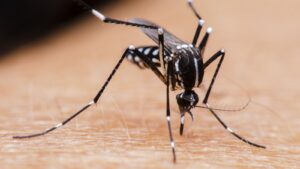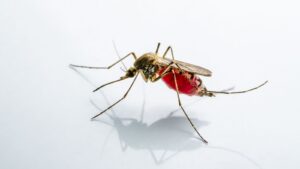

If you miss a mosquito treatment, a short delay is usually very different from skipping an entire scheduled treatment cycle.
Every season, somebody calls me with a perfectly reasonable request: "Jeff, we are going away next week, so just skip this mosquito treatment and come back the next time."
Hey, I’m Jeff, your local pest control guy.
Maybe the family is on vacation, a siding crew is working on the house, new windows are going in, or a deck project has half the backyard tied up.
None of those situations automatically means the mosquito program should stop.
Usually, the smarter move is to keep the property on schedule and work around whatever is happening that day.
For Mosquito Enemy customers, the standard barrier program is built around recurring applications because mosquito pressure is not a one-and-done problem.
Skipping a visit can open a gap that lets the yard slide backward, especially during the hottest, wettest part of the season.
That does not mean being two days late is a disaster, and it does not mean every property reacts the same way.
What it does mean is that there is a big difference between a short weather delay and deliberately missing an entire treatment cycle.
Why People Want to Skip When the Program Is Working
Ironically, one of the biggest reasons customers think they can skip is because the program has been working so well.
After several treatments, the yard feels comfortable, mosquito pressure is down, and it becomes easy to forget what the property felt like before control was established.
So the homeowner thinks, "Everything is great. Why not stretch this three-week schedule to four or five weeks and save a little money?"
That is exactly when I remind them that the good results are not evidence that the schedule is unnecessary; they are evidence that the schedule has been doing its job.
Mosquito control is a process of keeping pressure down while new mosquitoes continue to hatch, fly in, and use the surrounding landscape.
Once you create a long enough opening, the population can begin rebuilding while the treatment program is sitting still.
Mosquito Control Is Not a Can of Raid
A major misconception I hear is that professional mosquito control works like grabbing an aerosol can, spraying once, and making the whole problem disappear.
Barrier service is different because we are trying to maintain lower mosquito pressure across an outdoor property over time.
Instead of treating one visible insect in front of you, the technician is targeting shaded foliage, protected vegetation, wooded edges, under-deck areas, and other places adult mosquitoes use for resting.
Meanwhile, new mosquitoes may still be developing in water or arriving from outside the property.
That is why is one treatment enough for the whole season is such a common homeowner question, and the practical answer is usually no.
A seasonal program works by returning before mosquito pressure has enough time to fully re-establish itself.
A Short Delay Is Not the Same as Missing a Whole Cycle
I do not treat the calendar like a magic switch that flips at exactly 21 days.
Weather happens, routes move, rain can push a Thursday stop to Monday, and sometimes a technician needs to come a day or two earlier because conditions are changing fast.
From my field experience, I think of the timing more like a traffic-light scale.
One to three days late is generally still green because that kind of normal movement usually is not a game changer.
Around a week late starts moving us through yellow and toward orange, especially when heat, humidity, rainfall, and local mosquito pressure are high.
Skipping an entire scheduled cycle is where I consider the warning light red because we are no longer talking about a small route adjustment.
At that point, we may be trying to recover control instead of simply maintaining it.
Properties near marshes, wetlands, slow-moving water, dense woods, or heavy neighborhood pressure can slide backward faster than easier suburban yards.
Why a Week Can Matter So Much During Peak Mosquito Season
Mosquito biology helps explain why the gap can become noticeable so quickly.
According to the CDC’s Culex mosquito life-cycle guidance, some Culex mosquitoes can develop from egg to adult in about 7 to 10 days under favorable conditions.
That does not mean every mosquito in every Massachusetts or New Hampshire yard follows the exact same clock.
But it shows why a one-week extension is not biologically trivial when warm weather and standing water are producing mosquitoes quickly.
During July and much of August, I often hear customers say they can feel mosquito pressure creeping back as they approach the next scheduled visit.
By fall, cooler nights often reduce that pressure, although mosquitoes can remain active well beyond Labor Day.
Timing matters most when the environment is giving mosquitoes everything they need to reproduce and survive.
Going on Vacation? You Usually Do Not Need to Skip
Customers sometimes ask why they should pay for a treatment when they will not even be home to enjoy the yard that week.
My answer is simple: you are maintaining the control that will still matter when you come home.
Biting insects do not know you are on vacation, and the mosquito life cycle does not pause because your family is at the beach or visiting relatives.
For our mosquito and tick work, customers do not need to be home for the treatment because the service is performed outside.
Usually, we just need normal access to the areas you want treated, including an unlocked gate when applicable.
Before service, customers can receive advance notification by email and, if they choose it, by text so they know we are coming the next day.
Keeping the visit on schedule means the yard is being maintained while you are away instead of asking us to rebuild the program after you return.
Construction Does Not Always Mean Canceling the Treatment
Home improvement is another common reason people ask us to skip.
Maybe siding is being installed, a deck is under construction, windows are being replaced, or a crew is using one section of the yard.
Often, we can work around the project rather than canceling the entire service.
If the workers can give us a short window, we may stay away from the active work zone and treat the rest of the property so the main program remains intact.
Every site has to be handled according to the actual conditions and the pesticide label, so there are times when postponing really is the right choice.
But I would rather solve the access problem than automatically create a three-week hole in the mosquito schedule.
No, We Cannot Just Spray Twice as Much Next Time
This is one of the most important questions customers ask after a missed visit: "Can’t you just spray twice as much next time?"
The answer is no.
More pesticide is not automatically better, and a professional applicator cannot make up a skipped treatment by inventing a heavier dose.
The EPA explains that pesticide labels are legally enforceable and define where, how, how much, and how often a product may be used.
Licensed applicators have to work inside those directions even when the customer wants faster results.
That is also why I do not promise that one return visit will instantly restore a yard that has been allowed to rebuild for several weeks.
We will work to regain control as efficiently as the property and label allow, but we cannot legally or responsibly compensate by over-applying product.
There Is No One-Size-Fits-All Treatment Interval
Most Mosquito Enemy customers on our standard barrier program are scheduled about every 21 days, while our botanical program uses a tighter interval.
Still, I do not believe every property behaves identically just because the calendar says the same date.
I watch rainfall, heat, evapotranspiration, property conditions, customer calls, and what the technicians are seeing in the field.
Sometimes those signals tell me a route should move from day 21 to day 19 or 20 because pressure is building sooner than expected.
One property I think about sits along the Parker River with slow-moving water wrapping around two sides of the site.
During the heaviest part of mosquito season, that kind of property can need a tighter 14-to-16-day approach to keep the customer comfortable, provided the treatment plan and applicable labels allow it.
Most yards do not need that level of adjustment, but the example shows why professional mosquito control cannot be reduced to one universal number.
The schedule is a framework, and the property tells us how carefully we need to manage inside it.
Local Pressure Can Tell Me a Route Is Starting to Break Down
Customer calls are also useful field data when several people in the same area report the same change at the same time.
If I suddenly hear from multiple customers in a place such as Seabrook, New Hampshire, or Salisbury, Massachusetts, I look at the recent weather and service dates together.
Maybe a hot, wet stretch accelerated local breeding, or a microclimate around the coast changed how quickly mosquito pressure returned.
Rather than assuming every complaint is an isolated failure, I look for the pattern and decide whether a route adjustment makes sense.
That is one reason weather and rainfall can matter between treatments even when the original application was performed correctly.
Experience comes into play because the right response may be a slightly earlier scheduled treatment, an inspection for breeding water, or simply confirming that a brief increase is temporary.
Missing a Mosquito-and-Tick Visit Affects the Two Pests Differently
Mosquitoes usually punish a scheduling gap faster than ticks because mosquito generations can develop quickly during favorable summer weather.
Ticks have a different biology and a longer life cycle, so one missed combined visit does not necessarily produce the same immediate rebound you may notice with mosquitoes.
Even so, I do not like giving away the important spring and fall windows for tick control.
The Massachusetts tick-borne disease guidance notes that blacklegged tick risk is highest through spring, summer, and fall, while adults may still search for hosts on winter days above freezing.
For that reason, staying consistent with a combined mosquito-and-tick program still matters even though the two pests do not react to a missed date in exactly the same way.
Homeowners who only want tick service use our separate tick-only program, which has a different application approach and schedule, so those visits should be evaluated within that program rather than treated like a mosquito schedule.
What Happens When the Customer Calls and Says, ‘It Is Not Working Anymore’
When someone deliberately skipped and later tells me the treatment is not working, I go back to the conversation we had before the gap.
If I was at the computer when we spoke, I usually have notes explaining why I recommended staying on schedule and what I told the customer to expect.
Then we look at the property conditions: nearby water, woods, drainage, current weather, the length of the gap, and how much mosquito pressure has returned.
Saying we have to ‘start over’ is an analogy, not a claim that the yard literally resets to the exact biological conditions of day one.
What it means is that the level of control we built can deteriorate enough that we are again working to knock the population down instead of simply holding it down.
Some yards recover quickly after the next proper application, while difficult properties may need more time and more than one normal treatment cycle to feel like they did before the skip.
No two yards are exactly alike, and anyone who tells you they are is ignoring the surrounding water, vegetation, shade, neighboring pressure, and microclimate that make each property different.
How the Free Re-Spray Policy Fits After a Skip
Our current seasonal policy includes one free re-spray when the customer contacts us within the policy window and has not already used it.
I still handle a callback after a customer-elected skip one case at a time because there is no one-size-fits-all answer.
When they qualify, I will honor the policy, but I also explain that a free re-spray is not intended to become a substitute for a scheduled application.
Sometimes the customer decides to wait for the next regular visit because it is already close, while another customer may ask us to come out and troubleshoot sooner.
Either way, one additional visit does not guarantee that a several-week control gap disappears immediately.
For a deeper explanation of callbacks, read Free Respray or Breeding Water? How We Decide the Right Next Step.
Repeated Custom Rescheduling Can Also Change the Economics
There is another practical part of the schedule that homeowners do not always see.
Our normal pricing assumes routes are built efficiently, with customers in the same general area serviced together instead of sending a technician back and forth across several towns for individual preferred dates.
When a customer repeatedly asks to be pulled out of the normal route and serviced on a special day, the extra travel time and labor can eventually affect pricing.
Flexibility matters when something legitimate comes up, because weather, construction, pets, access, and family events are real life.
But flexibility works best when it is occasional, not when the scheduled program is being redesigned every visit.
Keeping the route organized is part of how we keep the service consistent and the price reasonable.
The Bottom Line: Protect the Control You Already Paid to Build
A recurring mosquito program works best when we maintain the control instead of repeatedly letting the yard fall behind and chasing the population back down.
Being a couple of days late because of weather is usually very different from choosing to skip an entire scheduled treatment.
During the heart of summer, a long gap can be especially noticeable because warm temperatures, standing water, and new mosquito development can rebuild pressure quickly.
If you are away, you usually do not need to be home; if construction is happening, call us before assuming the whole visit has to be canceled.
Most importantly, do not expect a licensed professional to double the pesticide rate later just because a visit was missed.
You hired us to manage the problem, and part of that job is telling you when a shortcut is likely to work against the results you are paying for.
For more ideas on supporting the program between visits, see Keeping Your Yard Bite-Free Between Treatments and our main Mosquito & Tick Control program.
Questions Homeowners Ask About Missing Mosquito Treatments
Q: Can I skip my mosquito treatment while I am on vacation?
A: Usually, no, because you do not need to be home for an exterior mosquito treatment. Keeping the visit on schedule helps maintain the control you already built so you can come home to a yard that has not been sitting untreated while mosquito pressure rebuilds.
Q: Do I need to be home for mosquito and tick treatment?
A: No. Mosquito Enemy performs this service outside, so normal access to the treatment areas is what matters. Before service, make sure gates are unlocked and follow any preparation instructions in your service reminder.
Q: If my mosquito treatment is a few days late, does it really matter?
A: A short delay of a few days is usually not the same as missing a full treatment cycle. However, a week or more can become more important during hot, wet periods when mosquito pressure is rebuilding quickly.
Q: What happens if I skip one scheduled mosquito treatment?
A: The yard can lose some of the control established by earlier visits, especially during peak mosquito season. How much it changes depends on the property, nearby water, weather, vegetation, and how long the treatment gap becomes.
Q: Can you spray twice as much next time if I miss a mosquito treatment?
A: No. Pesticide labels control how much product may be applied and how often it may be used. A professional applicator has to stay within those legal directions rather than over-apply product to compensate for a missed service.
Q: Why do mosquito treatments need to be repeated every few weeks?
A: Mosquitoes continue to hatch, fly in, and use the property throughout the season while treatment residues also change over time. Recurring service is designed to maintain lower pressure instead of waiting for the yard to fully reload before treating again.
Q: How often should my yard be sprayed for mosquitoes?
A: The correct interval depends on the program, product label, weather, property, and local mosquito pressure. Mosquito Enemy’s standard barrier program is normally scheduled about every 21 days, while certain properties or different programs may require a different cadence.
Q: Is one mosquito treatment enough for the whole summer?
A: Usually not if your goal is steady season-long control. One treatment can provide temporary relief, but mosquitoes can continue developing and entering the property, which is why seasonal programs use repeat visits.
Q: If I skip a visit and mosquitoes come back, will a free re-spray fix it?
A: A re-spray may help, but one return visit cannot be promised to instantly restore the level of control lost during a long gap. Mosquito Enemy handles callbacks individually, and the current free re-spray policy does not replace the importance of the normal scheduled program.
Q: Is missing one mosquito-and-tick treatment just as bad for ticks as mosquitoes?
A: Not necessarily, because ticks and mosquitoes have very different life cycles and activity patterns. Mosquito pressure can rebuild faster during favorable summer weather, while tick control still depends on maintaining the important seasonal windows and the schedule for the program you selected.
Need Help Staying on Schedule?
If you are an existing customer and a vacation, construction project, gate issue, or other conflict may affect your next visit, contact us before canceling the treatment.
New customers can contact Mosquito Enemy to learn how our recurring mosquito and tick program is scheduled around the season.
Call or text: 888-229-0095
Learn more: Mosquito & Tick Control
It’s More Fun Outside! with Mosquito Enemy.