
Hey, I’m Jeff, your local pest control guy.
If you’re asking how long should I stay off the yard after treatment, the safest answer is simple: keep children and pets away from treated areas until the pesticide has dried, or longer if the product label requires it.
That matches current EPA pesticide-safety guidance. The label is the legal and safety standard, so a fixed number like 30 minutes or two hours should never override the actual product directions.
How long should I stay off the yard after treatment?
Stay out of treated areas until they are dry and follow any longer re-entry time printed on the pesticide label. Sun, shade, humidity, wind and the amount of foliage can all change drying time.
A sunny open area may dry quickly, while dense shrubs or deep shade may take longer. That is why I would rather give a homeowner the correct rule than a made-up universal clock time.
Why dry time matters
Keeping people and pets away while an application is wet reduces direct contact with treated surfaces. Once the material has dried, normal re-entry is generally allowed unless the label says otherwise.
Drying also matters for application quality. A treatment needs time to settle onto the foliage and other target areas before irrigation or heavy rain hits it.
Every product is different, so the label still comes first.
What areas of the yard are usually treated?
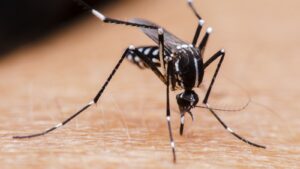
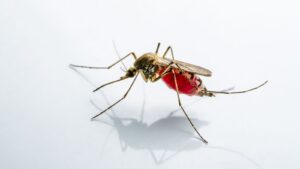
Mosquito treatments are normally focused on shaded resting areas rather than the middle of an open lawn. Shrubs, hedge lines, under-deck areas, protected corners and other cool foliage are common targets.
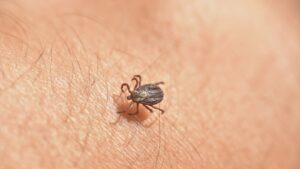
Tick work is more edge-focused. Leaf litter, stone walls, brush lines and transitions between lawn and woods often deserve the most attention.
For simplicity, I tell customers to keep normal yard traffic out until the treated zones are dry.
What should I do with kids after treatment?
Bring toys, balls and portable play equipment out of the treatment zone before service when possible. After the application, wait until treated surfaces are dry or until any longer label-required interval has passed.
Children are more likely to touch plants, sit on the ground and put hands near their faces, so following the label matters more than trying to shave a few minutes off the wait.
If you are unsure about a specific visit, call the company and ask exactly what product was applied and what the label says for re-entry.
What about dogs and other pets?
The same label-first rule applies. Keep pets away from treated areas until dry or longer if directed.
Dogs tend to run fence lines, sniff shrubs and push directly into the places we treat, so I would rather give the material enough time to dry than rush them back outside.
EPA also recommends reading pesticide labels carefully around pets because the label explains how to use the product safely and effectively.
What if my dog needs to go outside right away?
If you have an urgent potty break, use an untreated area if one is available and keep the dog away from wet foliage. A leash can help keep the trip short and controlled.
Once the treated areas are dry and the label allows re-entry, normal yard use can resume.
Does rain change the waiting time?
Rain can delay drying. If a treatment is still wet because a shower started immediately afterward, keep people and pets away until the treated areas have dried and follow any additional label directions.
Rain also creates new standing-water sources that can increase mosquito pressure later, which is a different issue from re-entry safety. Our article on how weather affects mosquito and tick treatments explains that distinction.
What about sprinklers after treatment?
I would not run irrigation onto freshly treated foliage before it has dried. Once the application is dry and the label allows it, normal irrigation is usually fine.
If sprinklers constantly soak shaded shrubs or create standing water, that can contribute to mosquito pressure for a completely different reason. CDC recommends emptying, scrubbing, turning over, covering or throwing out water-holding items at least weekly.
How Mosquito Enemy handles re-entry questions
We want the rule to be easy to understand. Keep kids and pets away from treated areas until dry, and follow any longer requirement on the actual product label.
Our mosquito and tick control programs focus treatment on the places pests use most, not random open lawn. If you want to know what was applied at your property, ask us and we can explain the visit.
Bottom line
How long should you stay off the yard after treatment? Until treated areas are dry, or longer if the pesticide label says so.
That rule protects kids and pets without pretending every day, product and property dries at the same speed.
FAQ
How long should I stay off the yard after treatment?
A: Stay off treated areas until everything is completely dry.
Detail: Dry time depends on sun, shade, humidity, and wind, so “dry” is the safest rule.
Is it the same rule for kids and pets?
A: Yes, the rule stays the same.
Detail: Treated shrub edges and perimeter areas are the zones to avoid until dry.
How do I know when it’s dry?
A: Touch a leaf or surface in the treated area.
Detail: If it feels wet or tacky, give it more time before kids and pets go into that zone.
Can my dog go out to potty right after treatment?
A: Wait until treated areas are dry.
Detail: Use an untreated path or a quick controlled area if you need an immediate break.
Does rain change the rule?
A: Yes, because it can delay or prevent dry time.
Detail: If it poured right after service and you’re unsure, contact us and we’ll guide you.
Why does dry time matter for results?
A: Products need time to settle on resting surfaces.
Detail: Sprinklers, mowing, and wet weather can affect how long results hold in shade zones.
Prefer to talk with a real person?Call 888-229-0095
It’s More Fun Outside! with Mosquito Enemy.