
I’m Jeff, your local pest control guy, and we’re talking about Skeeter syndrome.
Most mosquito bites are annoying, then they fade out.
One little bump shows up.
That itch kicks in.
Then life goes on.
Skeeter syndrome is the bite reaction that doesn’t play by those rules.
Swelling gets big.
Heat shows up.
Pain can show up too.
Parents see it on a kid and think “infection.”
Many adults see it on an ankle and think the same thing.
Let’s keep it simple, practical, and calm.
Related reading
Start here: Mosquito Spray Schedule: Why Recurring Treatments Beat One-Time Sprays
Then read this: What happens if it rains after a mosquito treatment?
Quick answer
Skeeter syndrome is a strong allergic reaction to a mosquito bite that causes a large, red, warm, itchy swelling, often within hours.
A normal bite is usually smaller and more “itchy only,” then it settles down faster.
Kids, allergy-prone people, and folks who get bitten a lot are often the ones who notice the biggest reactions.
Home care usually starts with cold compresses, an oral antihistamine, and an anti-itch cream, while keeping scratching out of the story.
Prevention is the win, because fewer bites means fewer chances for the big reaction to show up.
What is Skeeter syndrome?
Skeeter syndrome is a large local allergic reaction to mosquito saliva.
Your immune system treats that saliva like it’s a bigger problem than it really is.
That overreaction is what creates the “whoa” swelling people talk about.
Heat and firmness can show up, even when nothing is infected.
Pain can show up too, which is why it freaks people out.
A regular mosquito bite usually just annoys you.
This one can look angry enough to make you second-guess everything.
How is Skeeter syndrome different from a normal bite?
Timing is your first clue.
Skeeter reactions often ramp up fast, sometimes within hours of the bite.
A typical bite can swell a little, but it usually stays smaller and calmer.
Size is your second clue.
A big patch that spreads beyond the bite point is common, especially on arms, legs, hands, and ankles.
Warmth is another clue.
That area can feel hot like a “mini sunburn” around the bite.
Pain is the clue people don’t expect.
Tenderness can show up, not just itching.
Duration matters too.
A normal bite often fades faster, while a Skeeter reaction can hang around for days.
Why Skeeter syndrome gets confused with infection
A big red warm swelling looks like cellulitis to a lot of people.
That confusion is understandable.
Allergic swelling tends to peak quickly and itch hard.
Infection usually worsens over time and may come with fever, drainage, red streaking, or spreading tenderness that keeps climbing day after day.
If you’re unsure, call your clinician.
Getting it checked beats guessing, every single time.
Who is most likely to experience Skeeter syndrome?
Kids show it a lot.
Their skin swells fast, and it looks dramatic even when it’s “just a reaction.”
Allergy-prone people can get bigger bite reactions too.
Eczema and other allergic tendencies can travel with stronger swelling in some families.
New exposure can be a factor.
Moving to a different area can mean new mosquito species, and reactions can feel worse at first.
Frequent bites can also stack the odds.
More bites means more chances for your immune system to overreact.
How can I treat symptoms at home?
Start with clean.
Wash the area with soap and water so you’re not rubbing dirt into irritated skin.
Go cold next.
A cold compress can calm swelling and heat fast.
Add allergy control.
An oral antihistamine can help reduce the reaction for many people.
Use anti-itch help on top.
Hydrocortisone or calamine can reduce the urge to scratch.
Try elevation when it’s an arm or leg.
That simple move can reduce pooling and puffiness.
Keep nails out of it.
Scratching breaks skin, and broken skin is how infection gets invited in.
What makes Skeeter swelling worse?
Heat can pump it up.
Hot showers right on the bite can backfire.
Tight socks and tight sleeves can trap irritation and make the swelling feel worse.
Sleep scratching is common.
A kid can rub the bite all night without even realizing it.
Multiple bites close together can also look like “one giant bite.”
That stacked reaction is why ankles and lower legs get so dramatic after an evening outside.
When should I get medical help?
Breathing trouble is an emergency.
Throat tightness, wheezing, dizziness, fainting, or widespread hives after a bite needs urgent care.
Fever plus spreading redness is another reason to call a clinician.
Red streaking, pus, or worsening pain day after day deserves a professional look.
Swelling near eyes on kids deserves faster attention too.
Medical advice beats internet opinions every time.
Can Skeeter syndrome be prevented?
Yes, by preventing bites.
Repellent helps.
Clothing coverage helps too.
Fans on patios help more than people expect because mosquitoes are weak flyers.
Screens help if you keep doors closed and repairs tight.
Standing water control helps most.
Dump what holds water.
Fix what keeps refilling.
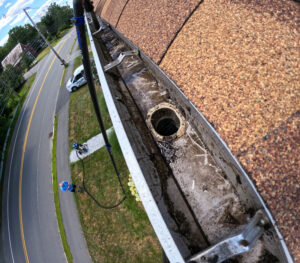
Clogged gutters can quietly hold wet debris and create surprise breeding pockets.
Why yard control matters when someone reacts badly
Skeeter syndrome is personal.
Biting pressure is environmental.
When a yard holds mosquitoes, the “big reactor” in the family gets hit hardest.
Reducing the mosquito population reduces the number of triggers.
That’s why a consistent plan matters.
Our core service is Mosquito + Tick Programs because comfort comes from steady pressure reduction, not a one-time visit.
Breeding control steadies tougher yards.
That’s why Mosquito Egg & Larvae Control exists as a five-application program aimed at breeding zones.
Larvae feed, so larvicides can control them.
Pupae don’t feed, so that stage can’t be controlled the same way.
A calmer yard usually means calmer skin.
Bottom line
Skeeter syndrome is real, and it can look scary.
Big swelling after a mosquito bite can be allergic reaction, not infection.
Home care can help most people when they start early.
Medical help is the right move when symptoms feel severe or confusing.
Prevention is still the best strategy because fewer bites means fewer reactions.
FAQ
What is Skeeter syndrome?
A: Skeeter syndrome is a large local allergic reaction to mosquito saliva that can cause big swelling, heat, redness, itching, and sometimes pain.
Detail: The reaction can look like infection, so fast timing and intense itch are useful clues when you’re deciding what it is.
How is Skeeter syndrome different from a normal bite?
A: Skeeter syndrome usually swells bigger and faster, often within hours, and the area can feel warm and sore instead of only itchy.
Detail: A normal bite tends to stay smaller and settle sooner, while a large allergic reaction can linger for days.
Who is most likely to experience Skeeter syndrome?
A: Children, allergy-prone people, and those who get bitten frequently are more likely to see exaggerated swelling.
Detail: New exposure to different mosquito species can also play a role after moving or traveling.
How can I treat symptoms at home?
A: Cold compresses, an oral antihistamine, and a topical anti-itch cream are common steps that can calm swelling and discomfort.
Detail: Avoid scratching and watch for infection signs like fever, red streaking, drainage, or worsening pain day after day.
Can Skeeter syndrome be prevented?
A: Bite prevention is the best prevention, using repellents, coverage, fans, screens, and reducing breeding water around the home.
Detail: Yard-level mosquito control lowers the number of bites, which lowers the number of chances for big reactions.
Top towns we service
Here are 16 of the top towns we service every week.
Amesbury, MA
Andover, MA
Boxford, MA
Byfield, MA
Georgetown, MA
Groveland, MA
Haverhill, MA
Ipswich, MA
Merrimac, MA
Newbury, MA
Newburyport, MA
North Andover, MA
Rowley, MA
Salisbury, MA
Topsfield, MA
West Newbury, MA
Don’t see your town? See the full list here: Service Area
Related resources
Start with: Mosquito + Tick Programs
Add this for tougher yards: Mosquito Egg & Larvae Control
Ticks ONLY: Tick Control
Home protection: Home Shield
Stinging insects: Stinging Insect Control
Rodents: Rodent Control
Gutter Cleaning: Gutter Cleaning
Reach us: Contact us
Call or text: 888-229-0095 | Email: jeff@mosquitoenemy.com | Contact us
It’s More Fun Outside! with Mosquito Enemy.