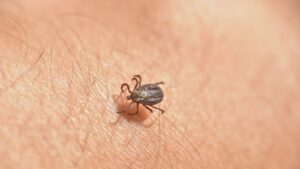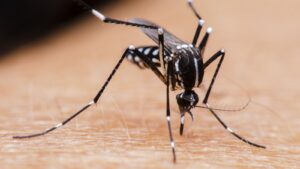
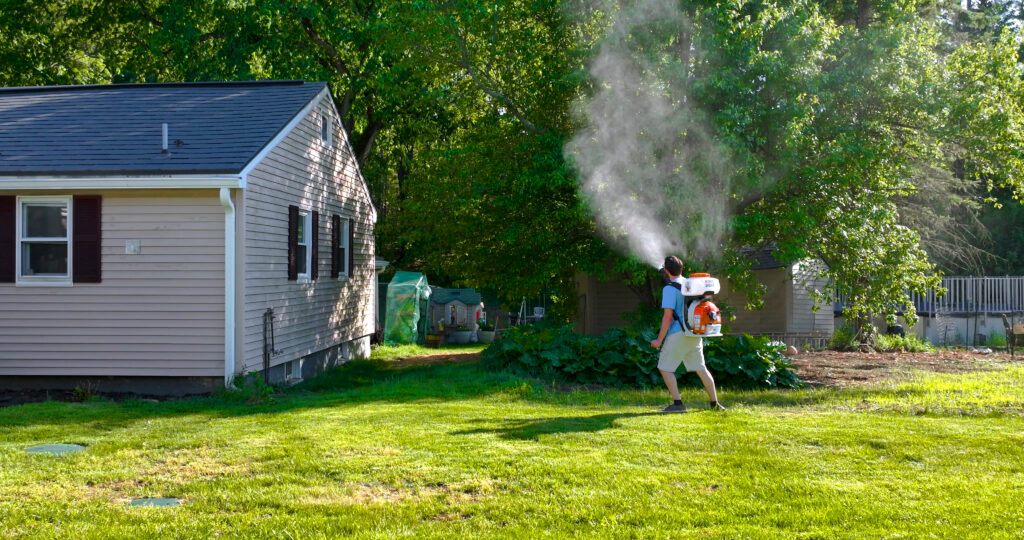
You walk outside after your mosquito treatment, sit down on the deck, and one mosquito finds you.
Hey, I’m Jeff, your local pest control guy.
Now the first thought may be, “I just paid to have this yard treated, so why did I get bitten?”
One mosquito bite after treatment does not automatically mean your treatment failed.
Good mosquito control is about reducing the mosquito population and the biting pressure around the places you use, not promising that another mosquito will never enter your yard.
That distinction matters because mosquitoes can fly in from neighboring properties, new adults can emerge after warm wet weather, and some people are simply more attractive to mosquitoes than others.
One bite is a data point; repeated biting pressure is a pattern.
Before you decide the treatment did not work, look at the whole experience of using your yard.
What Good Mosquito Control Actually Looks Like
Nobody can honestly guarantee that you will never see another mosquito outdoors.
I sometimes compare it to concrete in New England: nobody can promise that every slab will remain crack-free forever.
What I can tell you is what a well-controlled yard should feel like.
Maybe you are sitting on the back deck with your morning coffee, watching the dog in the yard, reading a book, or keeping an eye on the kids in the pool.
Instead of constantly slapping your legs, swatting around your ears, or giving up and going inside, you should be able to enjoy that space much more comfortably.
Seeing an occasional mosquito is different from being hammered by mosquitoes.
Persistent biting that feels anything like the pressure you had before treatment deserves a closer look.
If you are still slapping and whacking yourself silly, I want to know what is going on.
Why One Mosquito Can Still Show Up After Treatment
A mosquito treatment does not create a force field around the property line.
Mosquitoes can move into your yard from a neighbor’s property, nearby woods, wetlands, standing water, or other surrounding habitat.
Our job is to reduce the mosquitoes already using your property and treat the shaded vegetation and resting areas where adult mosquitoes are likely to spend time.
When a mosquito later contacts a properly treated resting surface, residual control may affect it, but that does not mean every mosquito crossing the property line dies instantly.
Think of the treatment as making your yard a much harder place for mosquitoes to remain established, not putting an invisible glass dome over the house.
As a result, a neighbor can have terrible mosquito pressure while your own yard still feels dramatically better.
Property lines do not stop mosquitoes, but an untreated neighbor does not automatically make your own treatment a waste of money.
A Hot, Rainy Week Can Change Mosquito Pressure Fast
Weather is another reason one evening can feel completely different from the evening before.
Higher temperatures plus standing water can accelerate mosquito development and create a noticeable surge in new adults.
For common Culex mosquitoes, the CDC says development from egg to adult can take roughly 7 to 10 days under favorable conditions.
Rain can refill buckets, toys, gutters, pool covers, saucers, low spots, and other containers that were dry only days earlier.
Sometimes a large group of mosquitoes develops on a similar timetable and emerges over a relatively short period.
I call that a mosquito explosion when I am talking with customers, although scientifically it is better described as a concentrated emergence or population surge.
The important point is that a sudden bad evening after hot, wet weather does not automatically prove the previous treatment failed.
Instead, it may mean the pressure around the property changed and we need to look at why.
Does Rain Mean the Mosquito Spray Washed Away?
Rain is probably the most common reason customers worry about a treatment.
Many people see rain after an application and assume everything we just put down disappeared.
That is not automatically true.
Mosquito Enemy uses a professional nonionic surfactant in appropriate treatment mixtures to improve wetting, spreading, and coverage on treated surfaces.
We refer to that part of our process as Rain Shield Protection, but I do not tell customers that rain can never affect a treatment.
A hard rain very soon after an application may reduce performance depending on the product, how long it had to dry, the treated surface, and the actual weather conditions.
By contrast, rain that arrives after the application has had adequate drying time does not automatically mean the treatment is useless.
That is why I look at the timing, the service record, the weather, and what the customer is actually experiencing before deciding a respray is needed.
How I Decide Whether a Customer Really Needs a Respray
When a Mosquito Enemy customer calls, I already know more about the service than most homeowners realize.
Our records show when the technician arrived, how long the service took, the weather conditions, the product used, and the amount applied.
GPS records from our vehicles also help me confirm that the truck was at the service location, although GPS by itself does not prove how the treatment was performed.
What I need from the customer is the information our software cannot see.
Tell me where on the property you are having the problem.
Are mosquitoes actually flying around you, or are you mainly noticing bites?
Was it the back deck, pool, fire pit, front steps, woods edge, or another specific area?
Those details tell me where a technician should investigate and where a return visit may need extra attention.
Sometimes we freshen the specific problem area instead of automatically spraying the entire property again.
On certain callbacks, we may also use a garlic-based repellent in a localized sitting area according to its product directions.
If the regular application is already close, moving that next scheduled visit a few days earlier may make more sense than inserting a separate service call.
Our current policy provides one free respray per seasonal contract when the customer contacts us within 7 days of the application.
What We Look for When the Problem Is Real
A sincere callback is not something I want a technician treating on autopilot.
First, we want to know whether there is a hidden water source that was not obvious during the regular visit.
Maybe an old saucer is upside down under the steps, a bucket has filled, a pool cover is holding rainwater, or a gutter is clogged.
Another possibility is that the problem area has very little usable foliage or shaded resting habitat, which can make a vegetation-based barrier program harder to optimize.
Nearby construction, drainage changes, irrigation, wetlands, dense neighboring vegetation, and recent weather can also change the pressure around a yard.
Sometimes the answer is not more spray; it is finding the reason the mosquitoes are being produced or concentrated there.
That is the difference between troubleshooting a mosquito problem and simply repeating the same application.
Sometimes the Bite Is Not From a Mosquito
Here is another thing homeowners do not always expect: every outdoor bite is not automatically a mosquito bite.
I have talked with customers who say they are being eaten alive near an elevated deck, yet they are not seeing mosquitoes around their face or upper body.
Most often in that situation, the bites are concentrated around the ankles and lower legs.
That pattern can make me consider fleas or another biting pest, especially where wildlife such as skunks or other mammals may be traveling or sheltering nearby.
A simple white surface placed near the problem area can sometimes make tiny dark jumping insects easier to notice, but it is not a definitive diagnostic test.
The bigger lesson is that a callback should start with questions and inspection rather than assuming every complaint means the mosquito treatment failed.
Why One Person May Get Bitten While Everyone Else Is Fine
Another reason one bite can be misleading is that mosquitoes do not find every person equally attractive.
They use carbon dioxide from our breath along with skin odor, body chemistry, heat, and visual cues to locate and choose hosts.
Research has even shown that some people remain consistently more attractive to mosquitoes because of differences in skin odor chemistry.
So if you get two bites while the person beside you gets none, that does not automatically tell us the yard has two different levels of mosquito control.
I sometimes joke that the easiest solution is to sit beside a friend the mosquitoes like better.
The science underneath the joke is real: mosquito attraction varies from person to person.
For that reason, I judge the overall pressure on the property rather than using one person’s bite count as the only measurement.
What You Can Do Between Mosquito Treatments
Standing water is the biggest thing homeowners can control on their side of the equation.
You cannot change the temperature, but you can walk the property and remove the water mosquitoes need for their aquatic life stages.
Check buckets, children’s toys, birdbaths, flowerpot saucers, pool covers, tarps, clogged gutters, and anything else capable of holding water.
Federal CDC guidance says to empty and scrub, turn over, cover, or throw out water-holding items at least weekly.
During hot, wet stretches, I like customers checking even more often; if you are willing to make that walk every four days, even better.
The goal is not to memorize mosquito biology but to keep interrupting the water cycle before a container becomes a reliable breeding site.
If water cannot be dumped, a professional may need to determine whether an appropriate larval-control option fits that location.
Keeping gutters flowing is especially important because water can remain hidden above your head where nobody thinks to look.
What to Do Tonight If You Get One Mosquito Bite
Please do not assume the whole program failed because one mosquito bit you this evening.
Compare tonight with what the yard felt like before treatment.
If you were once getting chased indoors and now you experienced one isolated bite, that is a very different result from continuing heavy pressure.
Use an EPA-registered skin repellent such as DEET or picaridin according to the label when you want another layer of personal protection.
A small outdoor fan can also help around a deck or patio because moving air can interfere with mosquito host-seeking and reduce landings.
Then give the yard another evening or two unless the pressure is obviously severe.
If the same problem keeps happening in the same place, contact us within the 7-day respray window and tell us exactly where you are experiencing it.
That gives me something much more useful than “I saw a mosquito” and lets us determine whether we are dealing with a true treatment issue, a weather-driven surge, a hidden breeding source, or something else.
The Bottom Line: Judge the Pattern, Not One Bite
Mosquito control should make your yard substantially more comfortable, but it cannot turn an outdoor property into a laboratory with zero mosquitoes.
One mosquito can fly in, one person can be more attractive than another, and one hot rainy week can change the pressure around a neighborhood.
What matters is whether you can use your yard without the constant swatting, slapping, and retreating indoors that made you call us in the first place.
If that comfort disappears and the biting pressure becomes persistent, I want to know about it.
Until then, remember the simplest way I can put it: one bite is a data point; repeated bite pressure is a pattern.
Quick Answers Homeowners Ask
Q: Does one mosquito bite mean my yard treatment failed?
A: No. One isolated bite can happen even when the overall mosquito pressure has been greatly reduced. Judge the treatment by whether your yard is substantially more comfortable than it was before, not by whether you ever see or feel a single mosquito.
Q: How long after a mosquito treatment should I wait before deciding whether it worked?
A: Give the treatment a little time and judge the pattern over the next couple of days unless the pressure is obviously severe. Many customers notice a major change quickly, but weather, new mosquito emergence, surrounding habitat, and the timing of the service can affect what you experience. If heavy biting persists, that is different from one isolated mosquito.
Q: Did rain ruin my mosquito treatment?
A: Not automatically. Rain very soon after an application can matter, but a later shower does not prove that the treatment is gone. Mosquito Enemy reviews the timing, products, drying conditions, weather, and actual mosquito pressure before deciding whether a return treatment is needed.
Q: Can mosquitoes fly into my yard from my neighbor’s property after my yard was treated?
A: Yes. Mosquitoes can cross property lines from neighboring yards, woods, wetlands, or other breeding areas. A barrier treatment is not a force field; its purpose is to reduce the population using your property and leave residual control on appropriate resting surfaces.
Q: Why did mosquitoes suddenly get worse after a hot, rainy week?
A: Warm weather and new standing water can produce a rapid increase in mosquito pressure. Common Culex mosquitoes can develop from egg to adult in roughly 7 to 10 days under favorable conditions, while an even faster change can occur if larvae or pupae were already developing before the rain. A sudden surge therefore does not automatically mean the previous treatment stopped working.
Q: When should I call Mosquito Enemy for a free respray?
A: Call when the biting pressure is persistent or clearly abnormal, not simply because you noticed one mosquito. Tell us exactly where on the property the problem is happening and what you are experiencing so we can troubleshoot the cause. Our current seasonal policy allows one free respray when you contact us within 7 days of the application.
Q: Why do mosquitoes bite me more than the person sitting beside me?
A: Mosquitoes do not find every person equally attractive. They use carbon dioxide, skin odor, body chemistry, heat, and visual cues, and research shows that some people consistently attract more mosquitoes than others. Your personal bite count should therefore be considered along with the overall mosquito pressure on the property.
Q: What can I do between treatments to help reduce mosquitoes?
A: Remove standing water as consistently as you can. Check buckets, birdbaths, children’s toys, pool covers, flowerpot saucers, tarps, clogged gutters, and similar water-holding items at least weekly, and more often during hot wet weather if possible. Personal protection such as an EPA-registered repellent and a fan around a sitting area can add another layer when a few mosquitoes are still present.
Still Not Sure Whether Your Treatment Is Working?
If the biting pressure is staying high instead of improving, do not guess at the cause.
Our mosquito and tick control program is built around inspecting the property, treating the right resting areas, documenting the service, and troubleshooting when conditions change.
Sometimes the answer is a targeted correction, while other times the real issue is new standing water, neighboring pressure, weather, or another biting insect.
The goal is simple: help you get back outside without constantly swatting and wondering whether every bite means something went wrong.
Call or text: 888-229-0095
Learn more: Mosquito & Tick Control
It’s More Fun Outside! with Mosquito Enemy.