
I’m Jeff, your local pest control guy.
Winter shows up and people finally breathe again.
Bites stop.
Buzzing disappears.
Then a weird warm day hits in January and somebody says, “Wait… are mosquitoes still a thing?”
That question is smarter than it sounds.
Off-season management is how you set up a better season before the first real hatch even happens.
Related reading
Start here: Mosquito Spray Schedule: Why Recurring Treatments Beat One-Time Sprays
Then read this: What happens if it rains after a mosquito treatment?
Quick answer
Mosquito activity usually drops hard in winter, but eggs can survive and “wait” for spring, so winter is not the time to ignore breeding areas.
Ticks can still bite during cold months whenever temperatures climb enough for them to move, especially on mild days and during winter thaws.
Standing water should still be managed in winter because it sets the stage for spring breeding and it often reveals drainage problems you can fix while the yard is quiet.
Repellent during winter activities can make sense on warmer days or in tick-prone edge areas, especially if you hike, hunt, work outdoors, or run dogs through brushy borders.
Year-round protection for pets matters because it only takes one exposure window to create a problem, and winter is full of surprise “warm spells” now.
Why off-season mosquito and tick management matters
Most homeowners treat mosquito and tick control like a summer-only topic.
That mindset is the reason spring hits so hard in certain yards.
A better approach is to treat winter like the “setup season.”
Small fixes in December, January, and February can prevent bigger pressure in May and June.
This is also when you have time to look at the property without feeling rushed.
Cold weather slows the pests, so you can hunt the conditions that help them.
Are mosquitoes active in winter?
Mosquitoes are not usually “active” the same way they are in July.
Cold shuts down flight, feeding, and normal development.
Eggs are the big story in winter.
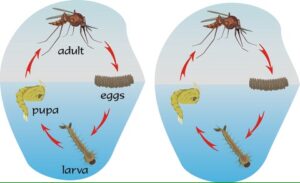
Many mosquito species lay eggs that survive cold weather and hatch when warmth and water return.
That means your spring mosquito problem can start in places that look harmless in winter.
A mild winter can add another twist.
Warmer stretches can keep certain mosquito life cycles moving longer than people expect, especially in protected micro-areas near structures or thick brush where the ground stays a bit warmer.
So the practical takeaway is simple.
Winter isn’t “mosquito season,” but winter can still be “mosquito setup time.”
Can ticks still bite during cold months?
Ticks don’t disappear just because it’s December.
Activity slows when it’s truly cold, but ticks can wake up and move during mild stretches.
Winter thaws are a common bite window.
A sunny 40-degree day can be enough for ticks to quest in the right habitat.
That habitat matters more than the calendar.
Leaf litter, brushy edges, stone walls, tall border growth, and sheltered transition zones can hold moisture and insulation that help ticks hang on.
Dogs are the usual “early warning system.”
One winter tick found on a dog after a woods-edge run is all the proof you need that the risk didn’t vanish.
Should I manage standing water in winter?
Yes, and winter is actually a great time to do it.
Frozen ground reveals where water naturally collects when it melts.
Snowmelt tells the truth about drainage.
A low corner that turns into a muddy pond every March is usually predictable if you watch melt patterns in January.
Hidden water is the part people miss.
Clogged gutters can hold wet debris, then dump water right where you don’t want it, creating springtime soggy pockets that feed breeding.
Winter cleanup also prevents “first hatch fuel.”
Clearing containers, tarps, toys, buckets, wheelbarrows, and anything else that holds water is a boring task that pays off.
Fixing drainage is even better.
A small grading adjustment, a cleaned drain line, or a corrected downspout path can remove the breeding zone instead of treating it forever.
Do I need to use repellent during winter activities?
Sometimes, yes.
Hiking, hunting, trail running, winter dog walks, and outdoor work can all put you in tick habitat during mild spells.
Repellent makes the most sense when you’re moving through edges.
Brush lines and leaf litter are where exposure happens, even when the air feels “too cold for bugs.”
Clothing choices help a lot in winter.
Long pants, higher socks, and light-colored outer layers can make ticks easier to spot.
Tick checks are the real closer.
A quick scan after you come inside beats worrying about it for three days.
Mosquito repellent is rarely needed in true winter conditions.
A weird warm day can change that, though, especially near damp edges and sheltered pockets that stay humid.
Is year-round protection important for pets?
For many households, yes.
Pets don’t wait for “peak season” to run the edges.
Dogs patrol fence lines in February like it’s their job.
Cats find the thickest cover on the property and hang out there.
That behavior creates exposure windows during warm spells.
Veterinarians are the right voice for the product choice and the schedule.
Your job is to avoid the common mistake.
Stopping protection too early or restarting too late can leave a gap right when winter decides to act like spring for a week.
Off-season moves that set you up for a better spring
This is the part I wish more homeowners did.
The yard is quiet.
Mosquito and tick pressure is lower.
So you can make changes without feeling like you’re chasing mosquitoes while they bite your ankles.
Tidy the edges where ticks live
Edges are the tick engine in most yards.
Leaf litter holds moisture and creates protection.
Brush piles create cover and rodent activity, which can increase tick pressure over time.
Stone walls and fence lines often act like wildlife highways.
Cleaning those borders reduces habitat and reduces contact.
A cleaner transition zone gives you fewer “surprise” tick pickups when a dog does one lap around the perimeter.
Open up airflow in mosquito resting zones
Mosquitoes love shade, humidity, and still air.
Shrubs, under-deck pockets, dense groundcover, and damp corners are the usual resting hotels.
Winter pruning can help.
Thinning a thick hedge line or opening up a shaded corner often makes summer treatments work better because coverage and airflow improve.
A yard that dries faster is a yard that breeds less and rests less.
Handle the water problems before water returns
Spring breeding is driven by the first dependable water.
Snowmelt shows you where that water will sit.
Downspouts show you where you’re accidentally creating swampy edges.
A simple redirect can prevent weeks of soggy ground later.
Container cleanup is the fastest win.
Flip what holds water, store what collects water, and toss what you never use.
That one habit removes a surprising number of hatch sites.
Plan your season before the season
Good mosquito control is a schedule, not a single visit.
A consistent yard program targets resting zones and keeps pressure down as new waves hatch.
Strong tick control focuses on edges and transitions where exposure happens.
Our main service is Mosquito + Tick Programs, and it’s built around that rhythm.
Tougher yards often need breeding attention too.
That’s where Mosquito Egg & Larvae Control makes the season steadier by stopping refills at the source.
Larvae feed, so larvicides can control them.
Pupae don’t feed, so that stage can’t be controlled the same way.
Spring feels easier when you’ve already decided what you’re doing.
Bottom line
Winter isn’t the time for mosquito panic.
Off-season is the time for smart setup.
Ticks can still show up during mild stretches, so edge awareness still matters.
Standing water cleanup still matters because spring breeding doesn’t start in spring.
Pets still need protection because they don’t follow the calendar.
A calmer season starts with a calmer plan.
FAQ
Are mosquitoes active in winter?
A: Mosquito activity usually drops hard in winter, but eggs can survive and wait for spring conditions to hatch.
Detail: Off-season is the best time to remove breeding containers and fix drainage so the first warm rains don’t trigger a big refill.
Can ticks still bite during cold months?
A: Ticks can still bite during mild winter days and thaws when temperatures rise enough for them to move in sheltered habitat.
Detail: Leaf litter and brushy edges hold moisture and insulation, so winter hikes and fence-line dog runs can still create exposure windows.
Should I manage standing water in winter?
A: Yes, standing water management in winter helps prevent spring breeding and reveals drainage issues while the yard is quiet.
Detail: Snowmelt shows where water collects, and cleaning containers plus maintaining gutters prevents hidden, repeat wet spots.
Do I need to use repellent during winter activities?
A: Repellent can make sense on mild winter days if you’re spending time in tick habitat like brush lines, leaf litter edges, or wooded transitions.
Detail: Clothing choices and tick checks often do the heavy lifting in winter, with repellent as an added layer when conditions are right.
Is year-round protection important for pets?
A: Year-round protection can be important for pets because winter warm spells can create surprise exposure windows for ticks and mosquitoes.
Detail: Your veterinarian should guide product choice and timing, while yard edge cleanup and consistent control reduce the pressure pets face outside.
Top towns we service
Here are 16 of the top towns we service every week.
Amesbury, MA
Andover, MA
Boxford, MA
Byfield, MA
Georgetown, MA
Groveland, MA
Haverhill, MA
Ipswich, MA
Merrimac, MA
Newbury, MA
Newburyport, MA
North Andover, MA
Rowley, MA
Salisbury, MA
Topsfield, MA
West Newbury, MA
Don’t see your town? See the full list here: Service Area
Related resources
Start with: Mosquito + Tick Programs
Add this for tougher yards: Mosquito Egg & Larvae Control
Ticks ONLY: Tick Control
Home protection: Home Shield
Stinging insects: Stinging Insect (MA)
Rodents: Rodent (MA)
Gutter Cleaning: Gutter Cleaning
Reach us: Contact us
Get Your Free Quote
Call or text: 888-229-0095
Email: jeff@mosquitoenemy.com | Contact us
It’s More Fun Outside! with Mosquito Enemy.