Most homeowners look at a bird feeder, a stack of firewood, or a compost pile and see three ordinary backyard things. When I evaluate tick risk, I look underneath them.
Hey, I’m Jeff, your local pest control guy, and that difference in where I look tells me a lot about a property. None of these objects automatically means you have a tick problem, but each one can quietly give mice, rats, chipmunks, or other wildlife food, shelter, or an undisturbed place to live.
That matters because white-footed mice are important hosts for immature blacklegged ticks and important reservoirs for the bacterium that causes Lyme disease. Still, I do not walk into a yard, see one mouse, and announce that the customer has a huge tick problem.
What I am doing is reading the property. A bird feeder, compost pile, or wood stack may be perfectly manageable, or it may be one more clue that the yard is supporting the animals and microhabitats that ticks use.
Homeowners Look at the Object. I Look Underneath It.
One of the biggest differences between a quick walk-through and an experienced inspection is what happens after you notice something. The object itself is usually not the answer.
Move a board, lift a loose piece of lumber, look behind the firewood, or study the ground under a feeder, and you can start seeing the real story. Droppings, a small opening under something that has been sitting for months, disturbed soil, seed scattered across the ground, or a well-worn rodent route are the clues that make me pay attention.
Not every hole is automatically a mouse or rat tunnel, so I do not make that call from one opening alone. Instead, I look for the whole pattern around it and decide whether the homeowner has something worth addressing.
A Bird Feeder Is Not Automatically a Tick Problem
When I see a bird feeder, I do not immediately think, ‘There are the ticks.’ My eyes go to the ground first.
Seed collecting underneath the feeder can become a reliable food source for more than birds. Then I look for droppings, nighttime activity, mice or rats moving in and out, and whether the area sits close to a stone wall, heavy groundcover, or another protected edge.
Another thing I check is whether there is a bird bath nearby. Because Mosquito Enemy handles both mosquitoes and ticks, that one inspection can turn into two very different conversations.
A bird bath that sits with water for days can become mosquito breeding water, so my field recommendation is to dump it at least every four days and refill it fresh. Cleaning the feeder area is a different job: keep spilled seed from building up so you are feeding the birds, not creating a buffet for every mouse and rat in the neighborhood.
The bird feeder itself does not prove the yard has more ticks. What changes my concern is evidence that the feeder is supporting rodent activity in the same parts of the property where people and pets spend time.
The Small Clues Around Bird Feeders Matter More Than the Feeder
A homeowner may tell me, ‘There is hardly any seed left on the ground, so I keep it pretty clean.’ That can be true, but it can also mean birds and wildlife are cleaning it up for them.
Look early in the morning or after dark and the picture can be different. Mice and rats are often much easier to notice when the yard is quiet, especially when there is an easy food source they can return to night after night.
Droppings are another clue I do not ignore. Once I see enough evidence of rodent activity, the conversation is no longer only about ticks; now I am also thinking about sanitation, exclusion, and whether the customer needs a separate rodent-control plan.
Compost Is Not the Problem. Neglected Compost Can Be.
Compost by itself is not a reason to panic. A properly managed compost area can be part of a normal yard without becoming a major pest issue.
Problems start when the pile becomes an undisturbed source of food, cover, warmth, and moisture. Rodents can use protected spaces underneath or around an old pile, and the homeowner may never notice the activity until something gets moved.
Sometimes I see a chicken-wire enclosure filled with leaves, and for leaf storage that may be about the best a smaller property can reasonably do. Once food scraps are involved, though, chicken wire alone is not something I would consider rodent-proof.
If the property gives you room, I like compost and similar attractants farther away from the patio, play area, dog route, and maintained lawn edge. The goal is not to hide it deep in the woods; the goal is to reduce the overlap between rodent activity and the places where people and pets travel every day.
For me, that is a practical recommendation, not a magic distance. Smaller Massachusetts and New Hampshire yards do not always give homeowners the luxury of moving everything far away, so we work with the property they actually have.
Firewood and Tick Risk: Neat Does Not Mean Rodent-Proof
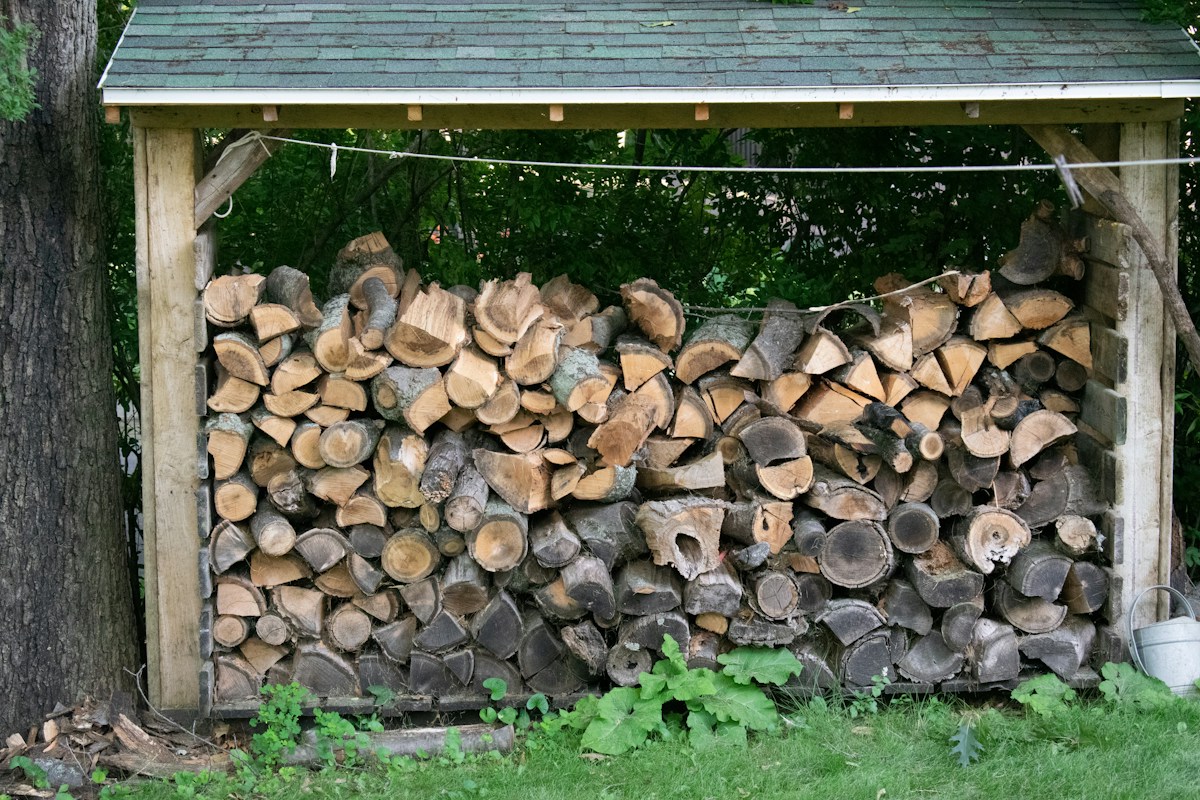
A clean stack of firewood is better than a damp, collapsed pile full of leaves and weeds. Even a neatly stacked woodpile can still provide shelter if it sits undisturbed long enough.
The wood is not producing ticks. What concerns me is the protected space around and underneath it, especially when mice, chipmunks, or other small mammals are using the stack for cover or food storage.
Move a lower log or an old board that has been lying on the ground and you may suddenly find an opening that was invisible from five feet away. That is the kind of field clue homeowners walk past because the top of the woodpile looks fine.
Location matters too. A stack sitting dry and open is different from one tucked against a shaded wooded edge where leaves collect, the ground stays damp, and wildlife has cover on several sides.
If you want a deeper explanation of the kinds of areas we pay attention to, our article on tick hot spots around stone walls, leaf litter, and wood edges covers that habitat side of the problem.
Chickens Can Eat Ticks. That Does Not Make Them a Tick-Control Program.
Chickens are a perfect example of why I look at the whole property instead of one pest at a time. People will sometimes tell me they got chickens because chickens eat ticks, so they assume professional tick control is no longer necessary.
Yes, chickens can eat ticks. However, that does not mean a backyard flock will reliably remove blacklegged ticks from the property or replace a real tick-control program.
Feed changes the equation. When I see chickens, or horses being fed grain, rodent pressure is one of the first things I look for because spilled or poorly stored feed can become a dependable food source for mice and rats.
Metal containers with tight-fitting metal covers are what I prefer for grain storage. Plastic barrels may look secure, but determined rodents can chew through plastic to reach the feed.
For me, that is another example of the circle of life in the yard. You are feeding the chickens or the horses, rodents notice the opportunity, and those rodents can also be hosts for immature ticks.
Reducing that food source is good integrated pest management, but it is not a promise that the tick population will disappear. Our article on mosquito and tick myths about birds and other backyard wildlife explains why I do not rely on predators alone to solve a tick problem.
The White-Footed Mouse Connection Is Real, but I Do Not Oversell It
White-footed mice matter because immature blacklegged ticks commonly feed on them, and mice can infect feeding ticks with the Lyme-causing bacterium. That is an important part of the Lyme disease cycle in New England.
Seeing mice does not prove that every tick on the property is infected, and it does not prove the customer has a severe tick problem. A lot of mice still means, first and foremost, that you have a lot of mice.
What their presence does is give me another reason to pay attention to the habitat around that property. If the same yard has heavy leaf clutter, wooded edges, stone walls, groundcover, firewood, spilled birdseed, and mouse activity, the individual clues start adding up.
You can read more about where ticks hide in a yard if you want the habitat side of that picture. I still keep the distinction clear: rodent activity is one clue, not a laboratory test for tick abundance.
These Clues Usually Change My Advice More Than My Tick Treatment
Here is something that may surprise homeowners: finding a feeder, compost pile, firewood stack, or even obvious mouse activity does not make us invent a completely different tick treatment. Mosquito Enemy already treats the areas where we expect ticks to be, and we do that consistently from property to property.
Instead, these observations change the homeowner conversation. Usually, I point out the spilled seed, tell them to move stored feed into metal containers, recommend cleaning around the compost, or show them the opening I found under a piece of lumber.
When there is clear mouse or rat activity at a Massachusetts property, that can also lead to a separate discussion about rodent control. Tick control and rodent control solve different parts of the problem, and I do not pretend one automatically replaces the other.
Keeping that separation clear is important. A good inspection should tell you what is a tick issue, what is a rodent issue, what is a mosquito issue, and what is simply a yard-maintenance opportunity.
Small Backyard Choices That Help Manage Tick Risk
You do not need to throw away your bird feeder, stop composting, get rid of your firewood, or give up your chickens because you are worried about ticks. The better question is whether those things are being managed in a way that unnecessarily supports rodents and protected habitat.
Keep seed from piling up, store grain so rodents cannot chew into it, avoid letting firewood and debris become forgotten wet clutter, and place compost away from the areas your family and pets use when the property allows it. Those are small choices, but they help me see a property that is being managed intentionally instead of one that is quietly feeding the next pest problem.
Most important, do not assume any one backyard object explains every tick you find. Professional tick control works best when the treatment addresses the real tick habitat and the homeowner handles the food, shelter, and clutter that can make the property more attractive to wildlife.
Frequently Asked Questions
Q: Do bird feeders cause ticks in my yard?
A: No, not by themselves. A bird feeder becomes more interesting to me when spilled seed is attracting mice, rats, chipmunks, or other wildlife around the same parts of the yard where people and pets spend time. The feeder is a clue to inspect, not proof of a tick problem.
Q: Can a firewood pile cause a tick problem?
A: No, the woodpile itself does not create ticks. What it can create is protected shelter for mice and other small mammals, especially when the pile is damp, messy, shaded, or surrounded by leaf litter. Neat is better, but neat does not mean rodent-proof.
Q: Can a compost pile attract mice that carry ticks?
A: Yes, a poorly managed compost area can attract or shelter rodents. Food scraps, protected space, moisture, and lack of disturbance can make the area more attractive to mice and rats. That does not automatically mean the compost pile is full of ticks.
Q: Should I move my compost away from where my dog plays?
A: If the property gives you room, I prefer separating compost and other rodent-attracting areas from normal pet and family traffic. The farther you can keep those attractants from high-use areas without creating another problem, the less overlap you create between wildlife activity and the places your dog regularly travels.
Q: Do chickens eat enough ticks to replace professional tick control?
A: No. Chickens can eat ticks, but there is not good evidence that a backyard flock reliably controls blacklegged ticks well enough to replace a real tick-management program. Spilled or poorly stored chicken feed can also attract rodents.
Q: Why would a pest professional look underneath boards, logs, or firewood?
A: Because the clue may be underneath the object, not on top of it. Moving something that has been sitting undisturbed can reveal a burrow opening, droppings, nesting material, or another sign of rodent activity that the homeowner never noticed from above.
Q: Does rodent control replace tick control?
A: No. Rodent control addresses mice and rats, while tick control targets the tick habitat and the ticks using the property. Managing rodent attractants is good IPM, but I do not promise that controlling mice by itself will eliminate yard ticks.
Q: What should I do if I see droppings or burrow openings around birdseed, compost, or firewood?
A: Treat that as evidence worth investigating, not as proof of one specific pest. Clean up the food source, avoid creating more shelter, and have the activity identified if it continues. On Massachusetts properties, Mosquito Enemy can also discuss rodent-control options when the evidence points to mice or rats.
Want Someone to Read the Whole Yard, Not Just Spray It?
If your property has bird feeders, compost, firewood, chickens, horse grain, wooded edges, or signs of rodent activity, the answer is not automatically to remove everything. The first step is knowing what is actually contributing to tick risk and what is a separate rodent or mosquito issue.
Mosquito Enemy provides professional tick control throughout our Massachusetts and New Hampshire service area. For Massachusetts properties with active mouse or rat problems, our rodent control service can address that issue separately instead of pretending one treatment solves everything.
Call or text: 888-229-0095 to talk about your property and the areas you are concerned about.
It’s More Fun Outside! with Mosquito Enemy.