
Hey, I'm Jeff, your local pest control guy. Parents usually think about the swing set, trampoline, sandbox, or little trail as a fun part of the backyard, but I look at what surrounds that play area before I decide how much tick pressure may be there.
Most of the time, the equipment itself is not the first thing that concerns me; the bigger question is whether the kids are stepping off it into leaf litter, brush, tall grass, a stone wall, or the lawn-to-woods edge.
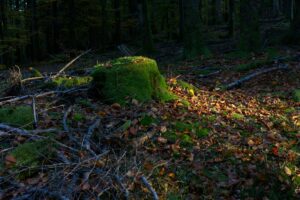
When a play set is pushed right up against the woods, I make a note of it because children repeatedly move through a transition zone that can be much more favorable for ticks than open, sunny lawn.
If the same trampoline is sitting in the middle of a maintained, sunny yard, I consider that a much lower-risk setup, although lower risk never means tick-proof.
That difference is why play-area placement deserves more thought than simply asking whether the grass has been mowed.
The Woods Edge Is the First Thing I Notice
A play set, trampoline, or backyard path placed directly beside woods can put children into repeated contact with the exact edge habitat where shade, leaf litter, brush, and wildlife traffic come together.
Massachusetts guidance recommends moving children's play areas as far as practical from woods, shrubs, and undergrowth, while CDC guidance also says playground equipment should be kept away from grassy, brushy, or wooded areas.
Rather than panic if the equipment is already there, I want the homeowner to look at what can realistically be changed around it.
Keep leaves and brush from piling up beside the play area, cut back vegetation that children brush against, and create a cleaner transition between the recreational space and the woods.
For a closer look at why those edges matter, see our tick hot spots around stone walls, leaf litter, and wood edges.
How Far Should a Play Set Be From the Woods?
My field preference, when the property gives you room, is to pull high-use play equipment roughly 6 to 10 feet away from a brushy woods edge and create a maintained separation zone.
CDC and University of Maine both use a 3-foot wood-chip or gravel barrier as a practical tick-safe landscaping recommendation, so I do not present my wider distance as a government rule or a guarantee.
Where I differ personally is that I prefer crushed stone in a heavily used children's area when the layout and budget allow, because I like a clean, dry, visible transition rather than another damp organic layer.
Authoritative guidance also allows wood chips or mulch as a maintained barrier, so homeowners should not hear me say that every bark-mulch bed automatically causes ticks.
The main goal is separation from brushy habitat and fewer places where kids are stepping directly from a swing, slide, or trampoline into leaf litter and vegetation.
A Trampoline in Open Lawn Is a Very Different Setup
Put the trampoline in sunny, maintained lawn and you have changed the exposure picture considerably.
Open turf is generally less favorable for blacklegged ticks than a moist wooded edge, especially when there is no leaf litter, brush, stone wall, or tall vegetation immediately beside it.
Even then, I still look underneath and around the trampoline because shade, trapped leaves, toys, damp ground, or vegetation can change the micro-area over time.
Nothing outdoors is guaranteed, yet moving the equipment away from the woods is one of the simplest ways to reduce unnecessary contact with higher-risk habitat.
Backyard Trails Need Their Own Plan
Children do not walk a backyard trail the way adults imagine they will; they step off the center, touch branches, chase each other, and brush against whatever is beside them.
Because of that, widening a short trail, cutting brush back from both sides, removing encroaching leaves and branches, and keeping the path open can reduce the amount of direct contact with vegetation.
CDC recommends staying in the center of trails in tick habitat, but I know that advice is harder to enforce with kids who are simply playing.
If a short trail is on the customer's property, accessible, and within the legal treatment area, we can evaluate the surrounding tick habitat and treat where the product label allows.
Property ownership matters, so we do not cross onto a neighbor's land, conservation land, or another owner's property just because the trail continues there.
Treatment Should Follow Exposure and the Product Label
Around a play area, I want the technician thinking about where children are actually likely to encounter ticks: the ground, leaf litter, brush, ground cover, wooded transition, and other appropriate habitat around and underneath the recreational space.
The current LESCO CrossCheck Plus label includes lawns, parks, recreational areas, athletic fields, and playgrounds among its allowed outdoor use sites, and its tick directions say to treat the entire area where tick exposure may occur rather than making isolated spot applications.
Current residential outdoor-surface restrictions also matter, which is why I do not want anyone assuming that spraying every swing seat, trampoline mat, handle, or other high-touch surface is automatically better or automatically allowed.
Instead, the exact surface, surrounding habitat, site conditions, and current label have to control the application.
Professional service can reduce tick pressure in treated habitat, but CDC specifically warns homeowners not to rely on pesticide application alone to eliminate infection risk.
Learn more about our professional tick control program and how we approach tick habitat across Massachusetts and New Hampshire.
Do Not Use a Fixed 30-Minute Rule if the Area Is Still Wet
One operational point deserves to be crystal clear around children: the current CrossCheck Plus label says people and pets should not be on treated surfaces until the spray has dried.
Drying may happen quickly under some conditions, but a fixed number of minutes should never override the actual label requirement if a treated surface is still wet.
For more detail on re-entry after service, read How Long Should I Stay Off the Yard After Treatment?.
Once the treated area is dry and the label requirements are met, the family can resume normal use of the yard.
Clothing and Repellent Still Matter on Wooded Trails
Yard treatment is only one layer of protection, especially when children leave the maintained lawn and head into a wooded path.
Use an EPA-registered repellent on exposed skin according to its label, and consider 0.5% permethrin for clothing and gear rather than spraying permethrin directly on skin.
Tucking pant legs into socks can also help keep a crawling tick on the outside of clothing where it is easier to notice.
Our older article on permethrin-treated clothing for ticks explains that additional layer in more detail.
Tick Checks Still Belong in the Routine
I recommend tick checks after outdoor activity even when a yard is professionally treated, because no legitimate company can promise that a child, adult, or pet will never encounter another tick.
CDC says many Lyme disease exposures happen in people's own yards or neighborhoods, and it recommends checking the body, clothing, gear, and pets after being outdoors, including after time in your own backyard.
Parents should pay particular attention to hidden areas such as behind the ears, around the hairline, under the arms, behind the knees, around the waist, and between the legs.
You can give families good instructions, but whether people follow them every single time is another story; my job is still to recommend the safest routine I can.
The Best Play Area Is Lower-Risk, Not Risk-Free
Moving a swing set or trampoline away from a wooded edge, keeping leaves and brush out of the play zone, opening a trail, and adding a maintained separation strip are all useful IPM steps.
Combine those landscape changes with personal protection, tick checks, and professional treatment when pressure justifies it, and you are stacking several sensible layers instead of expecting one tactic to do everything.
No yard can be made completely tick-free, yet the places children use most deserve extra attention because that is where repeated exposure happens.
Families do not need to stop using the backyard; they need to make the high-use areas smarter and easier to manage.
Frequently Asked Questions
Q: Is a swing set next to the woods a bad place for ticks?
A: It can be a higher-risk location because children are repeatedly moving through a wooded or brushy transition where ticks are more likely to be encountered. Moving the play area farther into open lawn, when practical, and cleaning the edge around it can reduce unnecessary contact with tick habitat.
Q: How far should a play set be from the woods?
A: There is no universal distance that guarantees protection, but CDC recommends keeping playground equipment away from yard edges and using a 3-foot wood-chip or gravel barrier between lawns and wooded areas. My field preference is often a wider 6-to-10-foot separation around a high-use play area when the property gives you the space, but that is practical advice rather than a government rule.
Q: Is a trampoline in the middle of the lawn safer from ticks?
A: Generally yes, because sunny, maintained lawn is usually a lower-risk setting than a trampoline pushed against leaf litter, brush, tall grass, stone walls, or woods. Still inspect underneath it for trapped leaves, damp ground, or vegetation that can change the conditions around the equipment.
Q: Can a professional tick treatment make my children's play area tick-free?
A: No reputable treatment can guarantee a tick-free play area. Professional control can reduce tick pressure in treated habitat, while landscape management, repellents, clothing, and tick checks reduce other parts of the exposure risk.
Q: How long should kids stay off a treated play area?
A: Follow the exact product label and keep children off treated surfaces until the spray has dried when that is the label requirement. Thirty minutes should not be treated as permission to re-enter if the area is still wet.
Q: Should I spray permethrin directly on my child before backyard play?
A: No, permethrin products used for tick prevention are for clothing and gear, not direct application to skin. Use an EPA-registered skin repellent that is labeled for children and follow the age restrictions and directions on that product.
Q: Are backyard trails a tick risk for children?
A: They can be, especially when the trail is narrow and children brush against tall grass, leaves, or low vegetation along the sides. Keeping the trail open, cutting brush back, and teaching children to stay toward the center can reduce contact, although kids will not always stay perfectly on course.
Q: Do I still need to check my child for ticks after playing in a treated yard?
A: Yes, I still recommend a tick check after outdoor activity, especially after time near woods, brush, trails, leaf litter, or a play area close to the edge. Treatment lowers pressure; it does not replace the simple habit of checking children, adults, and pets when they come back inside.
Want Us to Look at the Play Area, Not Just the Property Line?
If your swing set, trampoline, sandbox, or backyard trail sits beside woods or another tick-prone edge, tell us where the kids actually spend their time.
Mosquito Enemy can evaluate those high-use areas as part of the property and explain what can be improved through habitat changes, personal prevention, and professional tick control without promising something outdoors cannot deliver.
Call or text: 888-229-0095 or use our contact page to ask about tick control in your Massachusetts or New Hampshire yard.
It's More Fun Outside! with Mosquito Enemy.