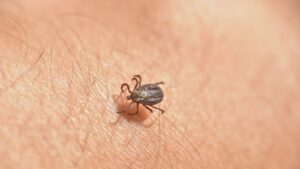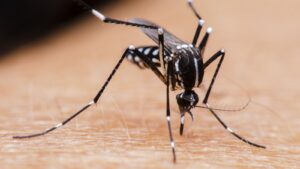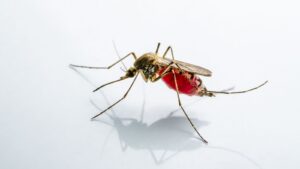

Do more acorns mean more ticks? A yard covered with acorns this fall does not automatically mean you are going to have a terrible tick problem next spring.
Hey, I’m Jeff, your local pest control guy. I have worked around New England yards long enough to know that a heavy acorn year gets people thinking about mice, chipmunks, squirrels, and eventually ticks, but I do not look at a carpet of acorns and pretend it is a crystal ball.
What the acorns can tell us is that there is a lot of food available for small mammals. Research has found a real ecological connection between acorns, white-footed mice, and later blacklegged-tick risk, but the timing is slower and less automatic than the headline usually makes it sound.
A Heavy Acorn Crop Is a Clue, Not a Tick Forecast
When I see acorns all over a property, my first reaction is simple: that property had a heavy acorn crop. It may also mean mice and other wildlife have an unusually good food source, especially around stone walls, woods, leaf litter, woodpiles, sheds, and other protected areas.
Still, I have never treated a yard differently just because I saw more acorns. More acorns do not prove that a customer has more ticks today, and they certainly do not justify putting down extra pesticide or changing a legal application rate.
The best-known long-term research behind this topic found that autumn acorn production influenced white-footed mouse abundance the following summer, and those mice then influenced the abundance of infected blacklegged-tick nymphs the following year. In that study, the strongest acorn signal for Lyme-disease exposure risk appeared roughly two years later, not automatically the very next spring. Read the original acorn–mouse–tick study
Another 19-year field analysis found the same general pattern: acorn-driven increases in mice were associated with a delayed increase in infected questing blacklegged-tick nymphs. That makes acorns useful ecological information, but it does not make every oak tree a prediction machine. See the long-term tick-risk research
Why White-Footed Mice Matter to Blacklegged Ticks
Blacklegged ticks need blood meals to move through their life stages, and immature ticks commonly feed on small mammals and birds. White-footed mice are especially important in Lyme-disease ecology because they can infect feeding larval ticks with the bacteria that cause Lyme disease. CDC tick life-cycle information
Once feeding ends, an immature tick drops off its host and continues developing in the environment. A mouse does not create a tick out of thin air, but it can help feed ticks that are already part of the local life cycle.
That is why I would never tell a homeowner that seeing mice automatically means there is a tick infestation. Mice are one piece of the system, while shade, moisture, leaf litter, wildlife, vegetation, season, and the surrounding landscape all influence what happens in a real yard.
Blacklegged Ticks Are Not the Only Ticks in Our Area
The acorn-and-mouse research is strongest for blacklegged ticks and Lyme-disease ecology, so that is where I want to keep the scientific claim focused. Around Massachusetts and New Hampshire properties, however, blacklegged ticks are not the only ticks homeowners may encounter.
Massachusetts identifies blacklegged ticks and American dog ticks throughout the state and lone star ticks in some areas. Dog ticks can transmit Rocky Mountain spotted fever and certain types of tularemia, while lone star ticks can be associated with ehrlichiosis, tularemia, STARI, and alpha-gal syndrome. Massachusetts tick-borne disease guidance
For a homeowner, the practical lesson is not to memorize every species before taking action. The better approach is to reduce favorable habitat, protect people and pets, and use a professional tick-control plan when the property calls for it.
Where Mice and Tick Habitat Overlap Around a Yard
Mice like cover, food, and protected travel routes, which is why I pay attention to stone walls, leaf litter, brush, woodpiles, sheds, under-deck areas, and wooded edges. Small holes around those areas may indicate rodent travel or burrows, while chewed acorn shells and nesting material can be another clue.
Ticks also do well in many of those same shaded, humid edge environments. For that reason, a messy stone wall packed with leaves and sticks can matter more to me than a clean, sunny section in the middle of the lawn.
Dogs add another layer because they are curious and repeatedly investigate the exact places rodents and wildlife travel. If your dog follows a fence line, sniffs around a woodpile, or pushes into a leaf-covered stone wall, that route deserves attention even if the rest of the lawn looks perfect. Read more about tick hot spots around stone walls, leaf litter, and wood edges and tick control for wooded yards and dogs.
Should You Pick Up All Those Acorns?
Yes, I would clean up concentrated acorns and walnuts in the usable parts of the property, but not because I can promise that raking acorns will prevent Lyme disease. I look at it first as good property maintenance and as one way to reduce a convenient food source around places where you do not want rodents congregating.
Focus on the areas around the house, foundation, garage, sheds, stone walls, dog areas, play areas, woodpiles, and frequently used lawn edges. Trying to vacuum every acorn out of several acres of woods is unrealistic and unnecessary.
Acorns and walnuts can also sprout and create unwanted seedlings, so cleanup has a landscaping benefit apart from pests. Keeping the property neat, reducing concentrated food, and removing shelter all fit the same IPM mindset described in our landscaping tips to deter mosquitoes and ticks.
What a Heavy Acorn Crop Changes for Mosquito Enemy
A heavy acorn crop makes me more aware of possible small-mammal activity, but it does not change the legal pesticide rate and it does not cause us to dump extra product into one section of the yard. Treatment still has to follow the product label and be directed toward the actual tick habitat on that property.
Fresh green acorns may simply tell me that the drop is recent and the homeowner has not had a chance to clean yet. Brown acorns, chewed shells, rodent holes, leaf clutter, and repeated wildlife activity can provide more context, but none of those observations alone proves a particular tick count.
Professional tick control is about reading the whole yard: lawn-to-woods transitions, stone walls, brush, leaf litter, shaded edges, pet routes, moisture, and other places where people or animals are most likely to encounter ticks. That is why our Tick Control program focuses on habitat rather than treating every square foot the same way.
Cleanup Is IPM – Not a Replacement for Tick Control
On the homeowner side, this is what pest-control professionals call Integrated Pest Management, or IPM. You reduce food, shelter, clutter, leaf buildup, brush, and other conditions that help pests thrive, while the professional uses the appropriate control tools for the pest and property.
I compare it to standing water and mosquitoes. We can treat adult mosquitoes professionally, but if a homeowner keeps dumping, tipping, and turning unnecessary water, the property is giving us less breeding pressure to fight in the first place.
Tick cleanup works the same way. Removing acorns, leaves, brush, and rodent shelter does not replace a properly designed treatment, but it makes the yard less hospitable and supports the work being done professionally. Our professional vs. DIY mosquito and tick control guide explains why those approaches work best together rather than as either-or choices.
What About Mice Around the House?
If mice are actually getting into the garage, basement, walls, sprinkler boxes, sheds, or other structures, that becomes a rodent problem in addition to a tick-habitat conversation. Look for droppings, gnawing, nesting material, openings around garage-door sweeps, and travel routes along foundations.
Do not respond by scattering poison around the yard. EPA continues to tighten rodenticide protections because children, pets, birds, and other wildlife can be exposed, and consumer rodenticide products are designed around labeled bait stations rather than loose outdoor bait. EPA rodenticide guidance
Local rules can also be stricter than federal requirements, and Massachusetts municipalities have been pursuing additional restrictions on some second-generation anticoagulant rodenticides. Because those rules can change, homeowners should follow the current product label and local requirements rather than relying on something they heard years ago.
For Massachusetts customers in Essex and Middlesex Counties, Mosquito Enemy also offers rodent control for mice and rats when the problem involves the home or structure. We do not currently offer that rodent service in New Hampshire.
Do Tick Tubes and Mouse-Targeted Tick Boxes Work?
I am very familiar with both approaches, although I have never made tick tubes a core Mosquito Enemy service. Traditional tick tubes contain permethrin-treated cotton that mice may collect for nesting, exposing ticks feeding on those mice to the acaricide. Federal tick-control review of host-targeted tools
Professional bait-box systems use a different idea. SELECT Tick Control System boxes contain a fipronil-treated applicator that contacts mice or chipmunks as they enter the box, treating the animal rather than scattering pesticide across the yard.
Research from some smaller field studies has shown strong reductions in ticks after bait-box deployment, while a larger randomized Connecticut trial involving 622 households did not find a significant reduction in household tick encounters, tick-borne disease, or overall nymphal tick density compared with placebo boxes. SELECT field study Randomized Connecticut bait-box trial
Tick tubes have also shown variable performance, and recent research continues to examine how placement and timing affect whether mice actually use the treated cotton. Recent tick-tube deployment research
So I view host-targeted products as possible additional IPM tools, not magic replacements for yard cleanup, personal protection, pet protection, or professional habitat treatment. I have been trained on bait-box systems, but I do not currently market them as the main answer for our tick-control customers.
Four Things I Would Do After a Heavy Acorn Fall
My order of priorities puts professional tick prevention first. Once a tick bite happens, you cannot rewind the clock, so I would rather reduce exposure before somebody in the family or the dog starts finding attached ticks.
Second, clean up concentrated acorns and walnuts in the usable yard, especially around the house, pet areas, stone walls, sheds, woodpiles, and other places where small mammals may feed. Third, remove leaf litter, brush, sticks, clutter, and other protected shelter from the high-use edges of the property.
Finally, watch for mouse activity and manage a real rodent problem legally and appropriately. Trapping, exclusion, sanitation, structural repairs, and labeled bait strategies all have a place depending on the situation, but throwing poison around outside is not a responsible shortcut.
The Bottom Line: More Acorns Are a Signal, Not a Guarantee
A big acorn year can feed more white-footed mice and other wildlife, and research shows that those ecological changes can contribute to higher blacklegged-tick risk later. What it does not mean is that every yard with acorns will suddenly have a terrible tick problem the following spring.
Use the acorns as a reminder to look at the whole property. Clean up concentrated food and clutter, reduce rodent shelter, keep the yard edges maintained, watch where pets travel, and stay ahead of tick control rather than waiting for a bite to convince you the risk was there.
That is the part homeowners can control. Mother Nature will keep producing acorns, mice, wildlife, and ticks, but good IPM plus professional prevention can make the areas your family actually uses much less inviting to the pests you are trying to avoid.
Frequently Asked Questions
Q: Do more acorns mean more ticks?
A: Not automatically. Heavy acorn crops can support larger populations of white-footed mice and other wildlife, and research has linked that ecological chain to later blacklegged-tick risk. A yard full of acorns is a clue about available food, not proof of a specific tick infestation.
Q: Does a heavy acorn crop mean I will have more ticks next spring?
A: Not necessarily. One major long-term study found the strongest connection between an autumn acorn crop and infected blacklegged-tick nymphs roughly two years later, because the acorns first affect mouse abundance and the mice then affect feeding larval ticks. The relationship is delayed and influenced by many other conditions.
Q: Why are white-footed mice connected to Lyme disease?
A: White-footed mice are important hosts for immature blacklegged ticks and efficient reservoirs for the bacteria that cause Lyme disease. Larval ticks can acquire the bacteria while feeding on an infected mouse, then later develop into infected nymphs that may bite people or pets.
Q: If I see mice around my property, does that mean I have a tick problem?
A: No. Mice can support immature ticks, but seeing mice does not prove that your yard has a high tick population. The habitat, season, moisture, leaf litter, wildlife, and surrounding landscape all matter too.
Q: Should I rake up acorns to reduce mice and ticks?
A: I recommend cleaning concentrated acorns and walnuts from the parts of the yard you use, especially near the house, pet areas, stone walls, woodpiles, and sheds. That removes a convenient food source and keeps the property cleaner, but it does not guarantee that mice or ticks disappear.
Q: Does cleaning up acorns, leaves, and brush replace professional tick control?
A: No. Cleanup is an important IPM step because it reduces food, shelter, and favorable habitat, while professional tick treatment addresses ticks in the areas being serviced. The strongest prevention plan combines homeowner maintenance with targeted professional control when the property needs it.
Q: Should I put mouse poison around my yard because mice carry ticks?
A: No, not as a loose do-it-yourself yard strategy. Rodenticides are regulated products with strict label directions, and improper use can expose children, pets, birds, and other wildlife. A real mouse problem should be handled with sanitation, exclusion, trapping, and legally labeled bait methods when appropriate.
Q: Do tick tubes or mouse-targeted tick boxes work?
A: They can reduce ticks under some conditions, but the research is mixed and they are not a stand-alone guarantee. Most tick tubes use permethrin-treated nesting material, while professional bait boxes can apply fipronil to mice or chipmunks as they enter. I consider them additional IPM tools rather than replacements for habitat management and professional yard treatment.
Want Help Reducing Tick Pressure Around Your Yard?
Mosquito Enemy can evaluate the actual tick habitat around your property and focus treatment on the wooded edges, stone walls, leaf litter, brush, pet routes, and other areas where exposure is most likely.
Call or text: 888-229-0095
Learn more about Mosquito Enemy Tick Control
It’s More Fun Outside! with Mosquito Enemy.