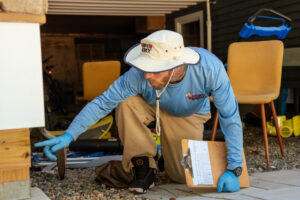

A year-round mosquito and tick prevention plan means knowing what to do in each season: spring cleanup, summer standing-water control, fall tick-habitat management, winter preparation, and personal protection throughout the year.
Hey, I’m Jeff, your local pest control guy. Most homeowners start thinking about mosquitoes when they get bitten and ticks when somebody finds one on the dog, but the strongest prevention plan starts before either problem feels urgent.
At Mosquito Enemy, our treatment season changes with the weather rather than one magic date on the calendar. Good preparation before, during, and after that season can make the yard easier to manage when mosquito and tick pressure builds again.
January and February: Winter Mosquito and Tick Prevention Starts With Yard Maintenance
Winter is usually quiet for mosquito calls in Massachusetts and southern New Hampshire, but that does not mean the yard should be ignored. Snow, wind, freeze-thaw cycles, fallen branches, tarps, flowerpot saucers, clogged gutters, and stacked firewood can all create conditions that matter once the weather turns.
Keep firewood neat, dry, and away from the high-use parts of the yard when practical. Clear brush and fallen branches rather than letting them build into a protected pile beside the lawn, dog run, stone wall, or foundation.
Standing water still deserves attention whenever winter weather allows it. A tarp, cover, barrel lid, or container that repeatedly holds water can become a spring mosquito issue as soon as temperatures rise.
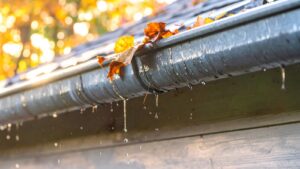
Gutters belong on the winter checklist too. If they are packed with leaves and debris, water can sit where it should be flowing away from the house; Mosquito Enemy also offers gutter cleaning for customers who would rather not handle that job themselves.
Ticks are a separate issue from mosquitoes in winter. CDC notes that blacklegged ticks can be active when winter temperatures rise above freezing, so I still want homeowners and dog owners thinking about tick checks after time in brushy, wooded, or leaf-covered areas.
March to Early April: Spring Yard Cleanup Before Mosquito & Tick Season
When the snow disappears, I want homeowners to look at the yard with fresh eyes. By spring, wind and winter weather have often moved leaves back into places you already cleaned in the fall, so this cleanup is really a reset rather than assuming last November’s work is still intact.
Rake leaves that have blown across the lawn, collected against stone walls, packed under shrubs, or settled along the lawn-to-woods edge. Pull out loose branches and debris from dog areas, play areas, paths, and the places your family actually uses.
If you are adding fresh bark mulch, this is a good time to do it, but do not delay a scheduled treatment just because the mulch is not down yet. Professional service can still move forward while the rest of the spring landscaping catches up.
Low spots deserve a closer look after snowmelt and spring rain. Fill small depressions where practical, especially around downspouts, so runoff does not keep sitting in the same divot and creating a repeated water source.
Containers should be emptied too. Old water sitting in pots, saucers, buckets, toys, covers, or other items is exactly the kind of hidden source homeowners forget until mosquitoes start developing in it.
Shrubs around the house are another spring project. My field preference is to keep roughly 6 to 12 inches of separation where practical so air can move and technicians can see what is happening along the foundation.
For a one-walk property check, use our Backyard Mosquito and Tick Risk Checklist instead of waiting for the first bad week of the season.
Mid-April Into May: Start Mosquito & Tick Control Before Pressure Builds
Our first spring visit is about getting ahead of pressure rather than waiting for the yard to become miserable. With a tick-only property, we pay close attention to the places ticks are already active: wooded transitions, shaded edges, leaf litter, stone walls, groundcover, brush, pet routes, and similar habitat.
For a mosquito-and-tick property, the first visit also includes looking for standing water that survived winter or developed during spring. Pool covers, boats, containers, pots, barrel covers, and water that cannot simply be dumped are all worth noticing.
Small eligible water sites may sometimes be addressed during the visit when the product label and site allow it. Larger, recurring, or more complicated water pressure is a different problem and may justify Mosquito Enemy’s dedicated Egg & Larvae Control add-on.
The important point is that adult mosquito treatment and breeding-water control solve different parts of the problem. Our Mosquito Egg & Larvae Control program is designed for properties where repeated water pressure deserves a more deliberate plan.
Late May Through June: Watch Irrigation, Shrubs, and Standing Water
Late May into June is when the property starts changing fast. Shrubs fill in, lawns thicken, irrigation systems run more often, pools open, and warm-weather pest pressure becomes easier to notice.
Existing Mosquito Enemy customers are often already in a good rhythm by then, so the technician’s job is not to invent a new program every visit. Instead, we keep observing the property and looking for changes that may alter pressure.
A neighboring swimming-pool cover can matter even though we cannot legally cross the property line and treat it. Off-property water or wet habitat can still send mosquitoes into your yard, so noticing those conditions helps explain why one section of a property may be harder than another.
Irrigation is another thing I watch closely. When the lawn feels “squish-squash” wet because it is being overwatered, I want the homeowner to dial it back rather than continuously creating damp conditions.
Shrubs touching the house also get another look. Even though we are there for mosquitoes and ticks, dense plant growth against the foundation can contribute to other pest pressure and make inspection harder.
July Through the End of August: Peak Mosquito Season in MA & NH
If I had to throw a dart at the calendar for when mosquito control gets hardest in our area, I would aim right around July 4. That is a field benchmark, not a scientific switch, but year after year it lines up pretty well with the stretch when heat, humidity, thunderstorms, downpours, and new standing water begin working together.
From roughly July 4 through the end of August, Mother Nature makes us earn our money. Mosquito pressure can rise quickly, and a rushed treatment that misses shaded resting areas or hidden habitat is much more likely to show its weakness.
Technicians need to be extremely thorough during this window. Pool covers, tarps, containers, toys, low spots, gutters, and other water-holding areas deserve repeated attention because one heavy storm can recreate a source that was dry the week before.
Homeowners have a job here too. EPA guidance says to empty or change water in common household containers at least weekly; my field preference during hot summer weather is to check and dump those sources about every four days when practical so you interrupt development before the yard gets another wave.
Tip it, toss it, turn it over, or dump it out. For me, that is still the single homeowner habit I would put at number one.
September Into October: Do Not Assume Mosquito Season Is Over
School starting, a pool closing, or Labor Day passing does not automatically end mosquito season. Warm evenings, humidity, rain, standing water, and shaded vegetation can keep pressure going well into September.
Most Mosquito Enemy customers are finished with their normal seasonal program by around the first week of October. Roughly 85 to 90 percent are usually done by then, while a smaller group continues because they are still using the yard or conditions remain active.
A hard frost is a much more meaningful biological turning point than a date printed on the calendar. Our light-frost-versus-hard-freeze guide explains why the timing varies every year and why nearby towns can experience different microclimates.
Ticks still need separate thinking during this period. Fall cleanup, dog checks, leaf management, and attention to wooded edges remain important even when mosquito pressure begins to fade.
Need the detailed cleanup plan? Read Fall Yard Cleanup for Fewer Ticks Next Spring rather than turning this master calendar into another full leaf-cleanup article.
November and December: Prepare the Yard for Next Mosquito & Tick Season
Once mosquito season is effectively over, the goal shifts from active summer control to leaving the property in better condition for winter. Homeowners are not usually calling because mosquitoes are ruining a November cookout; they are more often thinking about holidays, prepaying for the next season, or planning service at a home they recently bought.
I still want the yard kept orderly. Stack wood neatly, remove loose brush, keep gutters flowing, empty water-holding containers, and avoid letting debris pile up beside stone walls, dog areas, sheds, or the lawn-to-woods edge.
Rodent pressure can also become more noticeable as nights cool, although that is a separate service conversation. The year-round calendar stays focused on mosquitoes and ticks, but a technician who notices changing conditions around the house should still point them out.
Five Rules I Want Homeowners to Remember All Year
First, be relentless about water. Tip, toss, turn over, and dump anything that holds water, with extra attention after rain and during the hottest part of summer.
Second, remember that no legitimate company can promise to eliminate every last mosquito. Professional treatment can dramatically reduce pressure, while clothing, EPA-registered repellent, fans, and sensible outdoor habits still add another layer.
Third, use the same realistic thinking with ticks. Yard treatment can reduce ticks in treated habitat, but wildlife, neighboring property, trails, pets, and winter warm-ups mean a tick can still appear.
Fourth, check yourself, your children, and your pets after outdoor exposure. CDC recommends body checks after time in potential tick habitat, including your own yard, and that simple habit should not disappear just because the property was treated.
Fifth, call us when something changes. Tell us where the problem is, when you notice it, and what has changed in the yard so we can troubleshoot the actual situation rather than blindly applying more product.
More Pesticide Is Not the Answer to Every Problem
Customers sometimes think that if a normal amount of product is good, ten or twenty times more must be better. That is not how legal professional pest control works.
EPA pesticide labels control where, how, how much, and how often a registered product may be used. We cannot ignore those rules because somebody wants an immediate result or thinks a heavier dose should be put on the property.
Good service means doing the best job possible with the tools and labels we are allowed to use. It also means telling a customer when standing water, off-property pressure, weather, habitat, or another condition is working against the treatment.
What Should Homeowners Do Throughout the Year to Prevent Mosquitoes and Ticks?
A good mosquito and tick program is not twelve months of spraying. It is twelve months of paying attention.
Winter is for keeping debris, water, gutters, and woodpiles under control. Spring is for resetting the yard and starting professional service before pressure gets out of hand.
During summer, standing-water discipline and thorough treatment matter most. Fall is when you keep using the yard intelligently, clean tick habitat, and let the weather—not a holiday—tell you when mosquito season is actually ending.
Do your part and let us do ours. That combination gives you a much better chance of enjoying the yard without pretending nature can be reduced to zero.
Frequently Asked Questions About Year-Round Mosquito and Tick Prevention
Q: What month should I start preparing my yard for mosquito and tick season?
A: March and early April are a good time to reset the yard once snow cover is disappearing and the property is workable. Clean leaves and debris, empty water-holding containers, check drainage and gutters, trim problem vegetation, and get ready for spring service instead of waiting until biting pressure is already high.
Q: What is the most important thing I can do all year to reduce mosquitoes?
A: Stay on top of standing water. EPA recommends emptying or changing common water-holding containers at least weekly, while my field preference in warm weather is to check them about every four days when practical.
Q: When is mosquito pressure usually worst in Massachusetts and southern New Hampshire?
A: In my field experience, the hardest stretch is often around July 4 through the end of August. Heat, humidity, heavy rain, standing water, and fast-changing vegetation all increase the pressure, although weather can shift the exact timing from year to year.
Q: Do I still need repellent if my yard is professionally treated?
A: Yes, especially when mosquito or tick pressure is high or you are leaving the treated yard for woods, trails, sports, or other outdoor areas. No professional treatment eliminates every mosquito or tick, so EPA-registered repellent, appropriate clothing, and personal checks remain useful layers of protection.
Q: Should I keep doing tick checks in winter?
A: Yes when you have been outdoors in potential tick habitat. CDC says blacklegged ticks can be active during winter periods above freezing, so a mild day can still create exposure even though normal mosquito season is over.
Q: What should I do if mosquitoes or ticks are still bothering me between visits?
A: Give us a call and tell us exactly where and when the problem is happening. Effective troubleshooting starts with the location, water, weather, habitat, treatment timing, and off-property pressure rather than assuming the answer is automatically more spray.
Q: Can I ask my pest company to use a stronger dose when pressure gets bad?
A: A licensed applicator still has to follow the pesticide label. Product rates, locations, methods, intervals, and restrictions are legal requirements, so “more” is not automatically allowed or better.
Want a Yard Protection Plan That Works Through Every Season?
Mosquito and tick pressure changes throughout the year, and the best plan changes with it. If standing water, wooded tick habitat, heavy summer mosquito pressure, or changing conditions around your property are making it harder to enjoy your yard, Mosquito Enemy can help you figure out what needs attention and when.
We provide mosquito and tick control throughout our Massachusetts and southern New Hampshire service area, with treatment plans built around the way your property actually behaves—not a one-size-fits-all checklist.
Call or text Mosquito Enemy at 888-229-0095.
Learn more about Mosquito & Tick Control
It’s More Fun Outside! with Mosquito Enemy.